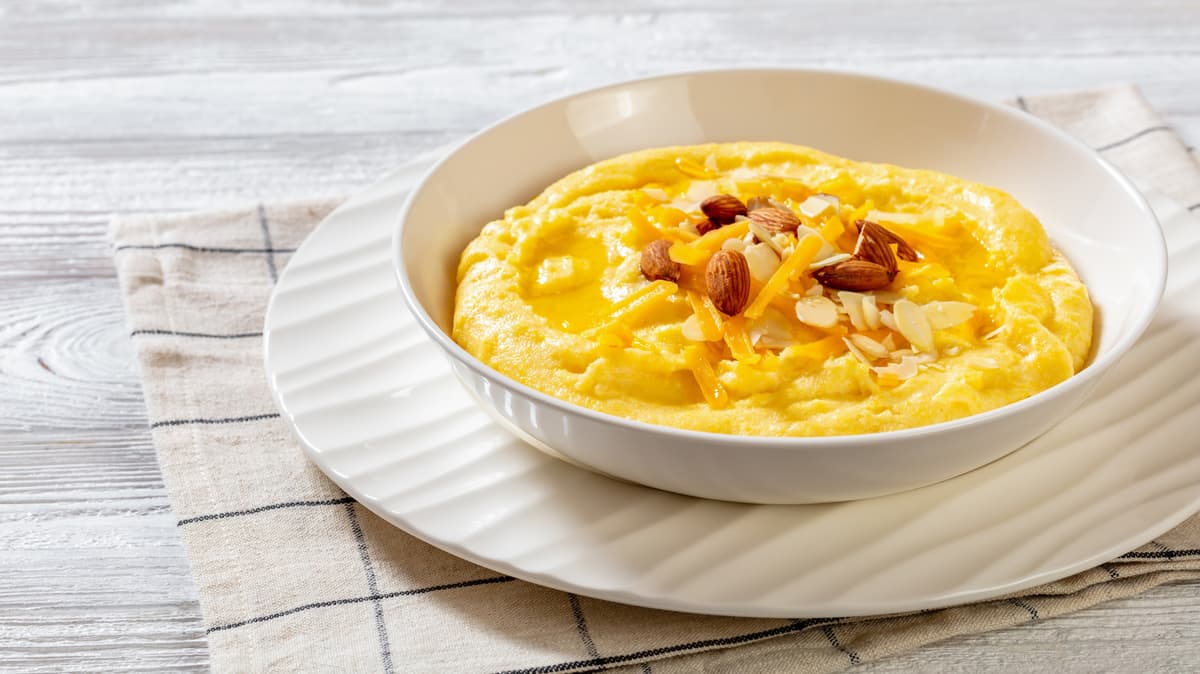
For The Creamiest Southern-Style Grits, There's One Cooking Rule You Must Follow
Why It Matters
Consistent stirring transforms grits from a bland staple into a premium comfort food, boosting their appeal for home cooks and restaurant menus alike.
Key Takeaways
- •Constant stirring prevents grits from becoming lumpy.
- •Low, slow cooking yields even starch absorption.
- •Use broth or dairy for richer flavor profile.
- •Simmer, not boil, to maintain smooth texture.
- •Versatile base pairs with proteins, vegetables, or cheese.
Pulse Analysis
The creamy texture of Southern grits is a textbook case of starch gelatinization. When cornmeal meets heat, its granules swell and absorb liquid, forming a network that gives the dish its characteristic mouthfeel. Continuous stirring disrupts localized hotspots, ensuring each grain receives the same amount of heat and moisture, which prevents the formation of dense lumps. This simple mechanical action aligns with food‑science principles, turning a potentially gluey porridge into a uniformly smooth base that can support a wide range of flavors.
The rise of comfort‑food culture has elevated grits from a regional side dish to a national menu staple. Restaurants across the United States now feature upscale shrimp‑and‑grits or cheese‑infused variations to attract diners seeking nostalgic yet refined experiences. By incorporating broth, buttermilk, or artisanal cheeses, chefs can boost perceived value while keeping costs modest, a balance that resonates with price‑sensitive consumers. Moreover, the versatility of a well‑stirred, velvety base allows food brands to launch ready‑to‑heat grits products that meet the growing demand for convenient, high‑quality meals.
For home cooks, a heavy‑bottomed saucepan and a silicone whisk are the cheapest tools to achieve restaurant‑grade consistency. Start with a 1:4 grain‑to‑liquid ratio, bring the mixture to a gentle simmer, then stir every 30 seconds, gradually increasing to continuous motion as the mixture thickens. Scaling the recipe for commercial kitchens simply requires proportionally larger pots and automated stirrers, but the underlying principle—uniform heat distribution—remains unchanged. Embracing this technique not only improves texture but also opens opportunities for product innovation, such as flavored grits blends or fortified versions targeting health‑conscious markets.
For The Creamiest Southern-Style Grits, There's One Cooking Rule You Must Follow
Comments
Want to join the conversation?
Loading comments...