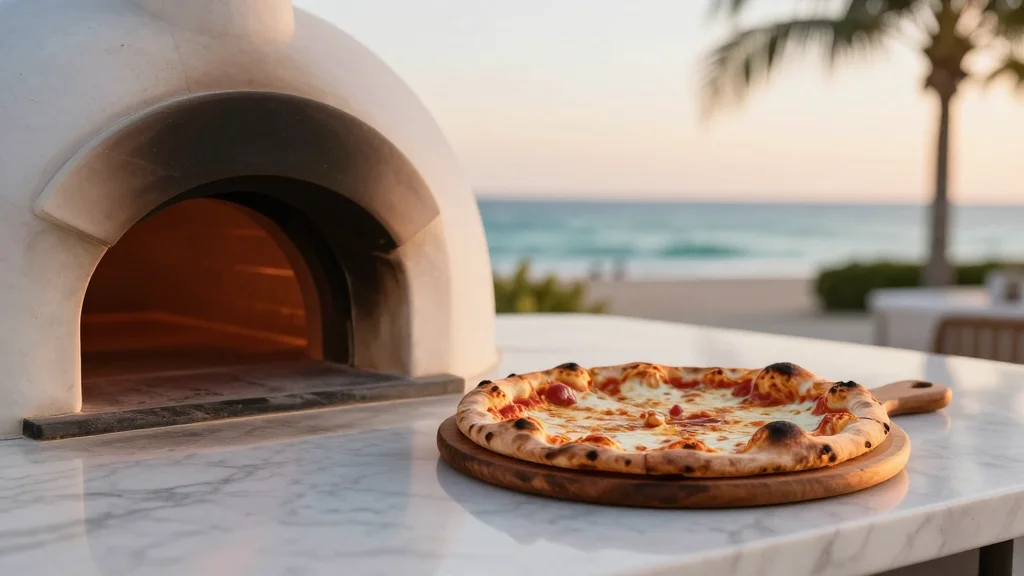
Four Seasons Seychelles Debuts Il Forno, a Beachfront Neapolitan Dining Experience

Why It Matters
Il Forno’s debut illustrates how luxury hotels are redefining value beyond rooms and amenities, turning dining into a centerpiece of the guest experience. By marrying authentic Neapolitan techniques with a beachfront setting, Four Seasons Seychelles taps into the $7.5 billion experiential dining market, which is expected to grow to $15 billion by 2033. The concept also signals a broader industry trend: hotels are investing in open‑kitchen designs and chef‑driven narratives to meet the expectations of high‑net‑worth travelers who prioritize authenticity, craft, and participation over passive consumption. If the model proves profitable, it could accelerate a wave of similar concepts across the Four Seasons portfolio and other luxury chains, reshaping competitive dynamics in the upscale hospitality sector. The emphasis on locally sourced ingredients and transparent cooking processes may also pressure rival resorts to elevate their culinary offerings, potentially raising overall standards for luxury travel dining worldwide.
Key Takeaways
- •Four Seasons Seychelles opened Il Forno, a beachfront Neapolitan restaurant, on Petite Anse.
- •Chef Carlos Rodriguez highlighted a 48‑hour‑fermented sourdough pizza dough as the menu’s cornerstone.
- •Director Thibaut Viera emphasized the open‑kitchen design to create an interactive guest experience.
- •Luxury hospitality revenue is projected to grow to $218 billion by 2029, with experiential dining valued at $7.5 billion today.
- •The experiential dining market is expected to double to $15 billion by 2033, driven by affluent travelers seeking immersive experiences.
Pulse Analysis
Il Forno arrives at a moment when luxury hospitality is undergoing a fundamental re‑orientation from static opulence to dynamic experience. Historically, upscale resorts relied on lavish rooms and exclusive services to differentiate themselves. Over the past decade, however, the rise of social media and the desire for shareable moments have shifted guest expectations toward authenticity and participation. Il Forno’s open‑kitchen concept directly addresses this shift, turning the act of cooking into a performance that guests can observe and, in some cases, influence. This aligns with the broader $7.5 billion experiential dining market, which is expanding at a 10% CAGR, indicating that the appetite for such experiences is not a fleeting fad but a structural change.
From a competitive standpoint, Four Seasons’ move could force other luxury operators to rethink their food‑and‑beverage strategies. Brands that have traditionally outsourced dining to external operators may now consider in‑house culinary showcases that highlight regional ingredients and artisanal techniques. The emphasis on locally sourced Seychellois produce also dovetails with sustainability trends, offering a dual narrative of luxury and responsibility that resonates with high‑net‑worth travelers increasingly conscious of their environmental footprint.
Looking ahead, the success of Il Forno will likely be measured not just by occupancy or restaurant revenue, but by guest sentiment and repeat visitation. If the concept drives higher average daily rates and longer stays, it could become a blueprint for scaling experiential dining across the Four Seasons network and beyond. The key question remains whether the operational complexities of open‑kitchen venues—staff training, supply chain rigor, and consistency in a high‑visibility environment—can be managed at scale without diluting the authenticity that makes Il Forno compelling.
Four Seasons Seychelles Debuts Il Forno, a Beachfront Neapolitan Dining Experience
Comments
Want to join the conversation?
Loading comments...