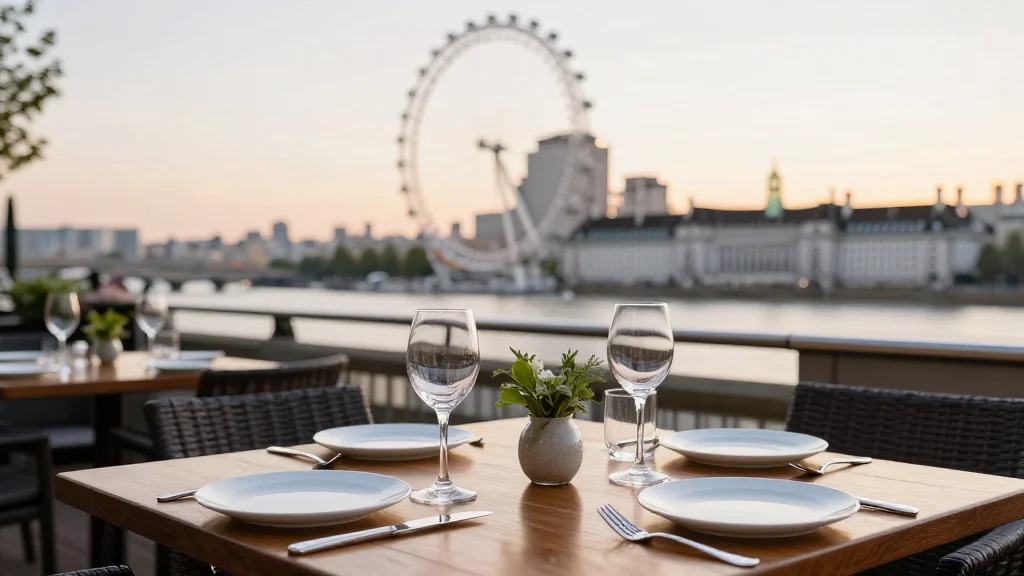
Gordon Ramsay Teams with Sea Containers to Open Riverside Restaurant on London’s South Bank

Why It Matters
The Ramsay‑Sea Containers venture underscores a broader trend of celebrity chefs leveraging iconic locations to create destination experiences that extend beyond food. By situating a high‑end restaurant on the South Bank, the project reinforces the area’s evolution from a cultural hub to a comprehensive lifestyle district, potentially reshaping visitor patterns and encouraging further investment in hospitality infrastructure. Moreover, the collaboration highlights how design‑focused operators like Sea Containers are increasingly partnering with culinary brands to deliver immersive, multi‑sensory environments that meet rising consumer expectations for experience‑driven dining. For the UK hospitality market, the opening represents a vote of confidence in premium dining’s resilience. It may prompt other operators to pursue similar high‑visibility partnerships, intensifying competition for prime riverfront real estate and driving innovation in service models, menu development, and venue design.
Key Takeaways
- •Gordon Ramsay Restaurants partners with Sea Containers London to open a flagship riverside restaurant on the South Bank.
- •The venue will feature indoor dining, a spacious terrace, and panoramic views of the River Thames.
- •Opening slated for autumn 2026, targeting both local diners and international tourists.
- •The partnership combines Ramsay’s culinary brand with Sea Containers’ design expertise.
- •Analysts expect the restaurant to boost foot traffic and average spend in the South Bank area.
Pulse Analysis
The Ramsay‑Sea Containers collaboration is more than a new address; it reflects a strategic shift in how high‑end dining brands are positioning themselves within urban ecosystems. Historically, celebrity chefs have relied on flagship locations in established culinary districts—think New York’s Midtown or Paris’s Champs‑Élysées—to cement their reputations. By moving to the South Bank, Ramsay taps into a mixed‑use environment where culture, tourism, and leisure intersect, creating a synergistic draw that can sustain higher occupancy rates year‑round.
From a competitive standpoint, the venture pits Ramsay against a growing cadre of boutique operators who are redefining riverside hospitality with concepts that prioritize flexibility, local sourcing, and experiential programming. The success of this project will hinge on its ability to differentiate through menu innovation and design while delivering the consistency expected of a Ramsay brand. If the restaurant can attract a steady stream of both high‑spending tourists and repeat local clientele, it could set a benchmark for future collaborations between culinary icons and property developers.
Looking ahead, the restaurant’s performance will likely influence investment patterns in London’s hospitality real estate. A strong launch could accelerate the conversion of underutilized riverfront sites into premium dining or mixed‑use venues, while a lukewarm reception might caution investors about overreliance on celebrity branding. In either scenario, the Ramsay‑Sea Containers project will serve as a litmus test for the viability of experience‑centric, high‑visibility dining concepts in a post‑pandemic market.
Gordon Ramsay Teams with Sea Containers to Open Riverside Restaurant on London’s South Bank
Comments
Want to join the conversation?
Loading comments...