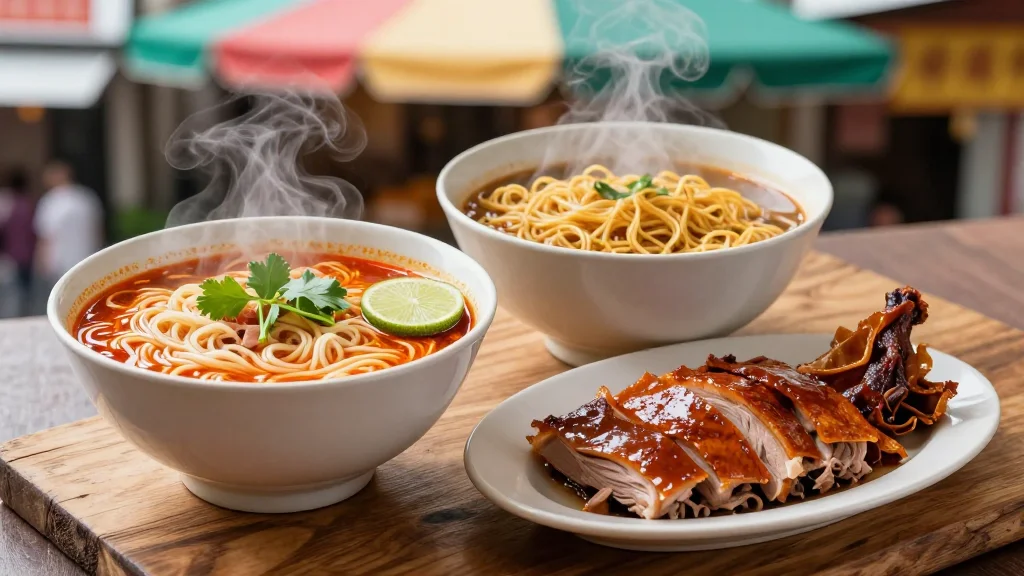
JB Food Guide: Hossan Leong’s Picks at Taman Sentosa’s Nostalgic Open-Air Hawker Street
Why It Matters
The revival of an open‑air hawker street boosts Johor Bahru’s culinary tourism and provides a low‑cost platform for local food entrepreneurs to scale their brands across the Malaysia‑Singapore corridor.
Key Takeaways
- •Sentosa Street Food revives open‑air hawker vibe near Johor‑Singapore Causeway
- •Grandma Ong’s original pushcart serves mee hoon kueh for RM8 (~$1.80)
- •20 BBQ chicken wings cost RM80 (~$17.60), showing value for indulgence
- •Ya Xiang Herbal Roast Duck sells out by 7 pm, driving demand
- •Penang‑style laksa and char kway teow priced under RM12 (~$2.60)
Pulse Analysis
The emergence of Sentosa Street Food in Taman Sentosa reflects a broader resurgence of open‑air hawker corridors in Southeast Asia, where nostalgia and urban revitalization intersect. By converting a former parking strip into a bustling food promenade, city planners have created a low‑cost, high‑impact attraction that leverages proximity to the Causeway to capture cross‑border foot traffic. This model not only enriches the local night‑life economy but also differentiates Johor Bahru from the homogenized mall‑centric dining scene that dominates many neighboring cities.
For entrepreneurs, the street offers a testing ground that balances heritage authenticity with scalable business models. Grandma Ong, for example, grew from a single pushcart in 1999 to a multi‑outlet chain across Malaysia while maintaining its flagship stall for purists. Pricing remains aggressively competitive—mee hoon kueh at roughly $1.80 and char kway teow under $2.60—making the venue attractive to price‑sensitive tourists from Singapore, where dining costs are typically higher. The rapid turnover of popular items like Ya Xiang’s herbal roast duck underscores strong demand and validates the street’s role as a launchpad for culinary brands seeking regional exposure.
Looking ahead, the success of Sentosa Street Food could inspire formalized hawker districts that blend regulation with flexibility, preserving the spontaneous charm while ensuring food safety and vendor rights. As consumer appetite for authentic, experience‑driven dining grows, such micro‑ecosystems may become pivotal in shaping Southeast Asia’s culinary identity, driving both tourism revenue and local employment. Stakeholders should monitor footfall trends, vendor diversification, and cross‑border spending patterns to fine‑tune support policies that sustain this vibrant food culture.
JB food guide: Hossan Leong’s picks at Taman Sentosa’s nostalgic open-air hawker street
Comments
Want to join the conversation?
Loading comments...