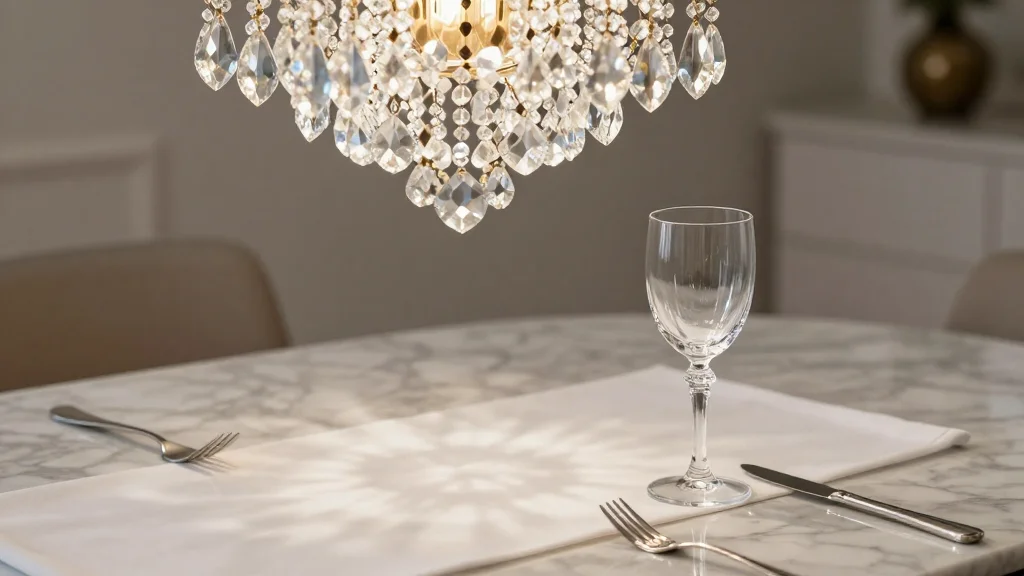
Keystone Hospitality Launches Chandelier, Upscale Surf‑and‑Turf Restaurant in DC

Why It Matters
Chandelier’s debut represents a significant infusion of luxury hospitality into Washington, D.C., a city where fine‑dining options have historically been more modest. By delivering a globally inspired, high‑budget concept, Keystone Hospitality is testing the appetite of a market that blends political power with international visitors. If successful, the restaurant could encourage other operators to pursue similarly ambitious projects, reshaping the city’s culinary map and raising expectations for service, design and ingredient sourcing. Moreover, the venture highlights a shift toward experiential dining, where ambience and visual spectacle are as critical as the food itself. The waterfall fire feature, marble private rooms and curated bar space illustrate how restaurateurs are leveraging architecture and technology to differentiate themselves in a crowded market. This trend may accelerate investment in upscale venues that prioritize both culinary and sensory experiences, influencing future development strategies across the broader U.S. hospitality sector.
Key Takeaways
- •Keystone Hospitality’s Chandelier will open summer 2026 at 1201 Pennsylvania Avenue NW, the former Del Frisco’s location.
- •The restaurant will seat approximately 400 guests and feature a 50‑seat bar, marble private rooms, and a waterfall fire centerpiece.
- •Menu focuses on premium surf‑and‑turf, with a two‑floor seafood display and a farm‑touring program to source top‑quality steaks.
- •Partners Joseph Azzouz and Jyoti Mahajan emphasize global design influences from Dubai, London and New York.
- •Chandelier aims to elevate Washington’s fine‑dining scene, signaling confidence in post‑pandemic luxury market demand.
Pulse Analysis
Keystone Hospitality’s decision to launch Chandelier at a prime Pennsylvania Avenue address reflects a calculated bet on the convergence of political power and high‑spending clientele. The capital’s dining ecosystem has traditionally catered to functional, often understated venues that serve government officials and lobbyists. By introducing a concept that rivals the opulence of flagship restaurants in New York or London, Keystone is attempting to rewrite the city’s culinary narrative, positioning DC as a destination for luxury experiences rather than merely a stop‑over for business meals.
The emphasis on immersive design—waterfall fire features, gold‑toned booths, and a massive bar—mirrors a broader industry shift where the visual and experiential components of a meal are as marketable as the menu itself. This aligns with the rise of ‘Instagram‑ready’ dining, where social media amplification can drive foot traffic and justify premium pricing. However, the success of such a model in Washington hinges on the ability to attract a consistent flow of affluent diners beyond the political calendar, especially during off‑peak seasons.
From a competitive standpoint, Chandelier will enter a market already seeing new entrants like high‑end rooftop venues and chef‑driven tasting rooms. Keystone’s advantage lies in its established brand portfolio and the strategic use of a historic, high‑visibility location. If the restaurant can deliver on its promise of world‑class steaks and seafood while maintaining the promised level of service, it could set a new benchmark for capital‑city hospitality, prompting rivals to upscale their own offerings. Conversely, any misstep—whether in execution, pricing, or supply chain reliability—could expose the risks of over‑investing in luxury concepts in a city where demand can be volatile. The upcoming soft‑opening will be a critical litmus test for both consumer reception and operational readiness, shaping the next wave of fine‑dining development in Washington.
Keystone Hospitality Launches Chandelier, Upscale Surf‑and‑Turf Restaurant in DC
Comments
Want to join the conversation?
Loading comments...