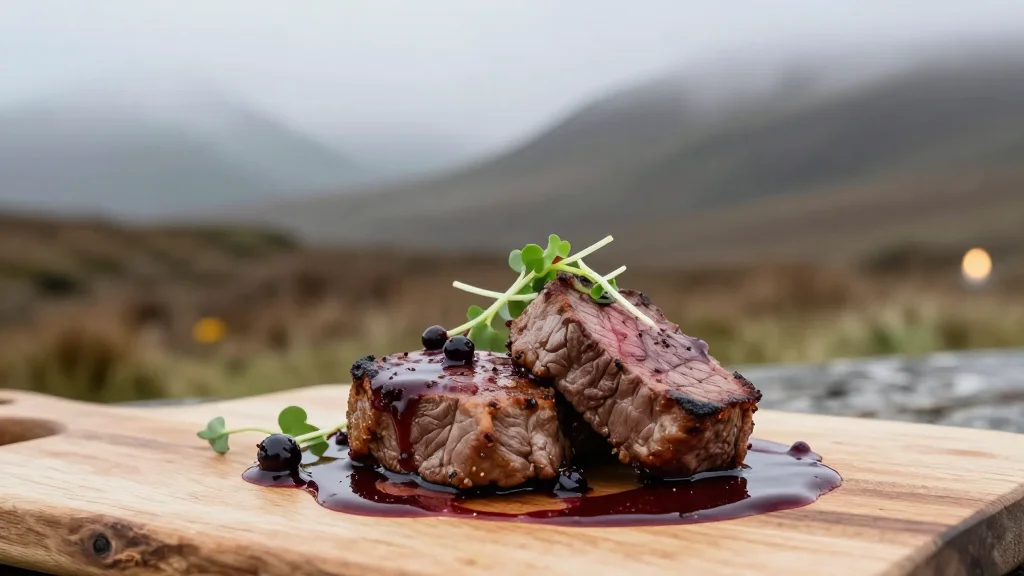
Killiecrankie House Wins First Michelin Star, Boosting Scotland’s Fine‑Dining Scene

Why It Matters
The Michelin star elevates Killiecrankie House from a regional curiosity to a national benchmark, reinforcing Scotland’s reputation for culinary innovation. By marrying Scottish terroir with Japanese technique, the Tsappis team exemplifies a broader movement where chefs reinterpret local produce through global lenses, attracting both gastronomic tourists and investors. Beyond the kitchen, the award could catalyze economic benefits for the surrounding community. Increased visitor traffic supports local farms, accommodation providers, and ancillary services, creating a ripple effect that strengthens the rural economy and encourages other entrepreneurs to pursue high‑end hospitality ventures in remote settings.
Key Takeaways
- •Killiecrankie House receives its first Michelin star, joining Scotland’s 15-starred restaurants.
- •Husband‑and‑wife team Tom and Matilda Tsappis are the chefs behind the accolade.
- •The restaurant blends Scottish produce with Japanese techniques, featuring dishes like oat tofu with fermented cream sauce.
- •The venue includes five guest rooms, an Art‑Deco cocktail bar, and a 12‑cover fine‑dining room.
- •The star is expected to boost tourism and inspire more rural fine‑dining concepts in the UK.
Pulse Analysis
Killiecrankie House’s Michelin recognition underscores a shift in fine‑dining geography. Historically, Michelin stars clustered in metropolitan hubs where supply chains, media exposure, and affluent clientele converge. The Tsappis duo’s success demonstrates that a meticulously curated narrative—combining heritage architecture, a boutique hotel experience, and a menu that fuses local and international techniques—can overcome those constraints. Their background, rooted in finance and global culinary training, provided the strategic acumen to position the property as a destination rather than a mere restaurant.
From a market perspective, the star could trigger a virtuous cycle: heightened demand leads to higher room rates and reservation premiums, which fund further menu experimentation and staff development. Competitors in the Scottish high‑end sector may accelerate their own cross‑cultural collaborations to capture a share of the emerging food‑tourism market. Moreover, the Michelin Guide’s emphasis on sustainability, reflected in the Green Star awards announced alongside the star, aligns with consumer expectations for provenance and environmental stewardship, giving Killiecrankie House a competitive edge.
Looking ahead, the sustainability of this model hinges on balancing exclusivity with scalability. While a twelve‑cover restaurant ensures meticulous execution, it also caps revenue potential. The Tsappis team may explore limited‑seat pop‑ups or collaborations with nearby producers to diversify income streams without diluting the brand. If they can retain the star and perhaps add a second, Killiecrankie House could become a case study for how rural, boutique establishments can thrive in a market traditionally dominated by city‑center institutions.
Killiecrankie House Wins First Michelin Star, Boosting Scotland’s Fine‑Dining Scene
Comments
Want to join the conversation?
Loading comments...