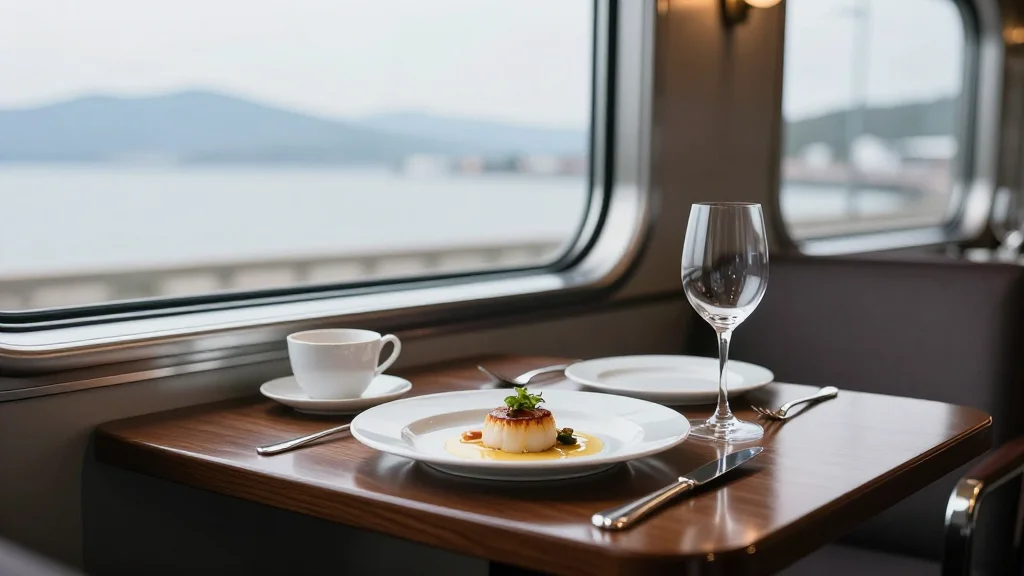
Kintetsu Railway Launches Luxury French‑cuisine Train Linking Nagoya and Ise‑Shima

Why It Matters
The “Les Saveurs Shima” train illustrates how food can become a vehicle for regional branding, turning local ingredients into a luxury narrative that attracts high‑spending tourists. By integrating a full‑course French menu with rail travel, Kintetsu creates a new revenue stream that leverages both culinary expertise and existing transportation infrastructure. The model also highlights a growing consumer appetite for immersive, destination‑focused dining experiences, a trend that could reshape restaurant concepts beyond static locations. For the broader food industry, the train underscores the value of terroir‑driven menus that pair local produce with global techniques. Chefs and restaurateurs may look to replicate this approach in pop‑up venues, cruise ships, or even mobile kitchens, expanding the market for premium regional cuisine and encouraging producers to meet higher quality standards.
Key Takeaways
- •Launch date: Nov. 1, 2026
- •Capacity: 50 seats across four cars, one round‑trip per day, six days a week
- •Full‑course French menu priced at ¥33,000–¥36,000 (≈$207–$226) inclusive of rail fare
- •Set menu in wooden boxes priced at ¥19,000–¥21,000 (≈$119–$131)
- •Target market: affluent domestic travelers and international tourists seeking curated experiences
Pulse Analysis
Kintetsu’s restaurant train arrives at a moment when Japan’s tourism strategy is pivoting from mass‑market attractions to niche, high‑value experiences. The concept builds on a legacy of luxury rail travel—such as the Shiki‑shima cruise train—but adds a culinary focus that differentiates it from purely scenic offerings. By embedding a French menu that sources ingredients locally, the service taps into the global appetite for authentic, place‑based cuisine while leveraging the prestige of French gastronomy.
From a competitive standpoint, the train competes not only with boutique hotels and ryokan but also with emerging culinary tourism products like food‑themed walking tours and farm‑to‑table pop‑ups. Its success will depend on Kintetsu’s ability to deliver consistent quality, manage the logistical challenges of cooking on a moving platform, and market the experience to overseas visitors who may be unfamiliar with Japan’s secondary destinations. If occupancy reaches the projected 80‑90% threshold, the model could be replicated on other regional lines, creating a network of mobile fine‑dining venues that collectively boost local economies.
Looking ahead, the train could serve as a testbed for data‑driven personalization—using reservation data to tailor menus to repeat guests or to highlight seasonal produce. Such innovations would deepen the integration of food, technology, and travel, setting a new benchmark for experiential hospitality in the food sector.
Kintetsu Railway launches luxury French‑cuisine train linking Nagoya and Ise‑Shima
Comments
Want to join the conversation?
Loading comments...