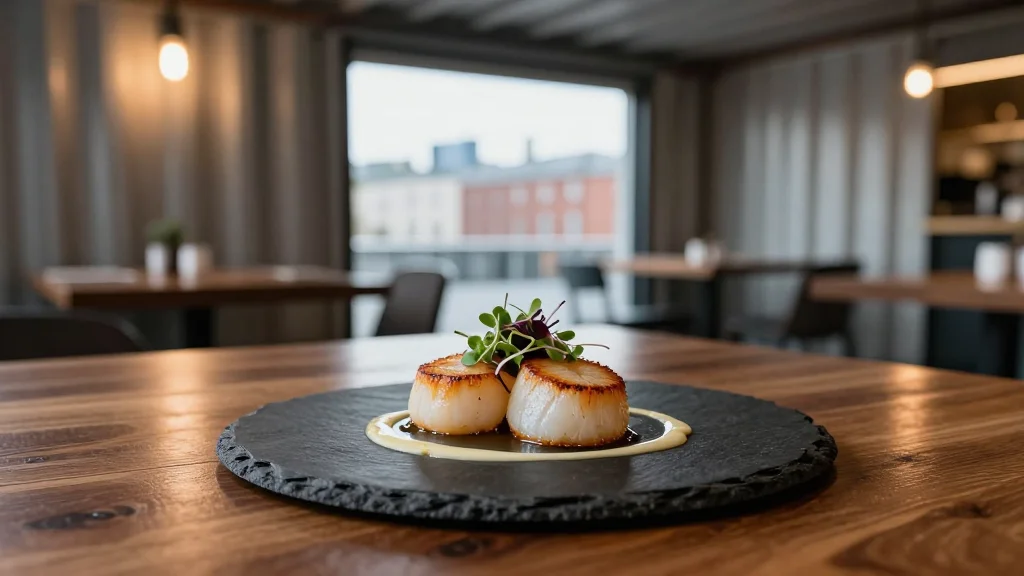
Liath Secures Two Michelin Stars, Showcasing Its ‘Flavour Provinces’ Concept

Companies Mentioned
Why It Matters
Liath’s two Michelin stars elevate Dublin’s reputation as a world‑class food destination, attracting gastronomic tourists and encouraging local talent to pursue ambitious concepts. The restaurant’s ‘flavour provinces’ model demonstrates how narrative‑driven menus can coexist with rigorous technique, potentially reshaping fine‑dining expectations across Europe. Moreover, the success of a container‑based venue underscores the viability of sustainable, low‑cost spaces achieving the highest culinary honors, offering a blueprint for emerging chefs facing high real‑estate barriers. The recognition also intensifies the competitive dynamics among Ireland’s elite restaurants, prompting a wave of innovation as peers seek to differentiate themselves. As Michelin continues to reward creativity, Liath’s achievement may accelerate a broader shift toward experiential dining that prioritizes storytelling as much as flavor.
Key Takeaways
- •Liath awarded two Michelin stars, joining an elite group of Dublin restaurants.
- •Chef Damien Grey’s ‘flavour provinces’ menu organizes dishes into thematic taste territories.
- •The restaurant operates out of three repurposed shipping containers in Dublin’s Docklands.
- •A Rowan Gillespie sculpture adds cultural depth to the minimalist interior.
- •The accolade is expected to boost high‑end tourism and inspire sustainable venue concepts.
Pulse Analysis
Liath’s meteoric rise reflects a broader trend where culinary excellence is increasingly measured by narrative cohesion as much as technical skill. Grey’s ‘flavour provinces’ echo the rise of experiential dining seen in cities like Tokyo and New York, where chefs craft a story arc that guides the palate. This approach resonates with a post‑pandemic clientele that values immersive experiences over traditional à la carte formats.
Historically, Michelin has favored classic French techniques, but recent years have seen a diversification toward regional storytelling and sustainability. Liath’s container setting challenges the notion that luxury requires opulent architecture, suggesting that the Michelin jury now places greater emphasis on the totality of the dining experience—including setting, service, and conceptual clarity. This could lower entry barriers for visionary chefs who lack capital for grandiose spaces but possess strong culinary narratives.
Looking ahead, Liath’s success may catalyze a wave of “concept‑driven” restaurants across Ireland and the UK, each seeking to carve a niche through thematic menus and unconventional venues. The pressure will be on other two‑star establishments to innovate further, potentially sparking a competitive arms race in menu storytelling, local sourcing, and design ingenuity. For investors, the story signals that backing chefs with a clear, marketable concept can yield high‑profile returns, especially as food tourism continues to grow.
Overall, Liath’s achievement is a case study in how daring creativity, when paired with disciplined execution, can redefine culinary hierarchies and inspire a new generation of restaurateurs.
Liath Secures Two Michelin Stars, Showcasing Its ‘Flavour Provinces’ Concept
Comments
Want to join the conversation?
Loading comments...