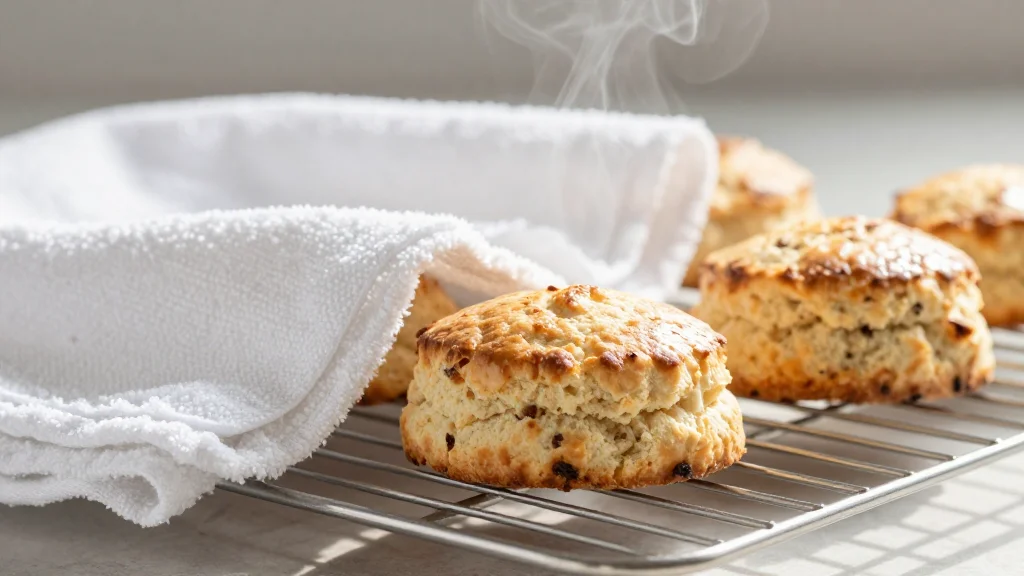
Mary Berry Says You’ve Ruined Scones for Years by Skipping This 10‑second Step Right After Baking Them
Why It Matters
The simple towel technique transforms home‑baked scones from dry, cardboard‑like treats into bakery‑quality delights, boosting consumer satisfaction and reinforcing Mary Berry’s authority as a practical baking mentor.
Key Takeaways
- •Cover hot scones with a clean tea towel to trap steam
- •Steam retention stops crust hardening and crumb drying
- •Use a wire rack; avoid leaving scones on the tray
- •Store cooled scones in paper then airtight tin for 1‑2 days
- •Cold butter and minimal mixing create a tender short‑crust
Pulse Analysis
The post‑bake environment is often overlooked by home bakers, yet it plays a decisive role in texture retention. When scones exit a high‑heat oven, the residual steam inside the crumb seeks an escape route. By draping a clean tea towel over the scones on a wire rack, that steam is temporarily held, allowing the interior to equilibrate without the outer crust becoming overly crisp. This micro‑climate mirrors professional bakery practices, where controlled cooling preserves the delicate balance between a golden crust and a moist crumb.
Mary Berry’s recommendation aligns with food‑science principles that emphasize moisture migration. The brief covering period creates a humid pocket that slows evaporation, preventing the starches on the surface from retrograding into a dry, chalky texture. Simultaneously, the glaze of egg‑milk applied before baking remains glossy, as the towel’s gentle pressure avoids crushing the delicate surface. For bakers seeking consistent results, the method is low‑cost, requires no special equipment, and can be integrated into any scone recipe, from classic Devonshire to fruit‑laden variations.
Beyond the immediate bake, Berry’s storage guidance reinforces the importance of layered protection. Wrapping cooled scones in kitchen or waxed paper absorbs excess moisture, while an airtight tin shields them from ambient air. This two‑step approach extends shelf life to one or two days at room temperature, after which refrigeration or freezing is advisable. By adopting these straightforward steps, home bakers can deliver scones that rival café offerings, enhancing brand loyalty for food‑related businesses and reinforcing Berry’s status as a trusted culinary authority.
Mary Berry says you’ve ruined scones for years by skipping this 10‑second step right after baking them
Comments
Want to join the conversation?
Loading comments...