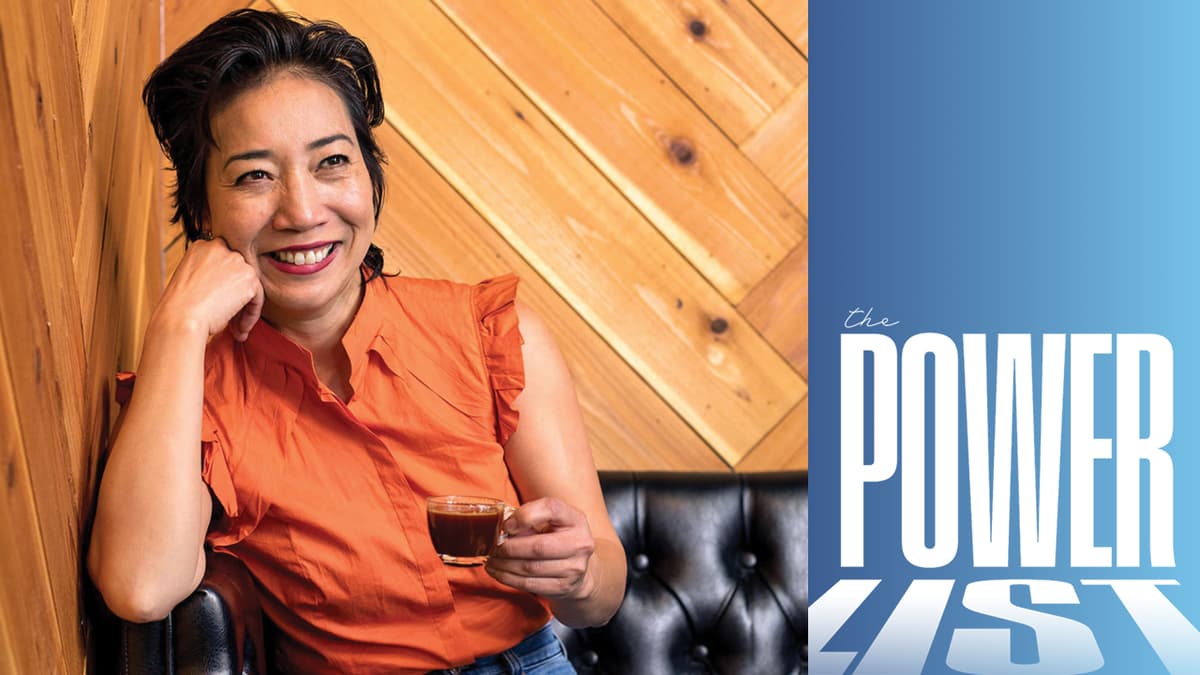
Mary Nguyen’s Quest to Make Chef-Driven Food Accessible Has Resonated Through Olive & Finch
Companies Mentioned
Why It Matters
Olive & Finch demonstrates that mid‑scale restaurants can deliver high culinary standards at affordable prices while prioritizing employee welfare, offering a sustainable growth model for an industry under cost pressure.
Key Takeaways
- •Olive & Finch now operates nine locations, four more slated for 2026
- •All menu items priced at $20 or less, defying inflation trends
- •Company provides full medical, dental, vision insurance and 401(k) to staff
- •Finch on the Fly supplies hotels and hospitals, expanding revenue streams
- •Business remains privately owned, rejecting venture capital and private equity
Pulse Analysis
Mary Nguyen’s journey from a Wall Street commodities desk to the kitchen of Denver’s dining scene reads like a modern entrepreneurial case study. After stints at Starbucks and as a sushi‑chef apprentice, she launched Parallel 17 in 2005, followed by Street Kitchen Asian Bistro in 2011, before unveiling Olive & Finch in 2013. The brand positions itself between high‑end, reservation‑only restaurants and fast‑food chains, offering chef‑driven dishes in a casual counter‑style setting. By anchoring the concept in community‑focused neighborhoods, Nguyen tapped a latent demand for quality food that is both quick and affordable.
Olive & Finch’s pricing discipline—every item $20 or less—relies on a vertically integrated supply chain. Early investment in a commercial production facility allowed the company to batch sauces, dressings, and other base components, freeing each outlet to focus on final assembly and service. Counter or QR‑code ordering streamlines front‑of‑house labor while the back‑of‑house maintains full‑service kitchen standards. The model also extends beyond retail; Finch on the Fly supplies pre‑crafted items to hotels, hospitals, and other institutions, creating a B2B revenue layer that cushions the brand against consumer volatility. Crucially, all employees receive medical, dental, vision coverage and a 401(k), a rarity in the sector.
The success of Olive & Finch carries broader implications for the restaurant industry, which is grappling with inflation, labor shortages, and investor pressure. By refusing venture capital and private‑equity partnerships, Nguyen preserves strategic autonomy and aligns growth with her hospitality‑first ethos. The recent appointment of CEO Meaghan Goedde and COO Brent Berkowitz signals a scalable leadership structure that can sustain expansion without diluting the brand’s core values. As more operators seek to replicate this “fine‑casual” formula, Olive & Finch may become a template for profitably delivering chef‑quality food at mass‑market price points while maintaining a strong employee value proposition.
Mary Nguyen’s quest to make chef-driven food accessible has resonated through Olive & Finch
Comments
Want to join the conversation?
Loading comments...