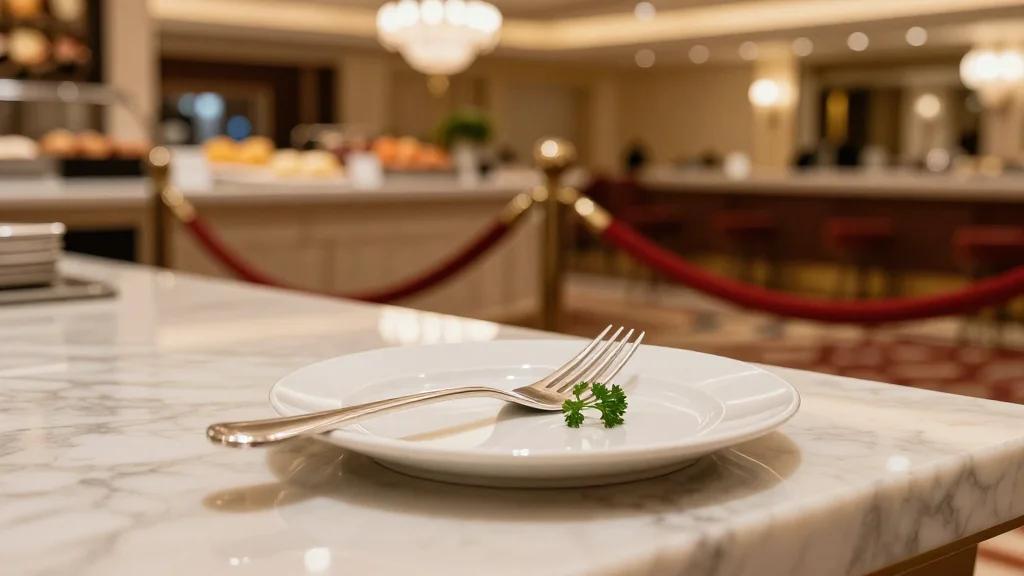
MGM Grand Ends 30‑Year Buffet Era as Las Vegas Shifts Away From All‑You‑Can‑Eat

Why It Matters
The end of MGM Grand’s buffet signals a broader erosion of the all‑you‑can‑eat model that once anchored Las Vegas’s hospitality ecosystem. Buffets served as a low‑cost entry point for families and casual tourists, supporting not only food sales but also ancillary gaming revenue. Their disappearance could reshape visitor spending patterns, pushing families toward off‑Strip dining or prompting casinos to develop new value‑oriented concepts. For the food industry, the shift highlights the pressure on large‑scale dining operations to adapt to rising ingredient costs, labor shortages, and steep real‑estate expenses. Operators that can innovate with flexible, high‑margin concepts—such as fast‑casual eateries, specialty kitchens, or experiential dining—will be better positioned to thrive in a market where traditional buffets are no longer financially viable.
Key Takeaways
- •MGM Grand’s buffet will close at the end of May, ending a 30‑year run.
- •Buffet closures are part of a wider trend as Strip casinos pivot to higher‑margin dining.
- •Corey Levitan notes that casino revenue composition flipped by the 2000s, with dining now outpacing gaming.
- •Tourists cite $30 breakfast prices and $80 per‑person family meals as evidence of rising costs.
- •The space may be repurposed for an upscale restaurant or mixed‑use venue targeting premium spenders.
Pulse Analysis
The closure of MGM Grand’s buffet is less a symptom of a fleeting fad than a structural realignment of the Strip’s revenue engine. Historically, buffets functioned as a loss leader, drawing gamblers onto the casino floor and generating ancillary spend. As gaming’s share of total revenue shrank to roughly 25% and property rents ballooned to $100 million annually, the economics of subsidizing low‑margin food evaporated. This forces operators to extract more value per square foot, favoring concepts that can command higher check averages and tighter cost controls.
From a consumer perspective, the loss of affordable buffets narrows the appeal of the Strip for middle‑class families, a demographic that has already felt squeezed by rising hotel rates and entertainment costs. While luxury travelers may welcome upscale replacements, the broader market may see a migration toward off‑Strip or suburban dining hubs that still offer volume‑based pricing. Restaurants that can blend value with experience—think fast‑casual concepts that leverage local sourcing and digital ordering—could fill the void left by buffets.
Looking ahead, the key question for Las Vegas hospitality is whether the Strip can reinvent its food identity without alienating the price‑sensitive segment that has traditionally sustained its visitor base. If casinos successfully integrate high‑margin venues while preserving affordable options through satellite locations or partnership models, they may sustain overall spend. Failure to do so could accelerate a shift of family tourism away from the Strip, reshaping the city’s culinary landscape for years to come.
MGM Grand Ends 30‑Year Buffet Era as Las Vegas Shifts Away from All‑You‑Can‑Eat
Comments
Want to join the conversation?
Loading comments...