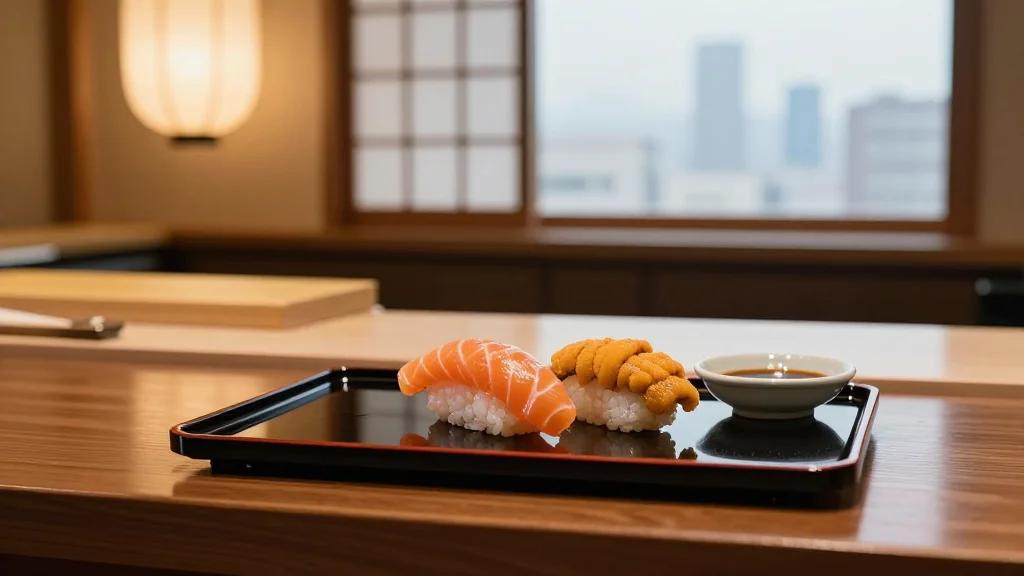
Michelin-Starred Chef Shinya Yamasaki Opens First Overseas Sushi Spot in Taipei's Xinyi District

Companies Mentioned
Why It Matters
Yamasaki’s Taipei launch signals a new phase of culinary globalization, where elite Japanese chefs are exporting not just dishes but entire dining philosophies. For Taiwan, the presence of a Michelin‑starred kaiseki house raises the standard for ingredient sourcing, service precision, and beverage pairing, potentially prompting local establishments to elevate their own offerings. The venture also illustrates how high‑end Japanese cuisine can serve as a cultural bridge, attracting affluent consumers who seek authentic experiences while fostering deeper appreciation for Japanese culinary heritage. On a broader scale, the move underscores the growing appetite among Asian consumers for premium, experience‑driven dining. As disposable incomes rise, restaurants that combine meticulous craftsmanship with storytelling—like Yamasaki’s emphasis on “flavor signals” and sake integration—are poised to capture a lucrative segment of the market. The success or challenges of this outpost will likely inform future decisions by other Michelin‑starred chefs considering overseas expansion, shaping the competitive dynamics of the region’s fine‑dining landscape.
Key Takeaways
- •Shinya Yamasaki, Michelin‑starred chef, opened his first overseas restaurant in Taipei on May 5.
- •Seasonal set menu priced at NT$5,800 (~US$190); limited‑edition chef collaboration dinner at NT$15,000 (~US$495).
- •Head chef Guo Yuan‑fu, trained in Japan for seven years, leads the Taipei kitchen.
- •Restaurant emphasizes minimalist flavor architecture and curated Japanese sake pairings.
- •Opening may trigger a wave of Japanese Michelin chefs establishing satellite venues across Asia.
Pulse Analysis
Yamasaki’s entry into Taipei is more than a single restaurant launch; it represents a strategic test of whether the disciplined, austere aesthetic that defines Tokyo’s top kaiseki can thrive in a market that historically favors more expressive presentations. The chef’s insistence on “simplify form, strengthen essence” challenges local competitors to rethink menu construction, moving away from visual spectacle toward a purer sensory focus. This could accelerate a shift in Taiwan’s high‑end sushi scene toward deeper integration of sake as a narrative element rather than a peripheral accompaniment.
From a business perspective, the pricing strategy—mid‑range for a seasonal set yet premium for the master‑class experience—balances accessibility with exclusivity. By filling the reservation calendar within weeks, Yamasaki demonstrates that there is a ready audience for authentic, high‑price Japanese dining, provided the brand narrative is compelling. The success of this model may encourage other Michelin‑starred chefs to adopt a similar tiered approach, using flagship locations to build brand equity while offering limited‑time, high‑margin experiences that generate buzz and media coverage.
Looking ahead, the restaurant’s performance will likely influence the calculus of future cross‑border expansions. If Yamasaki can maintain the exacting standards that earned him a Michelin star while adapting to local supply chains and consumer expectations, it will validate the exportability of Japan’s most refined culinary concepts. Conversely, any missteps—whether in ingredient sourcing, service execution, or cultural resonance—could serve as a cautionary tale, underscoring the delicate balance between authenticity and localization in the global fine‑dining arena.
Michelin-Starred Chef Shinya Yamasaki Opens First Overseas Sushi Spot in Taipei's Xinyi District
Comments
Want to join the conversation?
Loading comments...