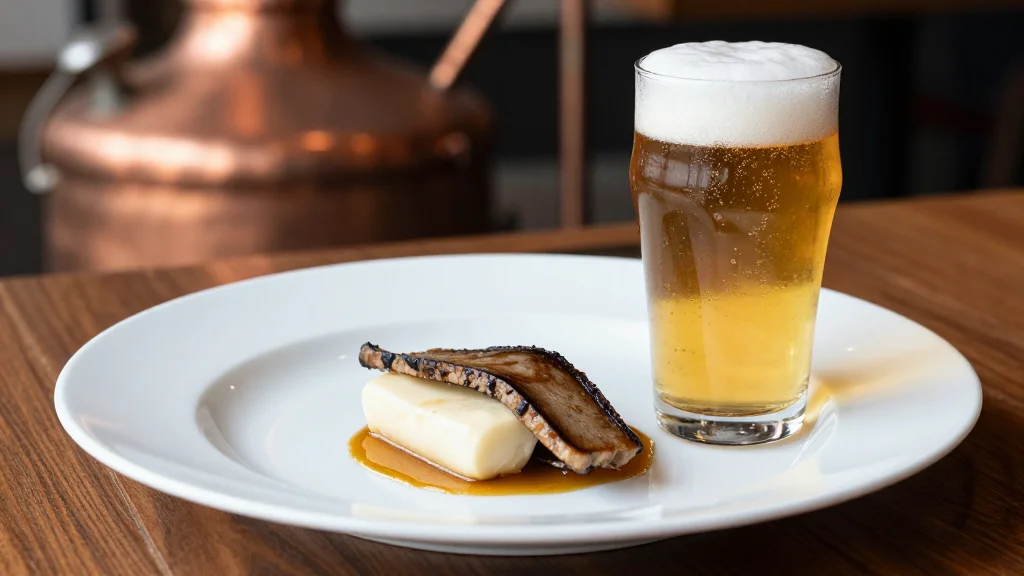
Moody Tongue Becomes World’s Only Michelin‑Starred Brewery

Why It Matters
The Michelin star awarded to Moody Tongue validates craft breweries as viable platforms for fine‑dining innovation, challenging the traditional separation between beer and haute cuisine. It may accelerate a trend where breweries invest in culinary talent and sophisticated menus, reshaping consumer expectations for both sectors. Additionally, the accolade puts Chicago’s already vibrant beer scene on a global stage, potentially attracting culinary tourists and boosting local economic activity. For the fine‑dining world, the recognition demonstrates that the Michelin guide is expanding its definition of excellence to include hybrid concepts, encouraging chefs to experiment with on‑site brewing and unique beverage pairings. This could lead to a more diverse portfolio of Michelin‑starred venues, blurring the lines between restaurant and producer.
Key Takeaways
- •Moody Tongue receives a Michelin star, the first brewery worldwide to do so.
- •The Dining Room seats 28 guests and offers a seasonal, multi‑course tasting menu.
- •Founder Jared Rouben blends his experience at Per Se and Goose Island to create the concept.
- •Customer feedback praises the food; beer reviews are mixed, with an 81/100 BeerAdvocate score for the Pilsner.
- •The award may spark a wave of brew‑and‑dine concepts and influence future Michelin evaluations.
Pulse Analysis
Moody Tongue’s Michelin star is less a triumph of its beer than a testament to its culinary ambition. Historically, breweries have been viewed as casual, community‑oriented spaces, while Michelin has reserved its stars for restaurants that excel in service, technique, and consistency. By awarding a star to a brewery‑run restaurant, the guide signals that the quality of the dining experience can outweigh the traditional venue type. This could lower barriers for other breweries that have the capital and talent to hire top chefs, potentially democratizing fine dining in markets that lack a dense restaurant ecosystem.
From a market perspective, the accolade offers Moody Tongue a powerful branding tool. In an industry where differentiation is increasingly difficult, a Michelin star provides a clear, globally recognized signal of quality. The brewery can leverage this to command premium pricing on both its food and its beers, attract media attention, and secure higher foot traffic from culinary tourists. However, the mixed reviews of its core beer lineup suggest a risk: the brand must ensure that its brewing standards evolve alongside its culinary reputation, or it may be perceived as a novelty rather than a lasting culinary institution.
Looking ahead, the broader implications could reshape how the Michelin guide evaluates non‑traditional venues. If more breweries adopt fine‑dining models and meet the guide’s rigorous standards, we may see a diversification of star recipients that includes coffee roasters, distilleries, and even food‑tech labs. For now, Moody Tongue stands at the intersection of two cultures, and its success will likely influence both the craft beer renaissance and the evolution of fine‑dining criteria.
Moody Tongue Becomes World’s Only Michelin‑Starred Brewery
Comments
Want to join the conversation?
Loading comments...