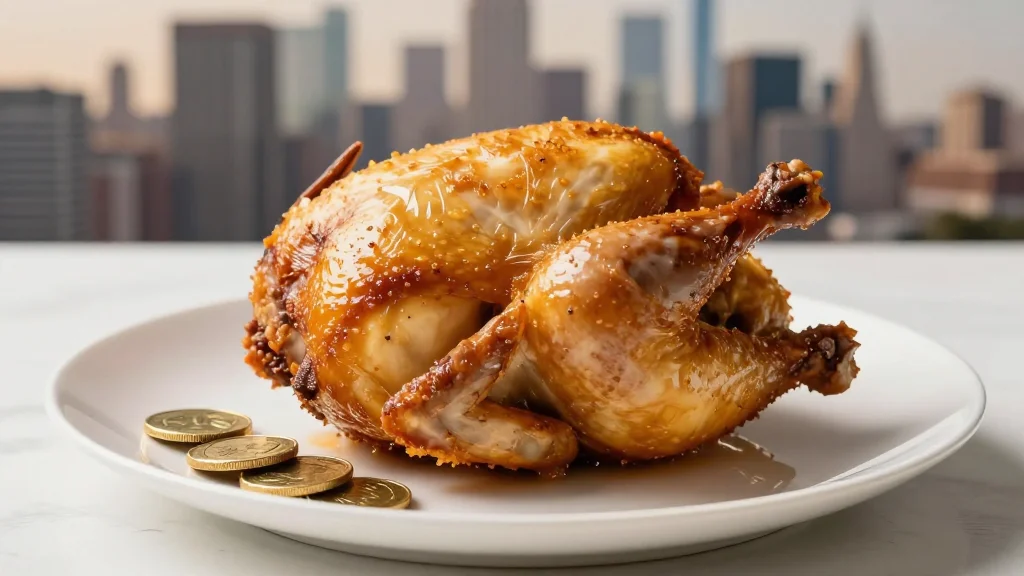
NYC’s Gigi’s $40 Half‑Chicken Stirs Debate Over Dining Costs

Companies Mentioned
Why It Matters
The Gigi’s pricing controversy spotlights a pivotal moment for the restaurant industry, where rising operational costs clash with a consumer base increasingly sensitive to price. If high‑priced menu items become the norm, casual diners may retreat to home cooking or lower‑cost alternatives, reshaping revenue models for mid‑range establishments. Conversely, restaurants that successfully communicate the value behind premium pricing could carve out a niche among affluent diners willing to pay for quality, potentially widening the divide between upscale and accessible dining. Beyond individual eateries, the debate feeds into broader policy discussions about urban cost of living, wage stagnation, and the sustainability of service‑sector employment. Policymakers and industry groups may look to such flashpoints when crafting support measures, from tax incentives for small businesses to initiatives that curb food‑price volatility.
Key Takeaways
- •Gigi’s charges $40 for a half rotisserie chicken, sparking public debate.
- •Chef Hugo Hivernat cites 25% ingredient cost and high overhead as justification.
- •New York’s cost‑of‑living crisis intensifies scrutiny of restaurant pricing.
- •Analysts warn high price points could erode repeat‑diner traffic and margins.
- •The incident may become a benchmark for future pricing strategies in upscale dining.
Pulse Analysis
The $40 half‑chicken at Gigi’s is less a pricing anomaly than a symptom of structural strain in the hospitality sector. Over the past decade, New York’s restaurant margins have been squeezed by a trifecta of rising real estate costs, labor shortages, and volatile food commodity prices. Historically, chefs have absorbed these pressures through menu engineering—offering smaller portions, reducing waste, or sourcing lower‑cost ingredients. Hivernat’s decision to maintain a premium price point signals a shift toward a cost‑pass‑through model, one that could redefine consumer expectations if other high‑visibility venues follow suit.
From a competitive standpoint, the episode pits two market philosophies against each other: value‑driven accessibility versus premium‑experience exclusivity. Restaurants that double down on transparency—breaking down ingredient costs, labor hours, and rent contributions—may cultivate a loyal clientele that appreciates the rationale behind higher prices. Meanwhile, establishments that ignore the narrative risk alienating price‑sensitive diners, potentially accelerating a migration toward fast‑casual concepts that promise consistency at lower price points.
Looking ahead, the industry will likely see a bifurcation. Upscale operators may double down on storytelling and experiential dining to justify premium pricing, while the broader market may gravitate toward hybrid models that blend quality with affordability. The Gigi’s controversy thus serves as an early indicator of how New York’s culinary landscape could evolve under sustained inflationary pressure, with implications that will ripple through citywide dining habits and, ultimately, the economic health of the hospitality sector.
NYC’s Gigi’s $40 Half‑Chicken Stirs Debate Over Dining Costs
Comments
Want to join the conversation?
Loading comments...