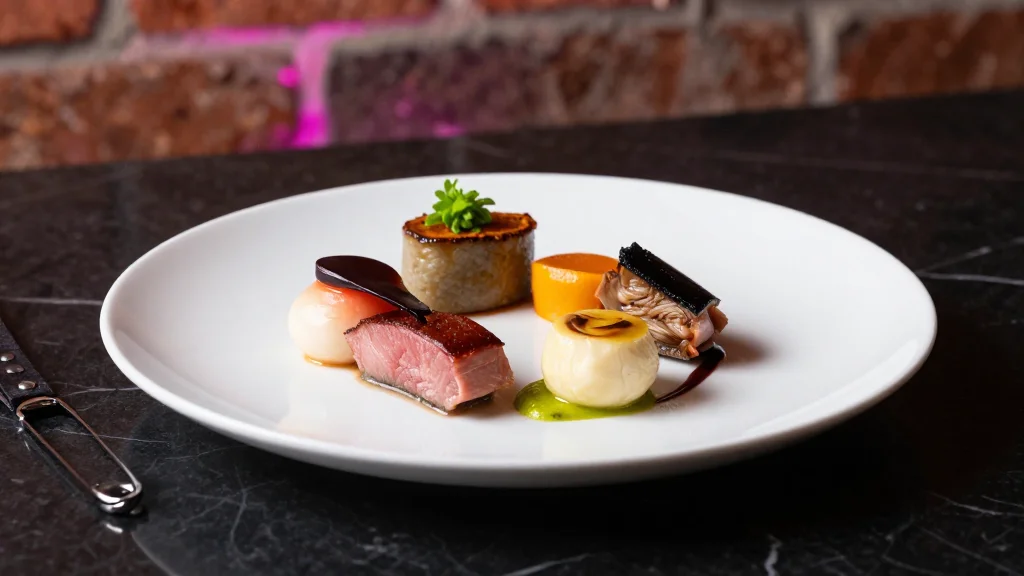
Punk Noir Launches 20‑Course Immersive Tasting Menu in Dallas Design District

Why It Matters
Punk Noir’s debut signals a convergence of fine dining and immersive entertainment, a trend that could reshape how upscale restaurants attract and retain patrons. By marrying a 20‑course, chef‑driven menu with a punk‑themed, multi‑room environment, the venue challenges the conventional hierarchy of service and ambiance, offering a template for future concepts that prioritize experience as much as cuisine. Moreover, the restaurant’s location in Dallas’ Design District highlights the city’s rising status as a destination for innovative hospitality, potentially drawing culinary talent and investment to a market traditionally dominated by more conservative dining formats. The venture also raises questions about scalability. While immersive spaces can command higher ticket prices, they require significant capital outlays for design, technology, and staff training. If Punk Noir can achieve sustainable profitability, it may encourage other restaurateurs to adopt similar models, accelerating a shift toward experiential dining across mid‑size U.S. cities. Conversely, if the novelty fades, the concept could serve as a cautionary tale about the limits of experience‑driven pricing in a competitive market.
Key Takeaways
- •Punk Noir opened June 2 in Dallas’ Design District with a 20‑course tasting menu.
- •Chef RJ Cooper, a James Beard Award winner, leads the kitchen.
- •Owners John, Cole and Clay McKeel describe the concept as a "rebellion against the ordinary."
- •The venue features a multi‑room, graffiti‑styled interior designed by local artist Michael Shellis.
- •The launch reflects a broader trend of immersive, experience‑focused fine dining in secondary markets.
Pulse Analysis
Punk Noir arrives at a moment when the fine‑dining industry is redefining value. Historically, upscale restaurants relied on reputation, chef pedigree, and wine lists to justify premium pricing. Today, the equation includes Instagrammable aesthetics, narrative-driven menus, and cross‑disciplinary collaborations. Punk Noir’s punk‑themed design is more than a gimmick; it creates a differentiated brand identity that can command higher average checks and generate organic media coverage. This aligns with data from the National Restaurant Association showing that 68% of diners under 40 consider atmosphere as important as food quality.
From a financial perspective, the multi‑room layout can improve table turnover without sacrificing the leisurely pace expected of tasting menus. By segmenting the experience—lounge, entry archway, communal dining room—the restaurant can stagger service, reducing bottlenecks in the kitchen and front‑of‑house. However, the model also raises cost pressures: bespoke interiors, high‑skill staff, and a constantly evolving menu demand robust cash flow. The McKeel family’s deep local roots and prior hospitality experience may mitigate some risk, but the venture’s success will hinge on repeat visitation and the ability to keep the experience fresh.
Looking ahead, Punk Noir could catalyze a wave of similar concepts in the Sun Belt, where real estate costs are lower than in coastal metros but consumer appetite for novel experiences is rising. If the restaurant sustains demand beyond the initial hype, it may inspire investors to fund more immersive concepts, potentially reshaping the competitive dynamics of the U.S. fine‑dining sector. Conversely, a rapid decline would reinforce the notion that experience alone cannot replace culinary excellence and operational efficiency.
Punk Noir Launches 20‑Course Immersive Tasting Menu in Dallas Design District
Comments
Want to join the conversation?
Loading comments...