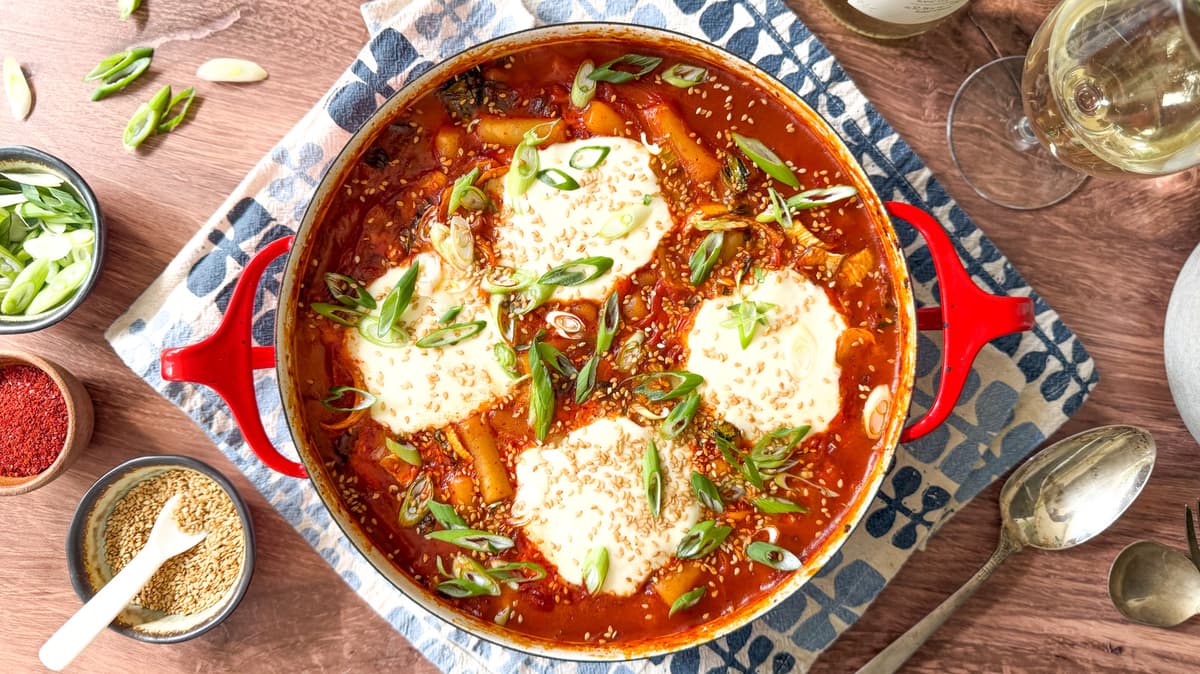
Why It Matters
The recipe exemplifies the rising fusion of Korean street food with upscale Western ingredients, signaling new growth avenues for grocery retailers and restaurants targeting adventurous American diners. It underscores Korean cuisine’s shift from niche to mainstream, driving demand for specialty items like tteok and burrata.
Key Takeaways
- •Korean tteokbokki gaining mainstream US popularity
- •Fusion of gochujang sauce with creamy burrata creates novel flavor
- •Recipe requires 1‑hour prep, suitable for home cooks
- •High calorie count (≈1,000) suits indulgent dining
- •Versatile base allows protein or vegetable additions
Pulse Analysis
Korean cuisine has moved from ethnic enclave menus to a national staple, with tteokbokki emerging as one of the most recognizable dishes. Market research shows a double‑digit annual increase in Korean food sales across major U.S. supermarkets, driven by younger consumers seeking bold, umami‑rich flavors. The availability of shelf‑stable rice cakes and ready‑to‑use gochujang pastes has lowered the barrier for home cooks, turning a traditional street snack into a convenient pantry item.
The spicy baked tteokbokki with burrata illustrates the current wave of culinary cross‑pollination. By marrying the fermented heat of gochujang and gochugaru with the buttery richness of Italian burrata, the dish delivers a multi‑dimensional taste profile that appeals to both comfort‑food seekers and gourmet enthusiasts. Restaurants are capitalising on this trend, featuring similar mash‑ups on menus to attract diners eager for novel experiences without sacrificing familiarity. The recipe’s flexibility—allowing tofu, shrimp, or extra vegetables—further broadens its appeal across dietary preferences.
For the food‑service and retail sectors, the recipe signals actionable opportunities. Grocery chains can expand dedicated Korean aisles, stock premium burrata, and bundle meal‑kit versions that include pre‑soaked tteok and measured sauce packets. Meanwhile, chefs can experiment with upscale presentations, using the dish as a centerpiece for tasting menus or pop‑up events. While the caloric density is high, the protein content and customizable ingredients enable positioning as an indulgent yet balanced option, aligning with consumer trends toward flavorful, experience‑driven meals.
Spicy Baked Tteokbokki With Burrata Recipe
Comments
Want to join the conversation?
Loading comments...