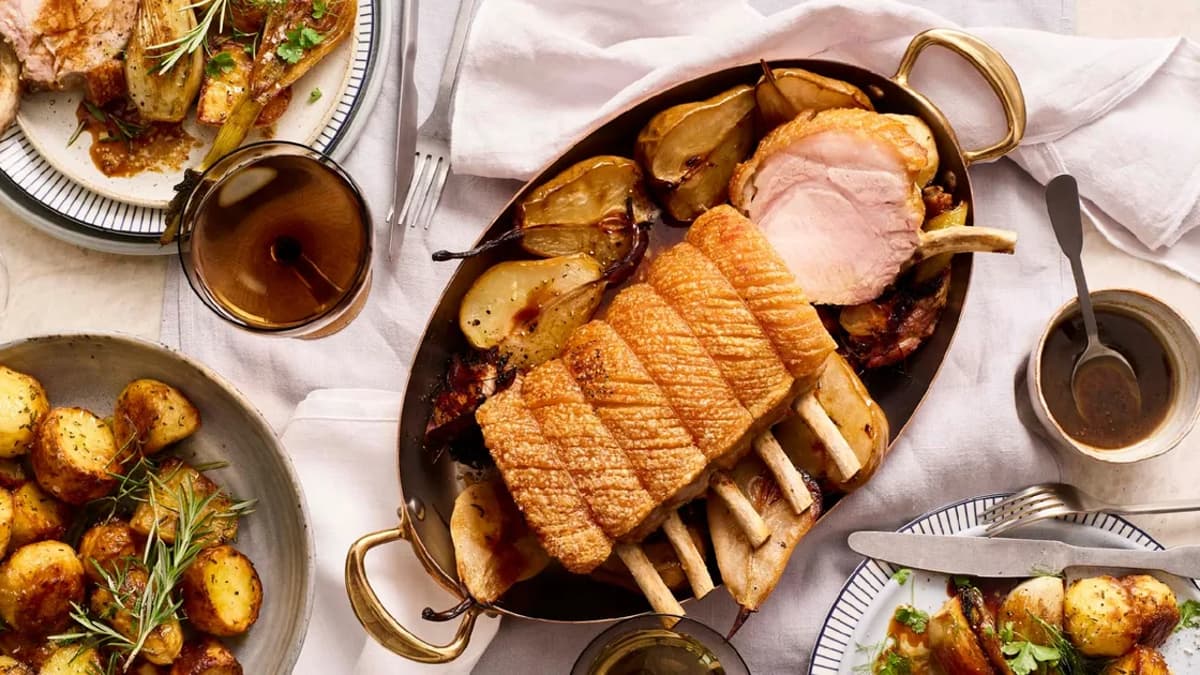
Stephanie Alexander’s Roast Rack of Pork with Pears
Why It Matters
Mastering the crackling technique elevates home cooking to restaurant quality, meeting the surge in demand for gourmet, experience‑driven meals. The recipe also spotlights premium pork cuts, reinforcing market growth for high‑end protein products.
Key Takeaways
- •Score pork skin at 5 mm intervals for perfect crackling
- •Use a fan‑forced oven to blister skin early
- •Prepare the rack a day ahead for deeper flavor
- •Add pears in final 30 minutes for sweet contrast
- •Save rendered fat for sautéing vegetables or bubble‑and‑squeak
Pulse Analysis
The appetite for restaurant‑level dishes at home has exploded, driven by streaming cooking shows and a desire for memorable meals without leaving the kitchen. A perfectly crackled pork rack, as demonstrated by Stephanie Alexander, satisfies this trend by offering a dramatic centerpiece that looks and tastes like a chef’s special. The key lies in technique—scoring the skin at precise 5 mm intervals, using a fan‑forced oven to blister the surface, and allowing the fat to render and baste the meat. These steps transform a simple cut into a textural masterpiece, appealing to both novice cooks and seasoned foodies.
Beyond the crackling, the recipe integrates complementary flavors that enhance the overall experience. Adding pears during the last half hour introduces a natural sweetness that balances the pork’s richness, while a reduction of veal stock and dry white wine creates a silky sauce perfect for drizzling. Retaining the chine bone not only stabilizes the rack during roasting but also contributes gelatinous depth to the pan juices, which can be repurposed for sautéed vegetables or a classic bubble‑and‑squeak. Such attention to detail reflects a broader movement toward holistic cooking, where every component—from bone to garnish—adds value.
From a business perspective, the spotlight on premium pork cuts aligns with a growing market for high‑quality protein, especially among affluent consumers willing to pay a premium for traceable, responsibly sourced meat. Publications like Gourmet Traveller influence purchasing decisions, driving demand for specialty butchers and upscale kitchen tools. Moreover, chefs who share detailed, technique‑focused recipes can monetize through digital platforms, cooking classes, and branded merchandise, turning culinary expertise into a scalable revenue stream. As home chefs seek to replicate restaurant standards, recipes like Alexander’s roast rack become both a culinary benchmark and a commercial catalyst.
Stephanie Alexander’s roast rack of pork with pears
Comments
Want to join the conversation?
Loading comments...