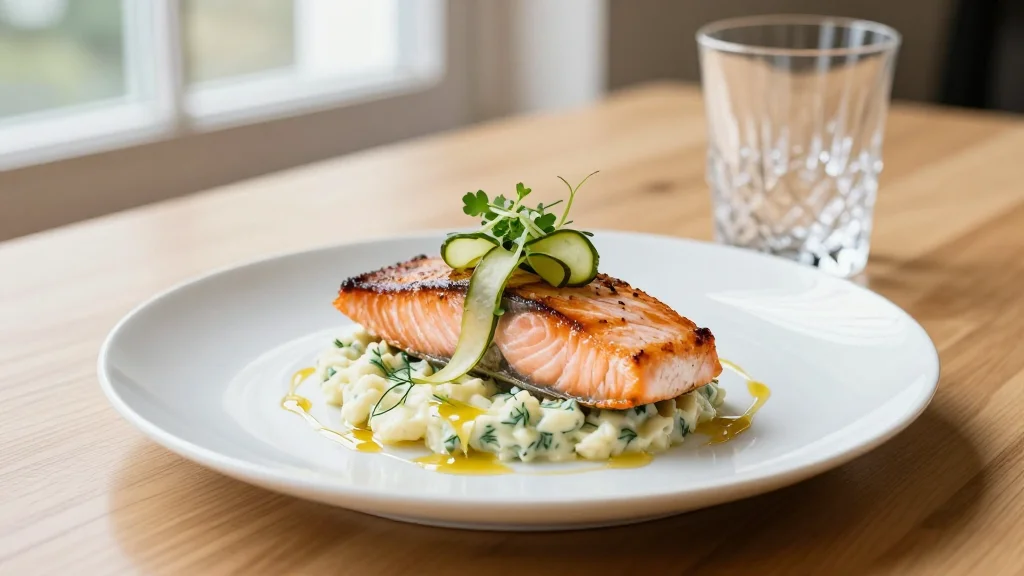
Swedish Chef Marcus Jernmark Launches Nordic Fine‑Dining Spot Lielle in Los Angeles

Why It Matters
Lielle introduces a Nordic culinary language to a market traditionally dominated by Californian and Asian influences, expanding the palate of Los Angeles diners. Its emphasis on local sourcing demonstrates how global techniques can be adapted to regional ecosystems, potentially encouraging other restaurateurs to forge similar farm‑to‑table partnerships. Moreover, the shift toward a relaxed service model challenges the perception that fine dining must be formal, aligning with broader consumer trends that value experience over ceremony. If Lielle succeeds, it could accelerate a broader re‑evaluation of price structures and ambience in the city’s upscale sector, prompting legacy establishments to adopt more inclusive, community‑focused approaches. The restaurant also serves as a case study for chefs relocating from European fine‑dining capitals to U.S. markets, illustrating how international expertise can be leveraged to create hybrid concepts that resonate locally.
Key Takeaways
- •Chef Marcus Jernmark, former head chef at Aquavit, Per Se and Frantzén, opens Lielle in Los Angeles
- •Lielle occupies the former Manzke/Bicyclette space on Pico Robertson
- •Menu blends Nordic techniques with California ingredients from partners like Motley Crew Ranch and Monterey Abalone
- •Concept emphasizes relaxed, guest‑centric service inspired by Parisian bistronomy
- •Opening slated for later 2024; exact date not disclosed
Pulse Analysis
Lielle arrives at a moment when Los Angeles diners are gravitating toward experiences that feel both exclusive and accessible. The city’s dining scene has seen a wave of chefs who, after earning accolades abroad, return home to reinterpret their training through a local lens. Jernmark’s background—spanning three‑Michelin‑starred kitchens and a stint at Thomas Keller’s Per Se—gives him credibility, but his pivot toward a more informal service model reflects a generational shift. Younger diners, accustomed to high‑quality food in casual settings, are less tolerant of pretension, and Lielle’s “no tablecloth” ethos directly addresses that demand.
From a market perspective, Lielle could catalyze a reallocation of capital toward venues that prioritize flexibility and local sourcing over opulent interiors. Investors have noted that restaurants with strong producer relationships often achieve better margins and resilience against supply chain shocks—a lesson reinforced by the pandemic’s impact on Jernmark’s earlier projects. By anchoring his menu in California’s agricultural ecosystem, Jernmark not only reduces logistical costs but also taps into the growing consumer appetite for sustainability.
Looking ahead, the success of Lielle may inspire other internationally trained chefs to experiment with hybrid concepts that blend their culinary heritage with regional ingredients. If the restaurant garners critical acclaim, it could also elevate the profile of Nordic cuisine in the U.S., prompting a wave of similar ventures beyond the West Coast. The key variables will be how well Lielle balances its high‑skill execution with the laid‑back atmosphere that modern diners expect, and whether the LA market can sustain another high‑profile fine‑dining entrant in an increasingly competitive landscape.
Swedish Chef Marcus Jernmark Launches Nordic Fine‑Dining Spot Lielle in Los Angeles
Comments
Want to join the conversation?
Loading comments...