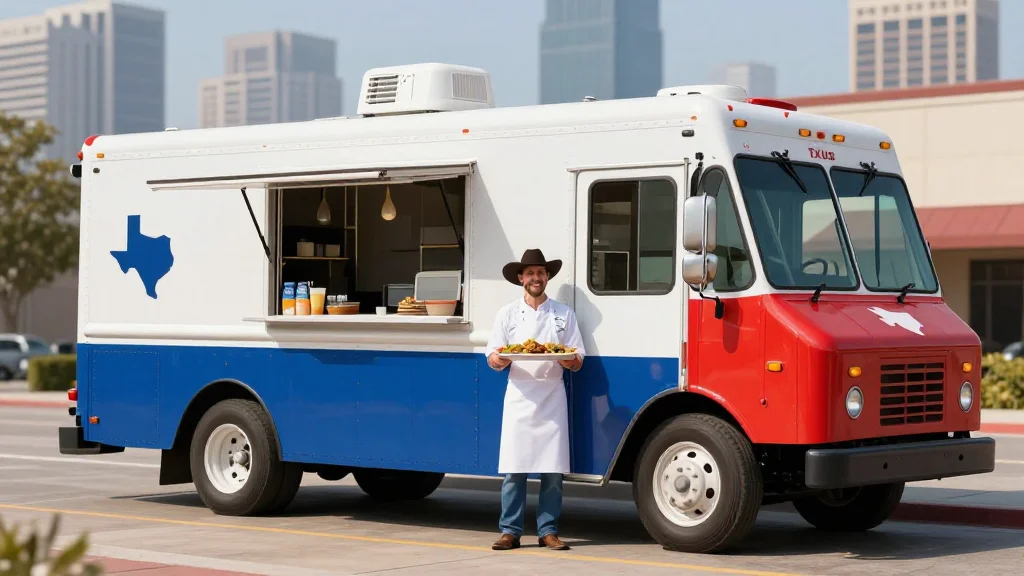
Texas to Launch Statewide Food‑Truck Permit System on July 1

Why It Matters
A unified licensing framework could dramatically lower barriers to entry for food‑truck entrepreneurs, fostering competition and expanding consumer choice across Texas. By reducing redundant inspections and fees, the policy may stimulate job creation and support small‑business recovery in a sector still rebounding from pandemic disruptions. Conversely, the shift raises governance questions about the balance of state versus local authority. Cities fear diminished control over public‑space usage and a loss of revenue that funds local health and safety programs. The outcome will set a precedent for how mobile‑food regulation can be harmonized across large, decentralized states.
Key Takeaways
- •Statewide food‑truck permit system launches July 1 under House Bill 2844.
- •DSHS will issue three tiered licenses, covering an estimated 19,000 trucks.
- •Initial application fees will range from $300 to $1,350; annual renewals $300‑$850.
- •Cities like Dallas and Amarillo oppose the plan, citing lost revenue and oversight.
- •A public database will list inspection results, complaints, and compliance status.
Pulse Analysis
The Texas statewide permit represents a rare instance of regulatory harmonization in a market traditionally fragmented by municipal authority. Historically, food‑truck operators have navigated a maze of local ordinances, often paying multiple fees for the same health inspection. By centralizing licensing, the state is effectively lowering the marginal cost of geographic expansion, which could trigger a wave of cross‑city itinerancy similar to the interstate trucking model. This could increase market saturation in high‑demand urban corridors, driving both price competition and innovation in menu offerings.
However, the policy also exposes a tension between efficiency and local autonomy. Municipalities have used permit fees not only as a revenue source but also as a lever to manage traffic congestion, noise, and public‑health concerns. The loss of that lever may compel cities to seek alternative regulatory tools, such as zoning restrictions or time‑of‑day limits, potentially re‑creating barriers in a different form. The success of the statewide system will hinge on DSHS’s ability to enforce consistent standards while providing cities with a meaningful role in site‑specific approvals.
Looking ahead, the public database could become a powerful consumer‑information tool, encouraging transparency and potentially rewarding high‑performing trucks with higher foot traffic. If the system proves financially viable for operators and politically acceptable to local governments, other states with large mobile‑food sectors—California, Florida, and New York—may look to Texas as a blueprint, ushering in a new era of standardized mobile‑food regulation nationwide.
Texas to Launch Statewide Food‑Truck Permit System on July 1
Comments
Want to join the conversation?
Loading comments...