Why It Matters
Consistent bacon quality boosts breakfast service efficiency for both home cooks and restaurants, while preventing waste from overcooked strips. Mastering these simple steps also enhances flavor consistency across menus.
Key Takeaways
- •Keep bacon in pan, avoid multitasking
- •Cook on medium heat, start before heating
- •Use cast iron or nonstick skillet
- •Press thicker slices to stay flat
- •Rest bacon after cooking for optimal crisp
Pulse Analysis
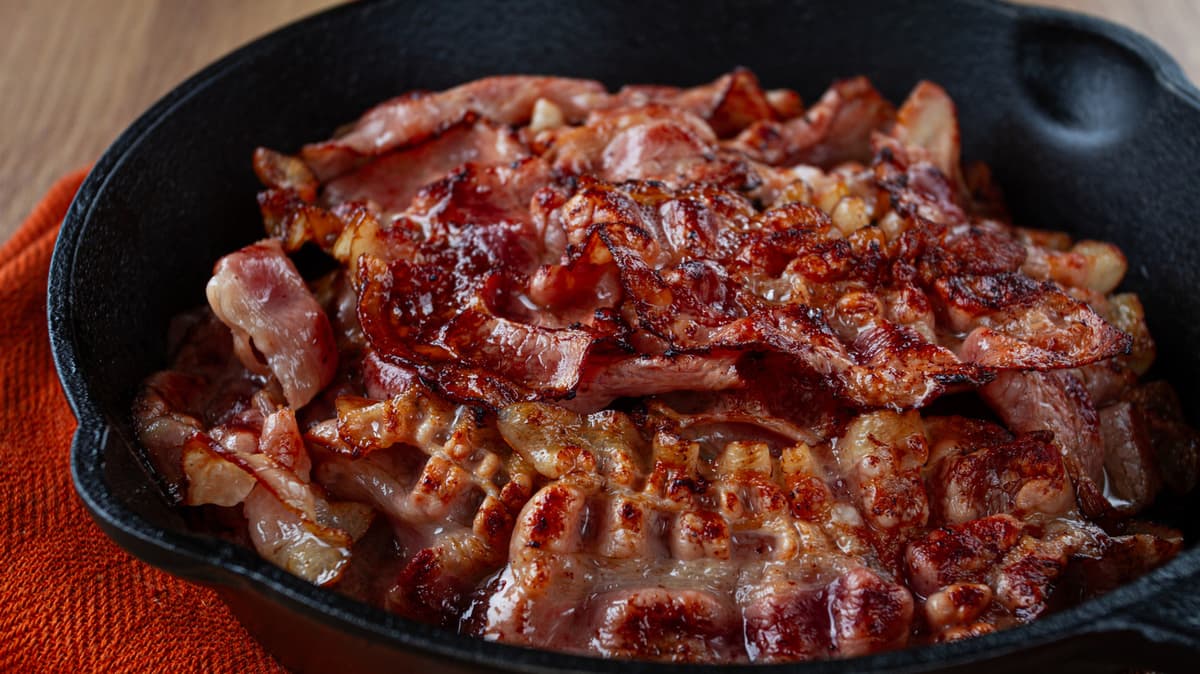
Bacon remains a staple of breakfast tables worldwide, yet achieving that perfect Goldilocks crunch on the stovetop can be elusive. Shane Schaibly, senior vice president of culinary strategy at First Watch, breaks down the process into three disciplined steps that eliminate guesswork. By loading the strips into a cold skillet and bringing the heat to a steady medium, the fat renders evenly, preventing the sudden temperature spikes that cause uneven browning. This controlled approach not only delivers consistent texture but also preserves the bacon’s natural flavor profile, a win for any kitchen.
The choice of cookware is equally critical. Cast‑iron pans provide superior heat retention, allowing the bacon’s fat to melt uniformly, while a high‑quality nonstick surface reduces sticking and cleanup time. Schaibly also recommends a light press on thicker‑cut slices, either with a bacon press or a simple spatula, to keep the strips flat and encourage even crisping. Although the popular water‑hack can limit curling, it adds moisture that may soften the final bite. By focusing on medium heat and proper pan selection, cooks avoid the over‑cooking trap that plagues many home kitchens.
Mastering stovetop bacon translates into measurable benefits for both casual diners and professional establishments. Consistent crispness reduces waste, shortens prep cycles, and elevates the overall breakfast experience—key drivers in today’s fast‑paced foodservice environment. Moreover, the technique aligns with the growing consumer demand for simple, high‑quality comfort foods prepared with transparency. As more chefs adopt Schaibly’s method, the humble bacon strip becomes a benchmark for kitchen efficiency and culinary credibility.
The Expert-Approved Tip For Better Stovetop Bacon
0
Comments
Want to join the conversation?
Loading comments...