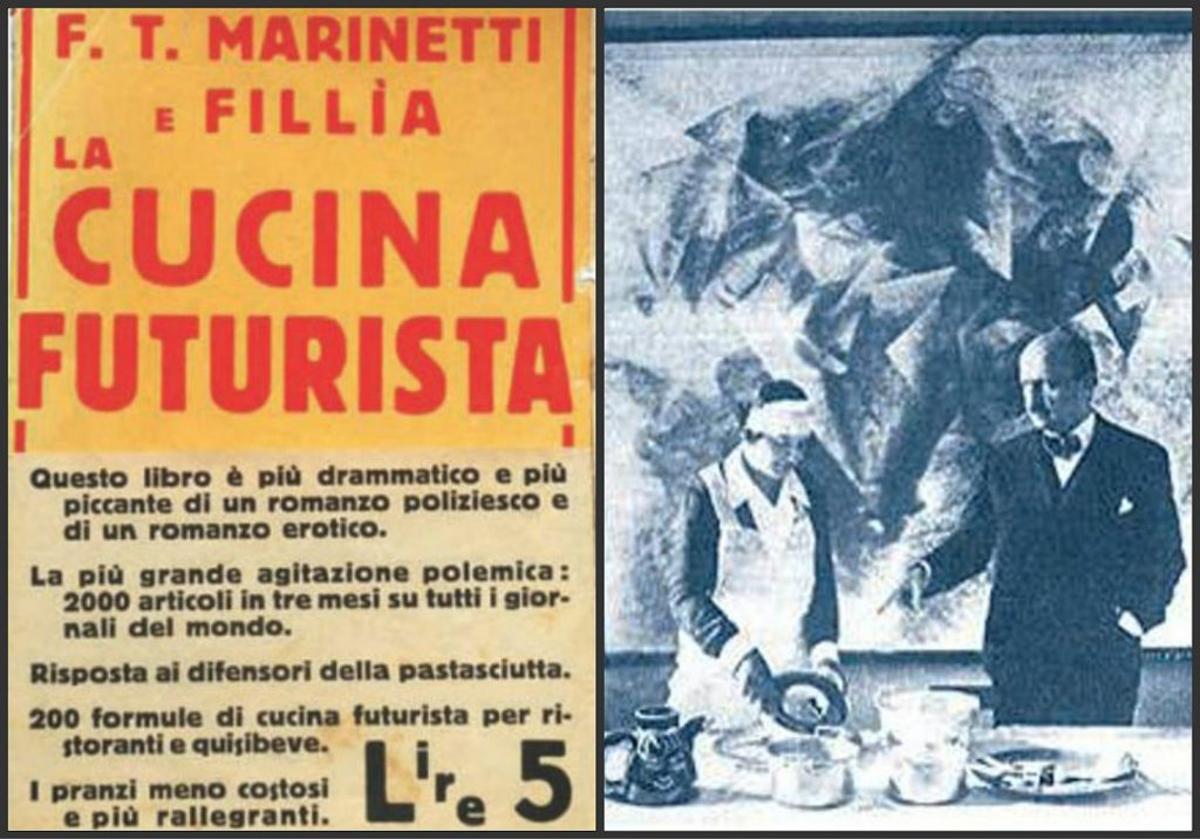
The Futurist Cookbook (1930) Tried to Turn Italian Cuisine Into Modern Art
•March 10, 2026
0
Why It Matters
By treating cuisine as a vehicle for ideological and technological change, the Futurist Cookbook foreshadowed modern branding strategies that fuse gastronomy with experience design, influencing contemporary culinary innovation. Understanding its blend of art, politics, and science helps businesses see how narrative can reshape consumer perception of food.
Key Takeaways
- •Marinetti’s 1930 cookbook fused art, politics, cuisine.
- •Proposed abolishing knives, using scientific kitchen tools.
- •Preceded modern molecular gastronomy and Nouvelle Cuisine trends.
- •Featured avant‑garde “aerobanquets” with airplane‑shaped tables.
- •Now seen as serious manifesto and artistic prank.
Pulse Analysis
The Futurist Cookbook emerged from the broader Futurist movement that glorified speed, technology, and radical break with the past. Marinetti’s manifesto framed food not merely as sustenance but as a tool for reshaping the Italian psyche, urging the elimination of traditional utensils and the adoption of laboratory‑grade equipment such as ozone generators and centrifuges. This aggressive re‑imagining of dining mirrored the era’s fascist enthusiasm for state‑directed cultural overhaul, positioning the kitchen as a laboratory for social engineering.
Beyond its political overtones, the book introduced concepts that predate today’s molecular gastronomy. Recipes called for edible plastics, precise flavor layering, and multisensory elements like perfume‑infused courses, anticipating chefs such as Ferran Adrià and Heston Blumenthal who later turned scientific techniques into culinary art. By championing originality, rapid service, and the fusion of visual, auditory, and olfactory cues, Marinetti set a template for Nouvelle Cuisine’s emphasis on lightness, creativity, and presentation, making the Futurist Cookbook a historical bridge between early 20th‑century avant‑garde and late‑century culinary innovation.
For contemporary businesses, the Futurist Cookbook illustrates the power of narrative‑driven product design. Its blend of performance art, technology, and ideological messaging created an immersive brand experience that resonated far beyond the plate. Modern hospitality firms can draw lessons from Marinetti’s approach—leveraging storytelling, sensory engineering, and disruptive aesthetics to differentiate offerings in a crowded market. As consumers increasingly seek experiential dining, the cookbook’s legacy underscores how bold, interdisciplinary concepts can transform ordinary meals into memorable brand touchpoints.
The Futurist Cookbook (1930) Tried to Turn Italian Cuisine into Modern Art
0
Comments
Want to join the conversation?
Loading comments...