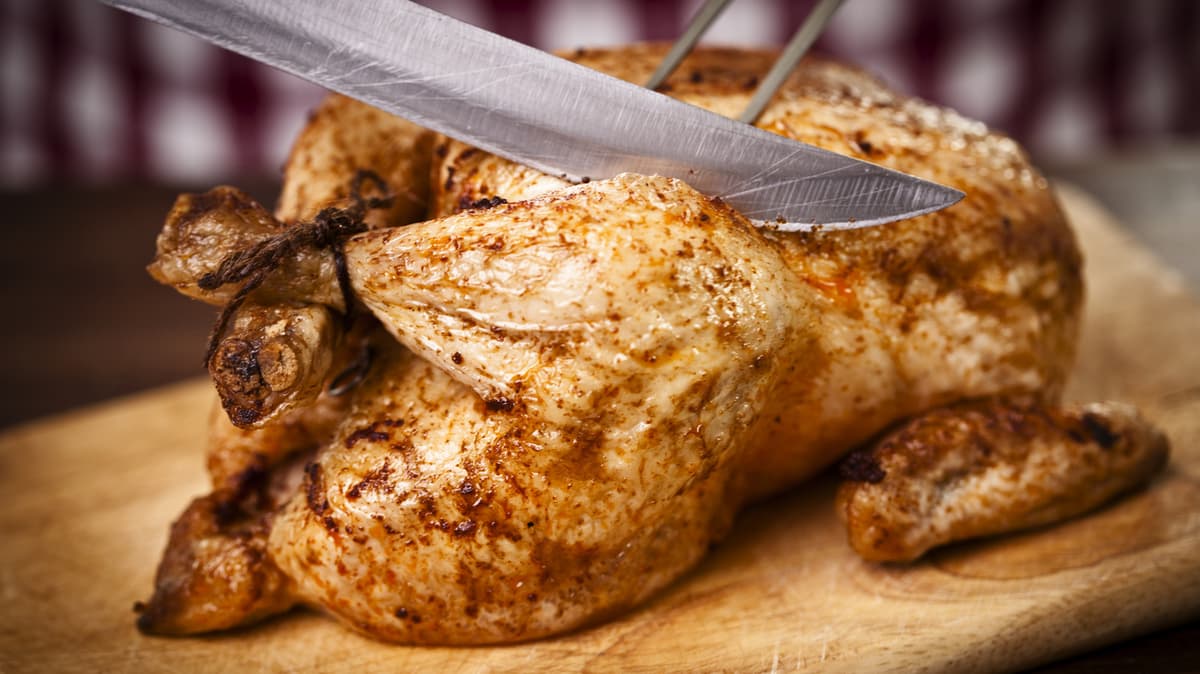
The Reason Rotisserie Chicken Can Look Pink (Even When It's Not Undercooked)
Why It Matters
The pink hue can spark unnecessary food‑safety fears, causing shoppers to discard safe meat. Knowing the science restores confidence and promotes proper temperature‑based cooking practices.
Key Takeaways
- •Young rotisserie birds have porous bones, letting hemoglobin tint meat pink
- •Gas‑fired rotisseries release CO/NO, forming pink pigments like smoked meats
- •Brine salts raise pH, stabilizing myoglobin and preserving pink hue
- •Color is unreliable; internal temperature of 165 °F (74 °C) ensures safety
- •Texture cues help, but only a thermometer confirms doneness
Pulse Analysis
Rotisserie chicken remains a staple of American grocery aisles, yet the occasional pink blush can alarm even seasoned shoppers. While popular media often equates pink meat with undercooking, the U.S. Department of Agriculture’s Food Safety and Inspection Service explicitly notes that safely cooked poultry may display a spectrum from white to pink. This regulatory nuance is critical for retailers, who must balance visual appeal with consumer education, ensuring that the presence of pink does not translate into lost sales or unwarranted health concerns.
The chemistry behind the pink coloration is rooted in three primary pigments: undenatured myoglobin, nitrosyl hemochrome, and reduced globin hemochromes. Young birds, typically 6–9 weeks old, possess thinner skin and more porous bones, allowing hemoglobin from marrow to seep into surrounding tissue during cooking. Gas‑fired rotisseries emit carbon monoxide and nitrogen oxides that bind with myoglobin, creating the same pink compounds found in smoked meats. Additionally, brine injections—rich in salts, phosphates, and trace nitrates—raise the meat’s pH, stabilizing these pigments and prolonging their visibility even at safe internal temperatures.
For consumers, the practical takeaway is clear: color alone cannot guarantee safety. While texture—firmness, opacity, and the absence of a glossy surface—offers useful clues, only a calibrated food thermometer can confirm the USDA‑recommended 165 °F (74 °C) threshold. Home cooks should prioritize temperature checks over visual inspection, especially when reheating pre‑cooked rotisserie chickens that may have cooled below safe levels. By understanding the underlying science, shoppers can dispel myths, reduce waste, and enjoy rotisserie chicken with confidence.
The Reason Rotisserie Chicken Can Look Pink (Even When It's Not Undercooked)
Comments
Want to join the conversation?
Loading comments...