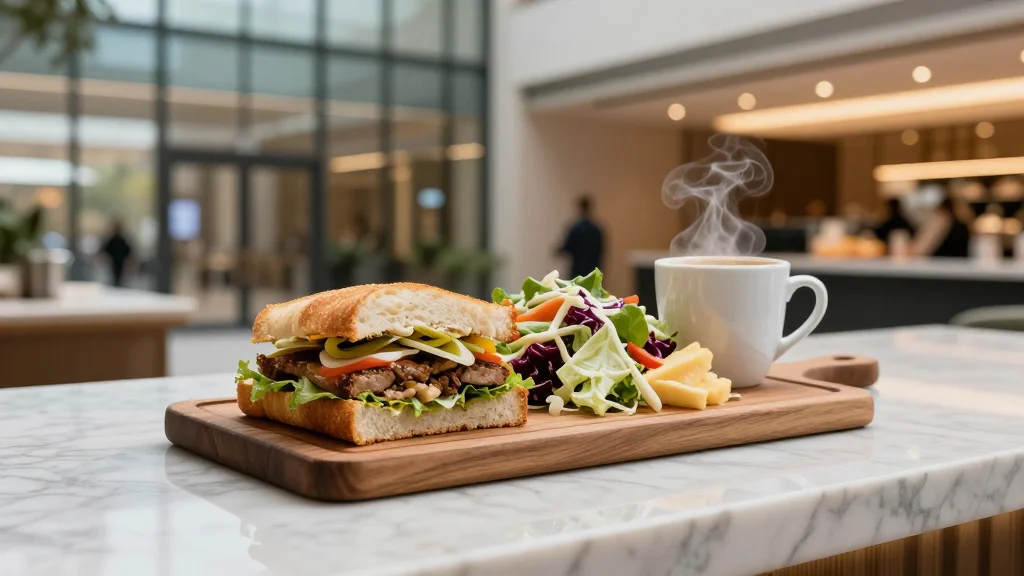
Time Out Market Launches 14th Global Venue in Vancouver’s Oakridge Park

Why It Matters
The opening of Time Out Market in Oakridge Park illustrates how food‑centric experiences are becoming central to urban development strategies, blending retail, residential and hospitality functions. By aggregating high‑profile chefs and affordable, quality meals, the market aims to attract a broad demographic, from families to tourists, potentially reshaping consumer expectations for mall dining. Its success could encourage other developers to prioritize curated food halls as anchors, influencing the future layout of Canadian mixed‑use projects. Additionally, the venue provides a platform for local culinary talent to reach a larger audience without the overhead of a standalone restaurant, fostering a more inclusive food ecosystem. If the model proves profitable, it may spur similar partnerships in other Canadian cities, accelerating the shift toward experience‑driven retail environments.
Key Takeaways
- •Time Out Market opened its 14th location worldwide in Vancouver’s Oakridge Park.
- •The food hall features 20 take‑away concepts, three bars and seating for over 1,000 guests.
- •Menu pricing ranges from $15 to $30, targeting affordability alongside quality.
- •Local chefs Rob Feenie and Vikram Vij are among the featured culinary talent.
- •The launch is part of a broader mixed‑use development strategy to boost mall dwell time.
Pulse Analysis
Time Out Market’s entry into Vancouver reflects a broader pivot in retail real estate toward experience‑first concepts. Traditional malls have struggled with declining foot traffic as e‑commerce captures a larger share of consumer spend. By integrating a high‑visibility food hall that doubles as a cultural showcase, developers can create a destination that compels visitors to stay longer, thereby increasing ancillary sales for surrounding retailers. This model leverages the growing consumer appetite for curated, Instagram‑ready dining experiences that also deliver value.
Historically, food halls have succeeded when they balance brand recognition with local authenticity. Time Out’s strategy of pairing celebrated chefs like Rob Feenie with emerging vendors such as Beaucoup Bakery mirrors the approach that propelled its Lisbon flagship to global fame. In Vancouver, the market’s emphasis on storytelling and approachable pricing may help it avoid the exclusivity trap that has limited some upscale food halls. If the Oakridge Park location sustains high traffic and generates strong ancillary retail sales, it could set a template for future Canadian developments, encouraging more mixed‑use projects to embed similar culinary anchors.
However, the model is not without risk. Concentrating a large number of popular vendors in a single space could intensify competition for local independent restaurants outside the mall, potentially reshaping the city’s broader food landscape. Success will depend on the market’s ability to continuously refresh its vendor mix and integrate community events that keep the offering dynamic. As developers watch the performance metrics—average dwell time, spend per visitor, and repeat visitation—Time Out Market’s Vancouver launch will serve as a litmus test for the scalability of experiential food halls across Canada’s urban centers.
Time Out Market launches 14th global venue in Vancouver’s Oakridge Park
Comments
Want to join the conversation?
Loading comments...