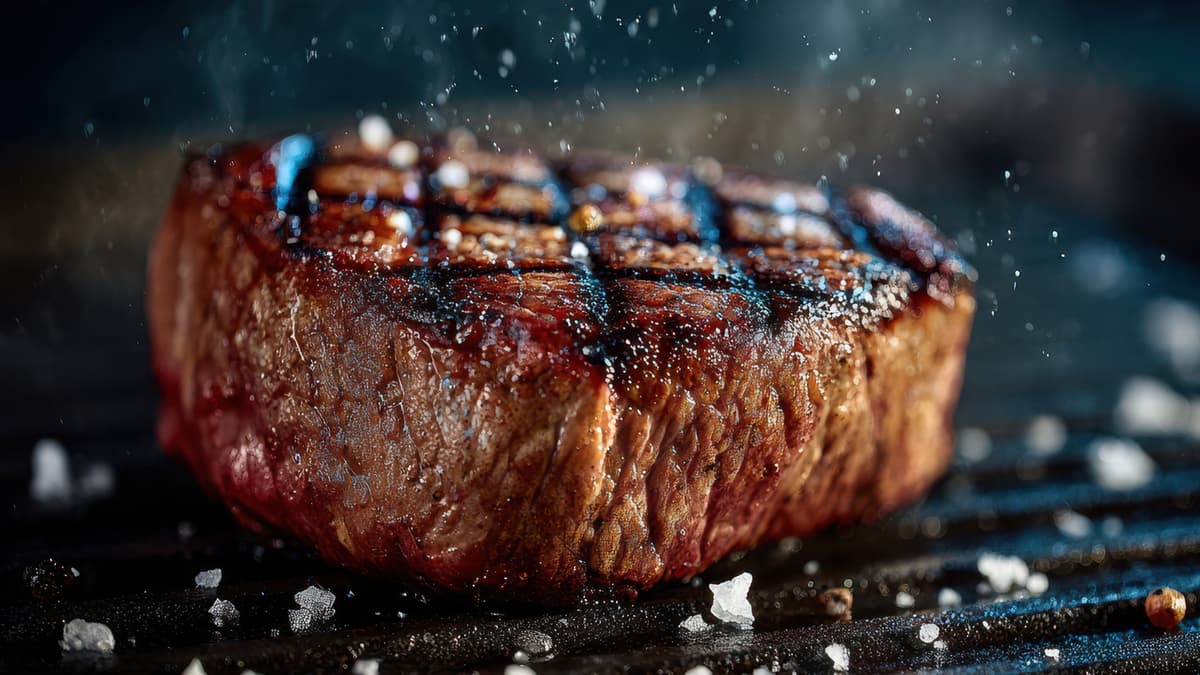
When You Should Really Be Seasoning Your Steaks For A Flavor-Packed Crust, According To Omaha Steaks
Why It Matters
Proper timing of seasoning transforms a basic grill into a tool for professional‑grade flavor, boosting home‑cooking confidence and driving demand for premium steak products.
Key Takeaways
- •Season steak at least 30 minutes before grilling
- •Dry‑brine lets salt and moisture reabsorb
- •Longer dry‑brine (1‑2 days) intensifies crust
- •Room‑temperature rest ensures even cooking
Pulse Analysis
Dry‑brining leverages osmosis: salt pulls surface moisture out, then the salty liquid migrates back into the muscle fibers. This process not only seasons the meat internally but also creates a drier exterior that caramelizes quickly, forming the coveted Maillard‑driven crust. Compared with wet brines, dry‑brining requires no extra water or bag, making it ideal for backyard grills where moisture control is critical. The science behind the technique explains why even a modest 30‑minute window can noticeably improve texture and flavor, while longer periods amplify the effect without risking dryness.
Omaha Steaks’ recommendation of a half‑hour rest aligns with practical home‑cooking constraints. Most grill enthusiasts lack the time or space for multi‑day brines, yet they still desire a restaurant‑level sear. By coupling seasoning with the natural warming period, cooks achieve a balanced internal temperature and a seasoned surface ready for high heat. The flexibility to extend the dry‑brine up to two days offers a scalable approach: casual diners can stick to the minimum, while enthusiasts can experiment with deeper flavor development, reinforcing the brand’s reputation as both a meat purveyor and culinary educator.
The broader market impact is subtle but significant. As more consumers adopt precise seasoning timing, demand rises for high‑quality salts, spice blends, and instructional content. Retailers and specialty brands can capitalize on this trend by offering curated dry‑brine kits and digital guides. Moreover, restaurants that publicize their dry‑brine practices can differentiate their menus, appealing to diners who value transparency and technique. In essence, a simple timing tip ripples through the steak ecosystem, influencing product development, marketing narratives, and the overall expectation of what a perfectly grilled steak should taste like.
When You Should Really Be Seasoning Your Steaks For A Flavor-Packed Crust, According To Omaha Steaks
Comments
Want to join the conversation?
Loading comments...