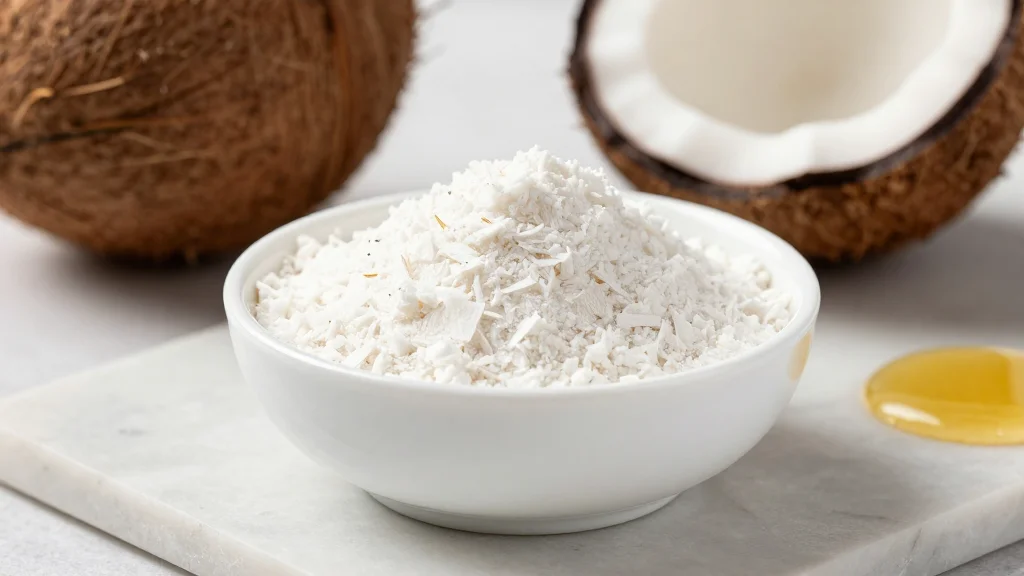
Why Coconut Flour May Be The Very Thing Your Baking Projects Need
Why It Matters
The surge in coconut flour usage expands the gluten‑free market and offers manufacturers a nutrient‑dense ingredient that can differentiate baked‑goods portfolios. Its health‑linked profile meets growing consumer demand for functional foods that support heart and metabolic health.
Key Takeaways
- •Coconut flour provides 10 g fiber per ¼ cup
- •Absorbs more liquid; requires recipe adjustments
- •May lower cholesterol when 15–25 g consumed daily
- •Gluten‑free, adds natural sweetness, reduces added sugar
- •Suitable for weight‑management due to protein and fiber
Pulse Analysis
The rise of coconut flour mirrors a broader shift toward specialty, health‑focused ingredients in the U.S. food sector. As consumers increasingly seek gluten‑free and low‑sugar options, retailers are stocking the powder alongside almond and oat flours, driving supply‑chain diversification. Producers benefit from its status as a by‑product of coconut milk, which keeps raw material costs competitive while appealing to sustainability‑conscious shoppers. This trend is prompting large‑scale bakeries to experiment with hybrid blends that combine coconut flour’s fiber punch with the texture of traditional wheat, creating new product lines that cater to both dietary restrictions and taste expectations.
Beyond its culinary versatility, coconut flour’s nutritional profile is backed by emerging research. The high insoluble fiber content supports gut motility and feeds beneficial microbiota, while the modest protein level contributes to satiety, aiding weight‑management efforts. Clinical data suggest that daily intake of 15–25 g of coconut fiber can reduce LDL cholesterol by roughly 9 % and triglycerides by up to 22 %, positioning the flour as a functional ingredient for heart‑health claims. Its low glycemic impact also helps stabilize blood sugar, making it attractive to consumers monitoring metabolic markers.
For home bakers and commercial kitchens alike, the key to success lies in recipe adaptation. Coconut flour can absorb up to three times its weight in liquid, so substituting even a quarter cup for each cup of all‑purpose flour often requires additional eggs or moisture to prevent dryness. Compared with almond flour, coconut flour offers fewer calories and less fat but more fiber and iron, allowing brands to position products along a spectrum of nutritional benefits. As the market matures, we can expect more pre‑blended mixes and ready‑to‑bake kits that simplify the learning curve, further cementing coconut flour’s role in the next generation of health‑forward baked goods.
Why Coconut Flour May Be The Very Thing Your Baking Projects Need
Comments
Want to join the conversation?
Loading comments...