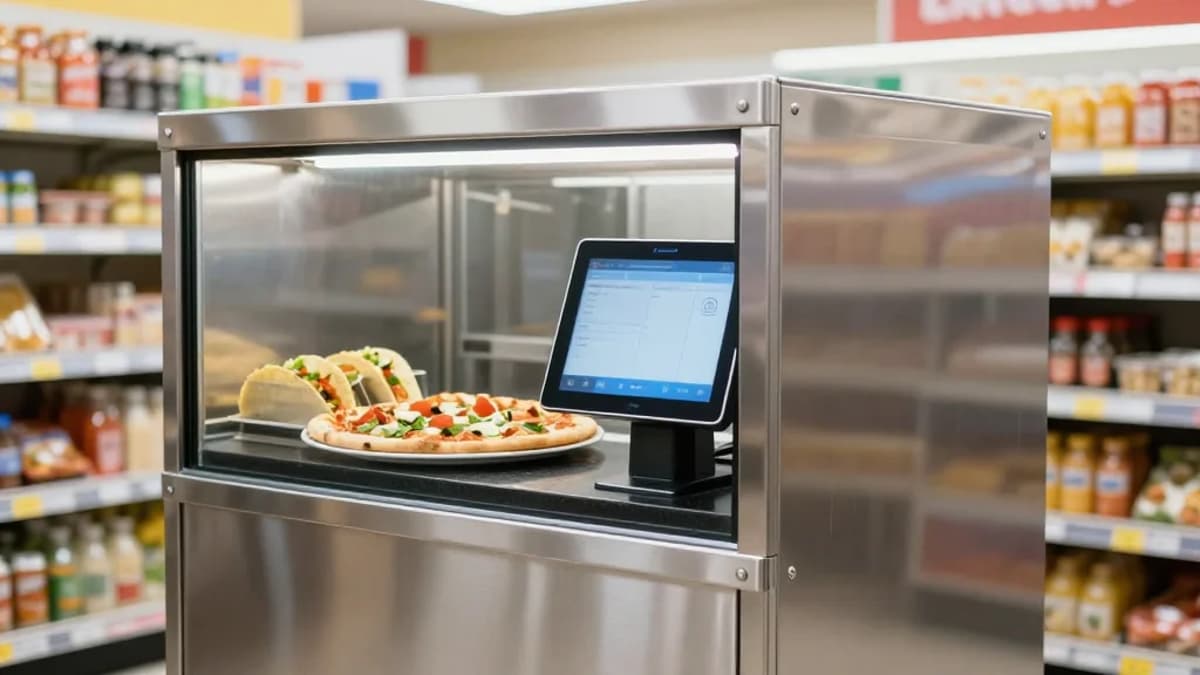
Why the Future of Highway Food Might Look More Like a Food Court
•March 6, 2026
0
Why It Matters
By digitizing and diversifying food offerings, Noahs gives struggling highway retailers a scalable growth engine and meets consumer demand for fresh, convenient meals, reshaping the roadside food economy.
Key Takeaways
- •Noahs equips stores with modular kitchens and digital ordering.
- •Retailers can swap multiple food brands instantly.
- •Many concepts run on existing equipment, no capex.
- •Goal: 600 European locations by 2026, US next year.
- •Fresh meals address declining tobacco and alcohol revenue.
Pulse Analysis
Highway food has long been synonymous with pre‑packaged snacks and stale sandwiches, a relic of limited space and low margins at service stations. Noahs challenges that status quo by installing compact, modular kitchen units that integrate with a cloud‑based ordering platform. This infrastructure enables retailers to prepare fresh meals on demand, turning a traditionally passive convenience stop into an active culinary destination. The model mirrors the subscription‑style flexibility of streaming services, allowing brands to rotate in response to local tastes without disrupting operations.
The business appeal lies in leveraging existing assets—staff, space, and equipment—to tap into the booming digital food economy. Because many concepts, such as a chicken‑based menu, can run on equipment already present in most stations, operators avoid hefty capital expenditures. The software layer handles order routing, inventory management, and brand licensing, effectively outsourcing restaurant expertise to a third‑party broker. This reduces operational complexity for retailers while opening new, higher‑margin revenue streams that compensate for the erosion of tobacco and alcohol sales.
Noahs’ growth trajectory underscores the scalability of its approach. With a target of 600 European sites by 2026, the company is poised to demonstrate the model’s profitability before expanding into the United States within the next twelve months. If successful, the platform could catalyze a broader shift toward on‑site, fresh‑food concepts at highway stops, reshaping consumer expectations and prompting legacy retailers to adopt similar digital‑first strategies. The ripple effect may also spur ancillary services—logistics, data analytics, and brand partnerships—further embedding technology into the roadside food landscape.
Why the Future of Highway Food Might Look More Like a Food Court
0
Comments
Want to join the conversation?
Loading comments...