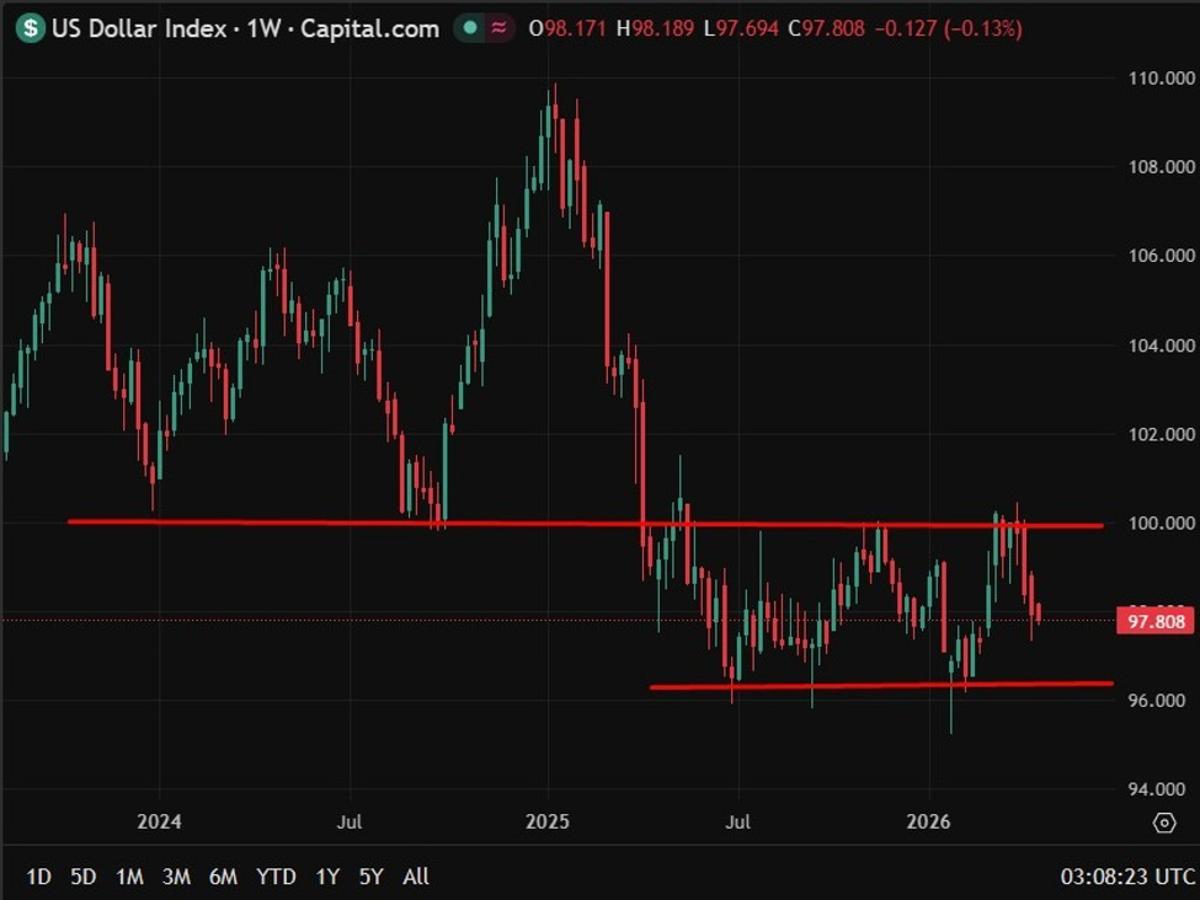
Westpac Sees US Dollar Weakening as Markets Look Through Energy Shock and Tensions
Key Takeaways
- •Westpac projects DXY falling to mid‑90s by late 2026.
- •Euro, pound, yen, and CAD expected to outpace USD gains.
- •RMB remains stable, aided by diversified energy imports and manufacturing.
- •Emerging market currencies set to benefit from global growth rebound.
Pulse Analysis
The latest Westpac note underscores a paradox: even as the Middle East conflict threatens oil supplies and disrupts the Strait of Hormuz, the U.S. dollar has failed to rally. Market participants appear to be pricing in a gradual normalization of shipping lanes, which reduces the risk premium traditionally baked into the greenback. With trade volumes expected to recover and global growth modestly improving, the dollar’s momentum is being eroded by a broader rebalancing of risk across both developed and emerging markets.
Westpac’s forecast for the U.S. Dollar Index (DXY) sliding from the high‑90s toward the mid‑90s by the end of 2026 signals a medium‑term bias against the greenback. The model attributes the decline to strengthening euro, sterling, yen and Canadian dollar, each buoyed by divergent monetary cycles and improving trade fundamentals. Meanwhile, China’s renminbi has shown resilience, supported by diversified energy sourcing and its central role in global manufacturing supply chains. This currency mix suggests that policy differentials, rather than geopolitical shocks, will dominate the next wave of FX moves.
The broader implication is a tilt toward emerging‑market currencies as global growth gains traction. Westpac anticipates that higher demand for industrial and green‑technology exports will lift currencies such as the Mexican peso, Turkish lira and South African rand, offering investors yield‑enhancing alternatives to traditional safe‑haven assets. However, the upside is not without risk; a resurgence of geopolitical tension or a tighter U.S. fiscal stance could reignite dollar strength. Investors should therefore monitor shipping‑lane clearance, policy shifts, and commodity price dynamics to gauge the durability of the projected FX rotation.
Westpac sees US dollar weakening as markets look through energy shock and tensions
Comments
Want to join the conversation?