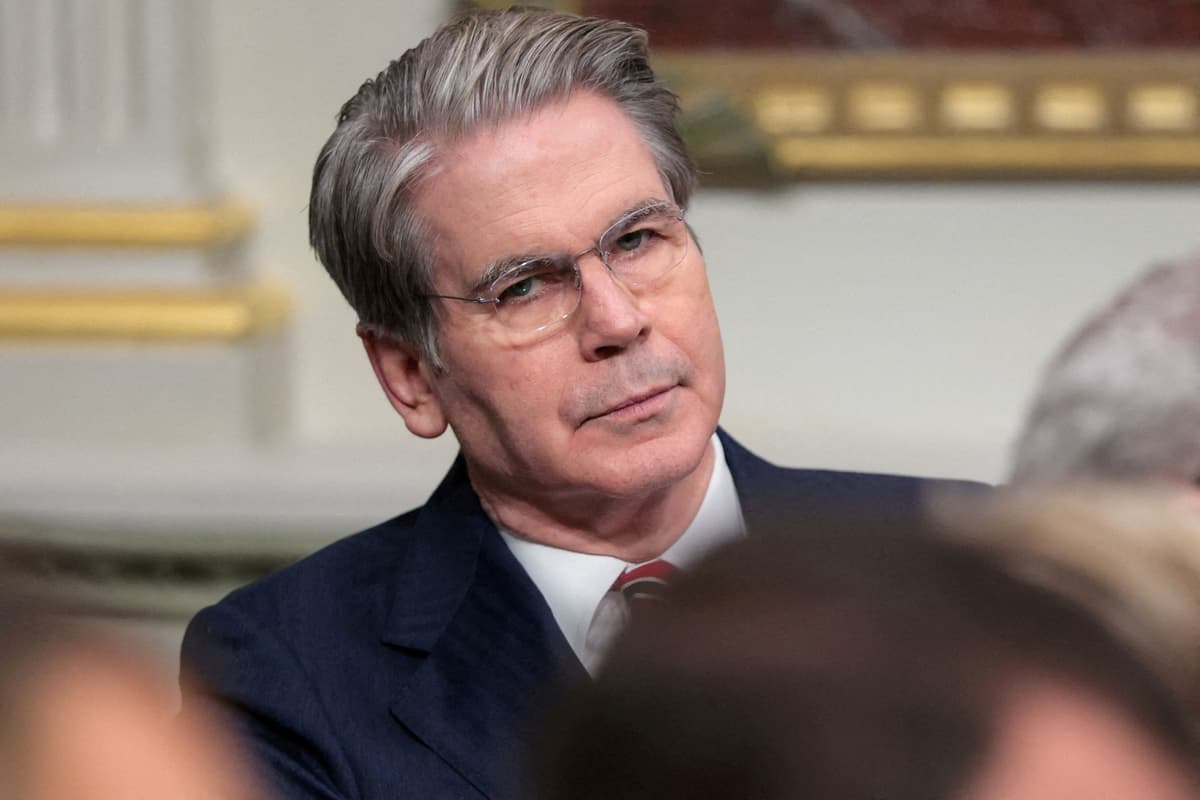
Bessent: US Should ‘Wait and See’ Before Lowering Interest Rates

Why It Matters
A pause in rate cuts could keep borrowing costs higher longer, influencing corporate financing, consumer credit, and market expectations amid geopolitical uncertainty.
Key Takeaways
- •Bessent urges Fed to pause rate cuts amid Iran conflict
- •Inflation spikes from oil, but core prices easing
- •Treasury sees economy still strong, growth above 4% possible
- •Bessent downplays dollar weakness, cites war‑driven strength
- •Supports executive order requiring banks to collect citizenship data
Pulse Analysis
Scott Bessent’s remarks arrive at a pivotal moment for U.S. monetary policy. While President Trump has been vocal about slashing rates, the Treasury secretary cautioned that the recent Iran conflict adds a layer of uncertainty that the Federal Reserve cannot ignore. Headline inflation surged in March, largely due to higher oil and gas prices, yet core inflation—excluding food and energy—remained close to forecasts. This divergence suggests the price shock may be transitory, reinforcing Bessent’s view that the Fed should monitor the situation before easing policy.
Market participants are likely to digest Bessent’s "wait and see" stance as a signal that the Fed will maintain its current rate trajectory for the near term. Higher rates for longer can temper demand in rate‑sensitive sectors such as housing and durable goods, while also supporting the dollar, which Bessent noted has been bolstered by the war. The Treasury’s confidence that inflationary pressures won’t embed into expectations may ease concerns about a prolonged price spiral, but investors will still weigh political pressure from the White House against the central bank’s data‑driven mandate.
Beyond rate policy, Bessent touched on broader regulatory themes that could shape the financial landscape. He signaled support for an upcoming executive order mandating banks to collect citizenship information, aiming to tighten AML safeguards. He also referenced ongoing dialogues about AI‑related cyber risks in banking and the strategic importance of rare‑earth supply chains. These ancillary issues underscore the Treasury’s expanding role in addressing both traditional fiscal concerns and emerging technological and geopolitical challenges.
Bessent: US should ‘wait and see’ before lowering interest rates
Comments
Want to join the conversation?
Loading comments...