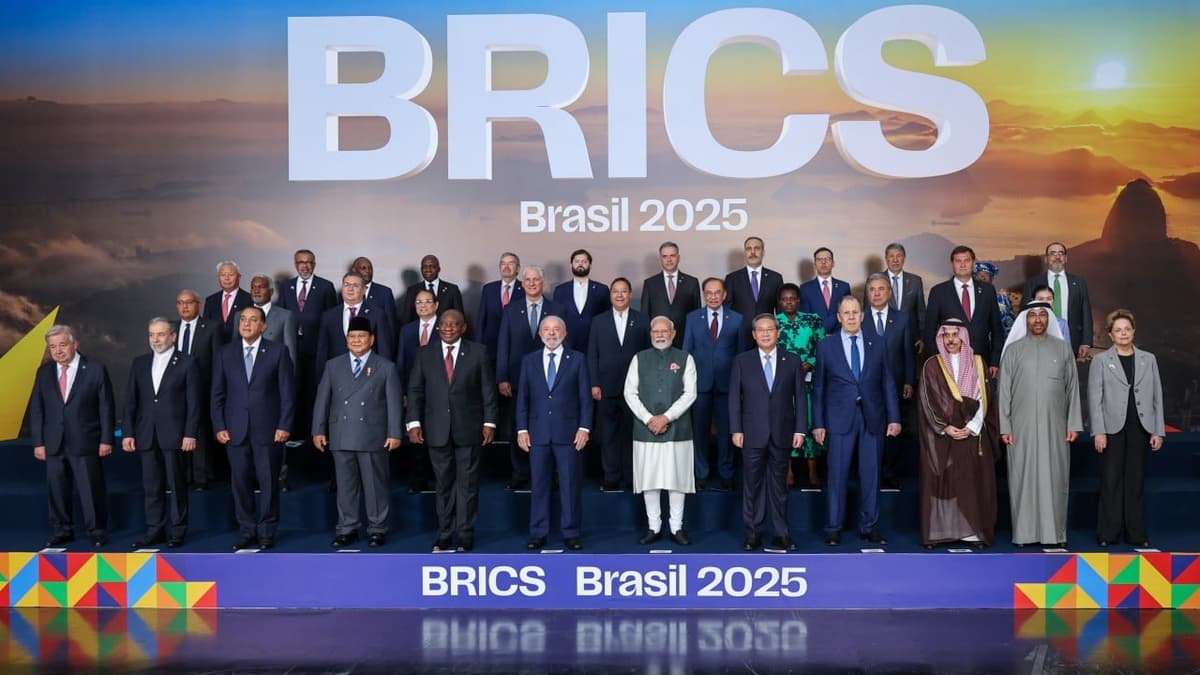
Brics to Push for Intra-Currency Payments as ‘Immunity’ Against Western Clout
Companies Mentioned
Why It Matters
A BRICS payment network would give member economies an alternative to Western‑controlled channels, protecting trade flows, lowering dollar conversion costs, and reshaping global finance dynamics.
Key Takeaways
- •BRICS explores digital payments settled in local currencies.
- •India’s central bank leads the cross‑border settlement framework.
- •System aims to bypass SWIFT, reducing sanction exposure.
- •Could lower dollar conversion fees for oil and grain trades.
- •US may view initiative as challenge to dollar dominance.
Pulse Analysis
The push for a BRICS‑wide digital payments infrastructure reflects a broader strategic shift among emerging economies to insulate their trade from geopolitical friction. By linking the rupee, yuan, real, rouble and other currencies through a shared settlement platform, the bloc hopes to sidestep the U.S.‑dominated SWIFT network that has historically been leveraged in sanctions regimes. This approach mirrors earlier bilateral arrangements, such as the Russia‑China oil‑trade conduit, but scales the concept to a multilateral level that could streamline invoicing, reduce settlement latency, and cut conversion fees tied to the dollar.
For member states, the financial upside is tangible. The bloc produces roughly 42% of global oil and 40% of grain, commodities that are routinely priced in dollars and settled through Western banks. A home‑grown payment system would allow producers and buyers to transact in their own currencies, preserving margins and ensuring supply‑chain continuity even when sanctions tighten. India, seeking to diversify its external financing, could use the platform to secure Russian oil without exposing its banks to U.S. penalties, while Brazil and South Africa could similarly safeguard agricultural exports.
Globally, the initiative signals a subtle but meaningful challenge to dollar hegemony. Although BRICS leaders stress the system is not intended to replace the dollar, its existence could erode confidence in the currency’s universal role, especially if adoption gains traction among other emerging markets. The United States is likely to monitor the development closely, weighing diplomatic pressure against the risk of pushing key trading partners toward alternative financial architectures. In the longer term, a functional BRICS payments network could catalyze a more multipolar monetary order, prompting both policymakers and investors to reassess exposure to dollar‑centric risk.
Brics to push for intra-currency payments as ‘immunity’ against Western clout
Comments
Want to join the conversation?
Loading comments...