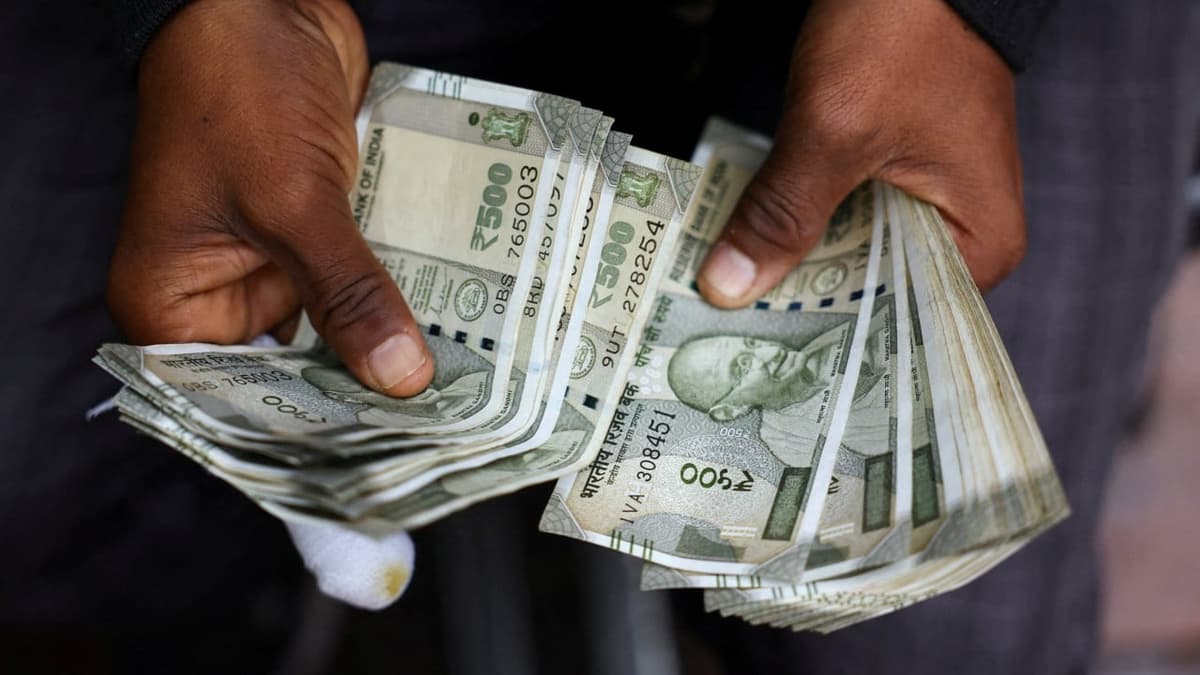
Bullish Narrative Around India’s Economy at Odds with Struggling Rupee
Companies Mentioned
Why It Matters
Currency pressure threatens higher inflation and financing costs while eroding foreign capital inflows, jeopardizing India’s growth outlook. Persistent rupee weakness also undermines the credibility of market‑opening reforms.
Key Takeaways
- •Rupee up 1.5% since March 27, best performer in Asia
- •Energy shock from Iran war widens India’s current‑account deficit
- •RBI caps bank bets at $100 million, bans offshore rupee derivatives
- •Foreign investors sold $33 billion of Indian stocks in 2024
- •China’s yuan outperforms, shifting sentiment to underweight India
Pulse Analysis
India’s modest rupee rally belies a fragile macro backdrop shaped by the Iran conflict. The sudden closure of the Strait of Hormuz has driven oil and gas prices higher, forcing India— which imports 90% of its oil—to spend more foreign exchange on energy. That dynamic inflates the current‑account gap and fuels domestic inflation, eroding the “goldilocks” narrative that previously attracted overseas capital. While the rupee’s 1.5% gain appears positive, it is largely a technical bounce driven by the RBI’s unprecedented clamp‑down on speculative bets, rather than a sign of structural strength.
The RBI’s intervention—capping banks’ currency positions at $100 million and prohibiting offshore derivative contracts—prompted a rapid unwind of bearish positions, delivering a short‑term price lift. However, such heavy‑handed measures signal policy desperation, prompting banks and investors to question the central bank’s commitment to market‑friendly reforms. Foreign fund outflows have accelerated, with $33 billion withdrawn from Indian equities in 2024, and a Bank of America survey shows a net 36% of Asia fund managers now underweight India, the most bearish stance among emerging markets. By contrast, China’s yuan has held up, benefiting from stronger energy buffers and reinforcing a shift in regional sentiment.
Looking ahead, domestic retail investors remain a stabilising force, and India’s structural reforms—such as labor market liberalisation and infrastructure spending—continue to underpin long‑term growth potential. Yet, unless energy prices ease or the RBI adopts a more transparent, gradual policy path, the rupee could drift toward the psychologically significant 100‑to‑$1 barrier, likely prompting higher interest rates. A swift resolution to the Iran war would alleviate the external shock, but the broader challenge of reversing a decades‑long trend of currency weakness will require sustained fiscal discipline and credible market‑opening measures.
Bullish narrative around India’s economy at odds with struggling rupee
Comments
Want to join the conversation?
Loading comments...