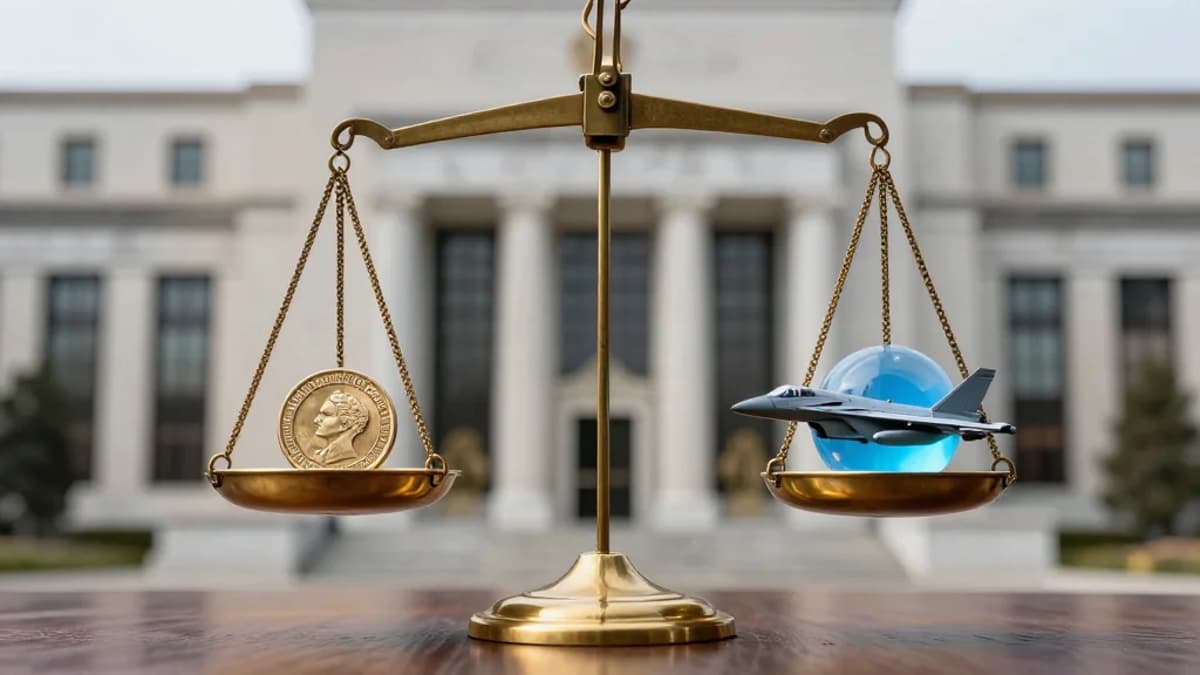
From Fed Failures to Inflation and Stablecoins: America’s Trust Is Cracking
•February 26, 2026
0
Why It Matters
A loss of institutional trust threatens both economic stability and democratic legitimacy, making swift reforms essential for preserving the U.S. financial system and social cohesion.
Key Takeaways
- •Fed losing billions erodes monetary credibility
- •Inflation and debt fuel public distrust
- •Stablecoins face regulatory capture risks
- •Military spending outpaces citizen welfare
- •Ethics-driven reforms proposed to restore trust
Pulse Analysis
The erosion of trust in America’s core institutions is no longer a peripheral concern; it is a systemic risk that could trigger a cascade of financial and social disruptions. Recent Fed balance‑sheet losses, combined with a quintupled Consumer Price Index since the 1977 Federal Reserve Reform Act, illustrate how monetary policy failures feed public skepticism. At the same time, unchecked military expenditures—projected to reach $1.5 trillion—divert resources from essential services, deepening the perception that policymakers prioritize elite interests over ordinary citizens. This mistrust is amplified by emerging sectors like crypto and AI, where regulatory capture threatens to entrench special‑interest power and undermine market integrity.
Beyond the macroeconomic indicators, the authors highlight concrete mechanisms that exacerbate the trust deficit. Regulatory capture, as described by Stigler, is evident in the crypto stablecoin arena, where government‑backed assurances often mask underlying volatility. Meanwhile, the Federal Reserve’s unprecedented losses signal a shift from a lender of last resort to a net borrower, weakening its credibility as a stabilizing force. The authors propose a suite of ethics‑centric reforms: a fiscal‑responsibility commission, a balanced‑budget amendment, and a “Fiscal and Economic State of the Union” address that mirrors a CEO’s shareholder letter. Such measures aim to re‑inject transparency and accountability into the fiscal process, restoring confidence among investors and the broader public.
Restoring trust requires both cultural and structural changes. Embedding military‑style ethical training for regulators, simplifying legal frameworks, and decoupling political incentives from budgetary decisions could curb the self‑interest that fuels capture. By aligning policy with the foundational principle of popular sovereignty, the United States can rebuild its reputation as a reliable steward of the global reserve currency. In an environment where gold and silver are gaining traction as safe havens, proactive reforms are not just advisable—they are imperative to prevent a repeat of the 2008‑09 crisis and to safeguard long‑term economic prosperity.
From Fed Failures to Inflation and Stablecoins: America’s Trust Is Cracking
0
Comments
Want to join the conversation?
Loading comments...