India's Goldilocks Growth Model Tested by Oil Shock and Rising Inflation

Why It Matters
India’s ability to preserve its Goldilocks equilibrium has implications far beyond its borders. As the world’s third‑largest economy and a key driver of global growth, any slowdown or inflationary breakout could reverberate through emerging‑market capital flows, trade balances, and commodity demand. Moreover, the country’s large domestic market and growing financial sector mean that sustained confidence is essential for attracting foreign investment and supporting global supply chains. A successful navigation of the oil shock would reinforce confidence in India’s policy toolkit, encouraging continued capital inflows and bolstering the broader narrative of emerging‑market resilience. Conversely, a failure to contain inflation or a sharp deceleration could prompt a re‑rating of risk premia on Indian assets, influencing global portfolio allocations and potentially dampening growth prospects for other developing economies that rely on Indian demand.
Key Takeaways
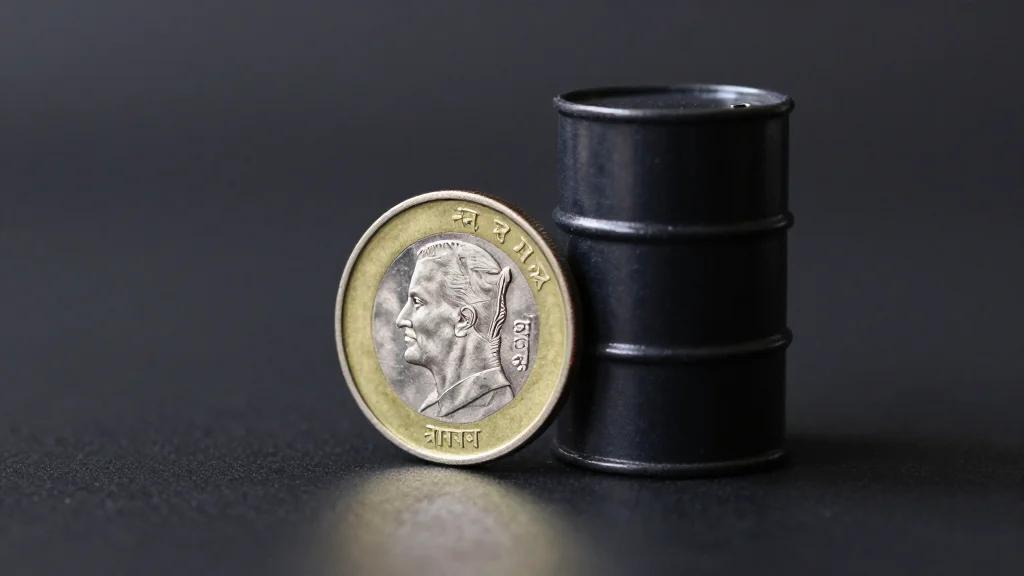
- •Crude oil prices have risen ~40% since the West Asia conflict, reaching $126 per barrel.
- •IMF data shows India accounts for 17% of global real GDP growth in 2026, the highest among major economies.
- •Inflation forecasts lifted to 5.1%, above the RBI’s 4% comfort band.
- •GDP growth projection for 2024‑25 trimmed to 6.6% from 7.1% amid higher energy costs.
- •India’s refining capacity stands at 258 MMTPA, set to exceed 300 MMTPA, supporting net export status.
Pulse Analysis
India’s Goldilocks narrative has been built on a rare convergence of high growth, low inflation and stable financial conditions. The current oil shock tests the durability of that convergence, but the country’s structural advantages—massive refining capacity, a diversified export basket and a deepening financial market—provide a cushion that many peers lack. Historically, oil price spikes have forced emerging markets to tighten monetary policy, risking growth slowdowns. India, however, can leverage its fiscal space and the RBI’s still‑moderate policy stance to absorb the shock without a sharp rate hike.
The market’s pre‑emptive pricing of the downside, as noted by analyst Kunal Saraogi, suggests that investors have already factored in a modest slowdown. This front‑loading of risk reduces the likelihood of a sudden sell‑off, but it also means that any further deterioration—such as a prolonged supply disruption or a sharper rupee depreciation—could trigger a more pronounced correction. The policy window remains open: the RBI can use targeted liquidity measures to support credit flow, while the government can accelerate the rollout of renewable energy projects to lessen oil dependence.
Looking ahead, the key variable will be the trajectory of global oil markets and the geopolitical landscape in West Asia. If the conflict de‑escalates and oil prices retreat, India’s growth engine could quickly regain steam, reaffirming its role as a global growth engine. If not, the country may need to recalibrate its growth targets and accept a modest inflation uptick, a scenario that would still keep it ahead of many peers but could reshape investor expectations for the next fiscal cycle.
India's Goldilocks Growth Model Tested by Oil Shock and Rising Inflation
Comments
Want to join the conversation?
Loading comments...