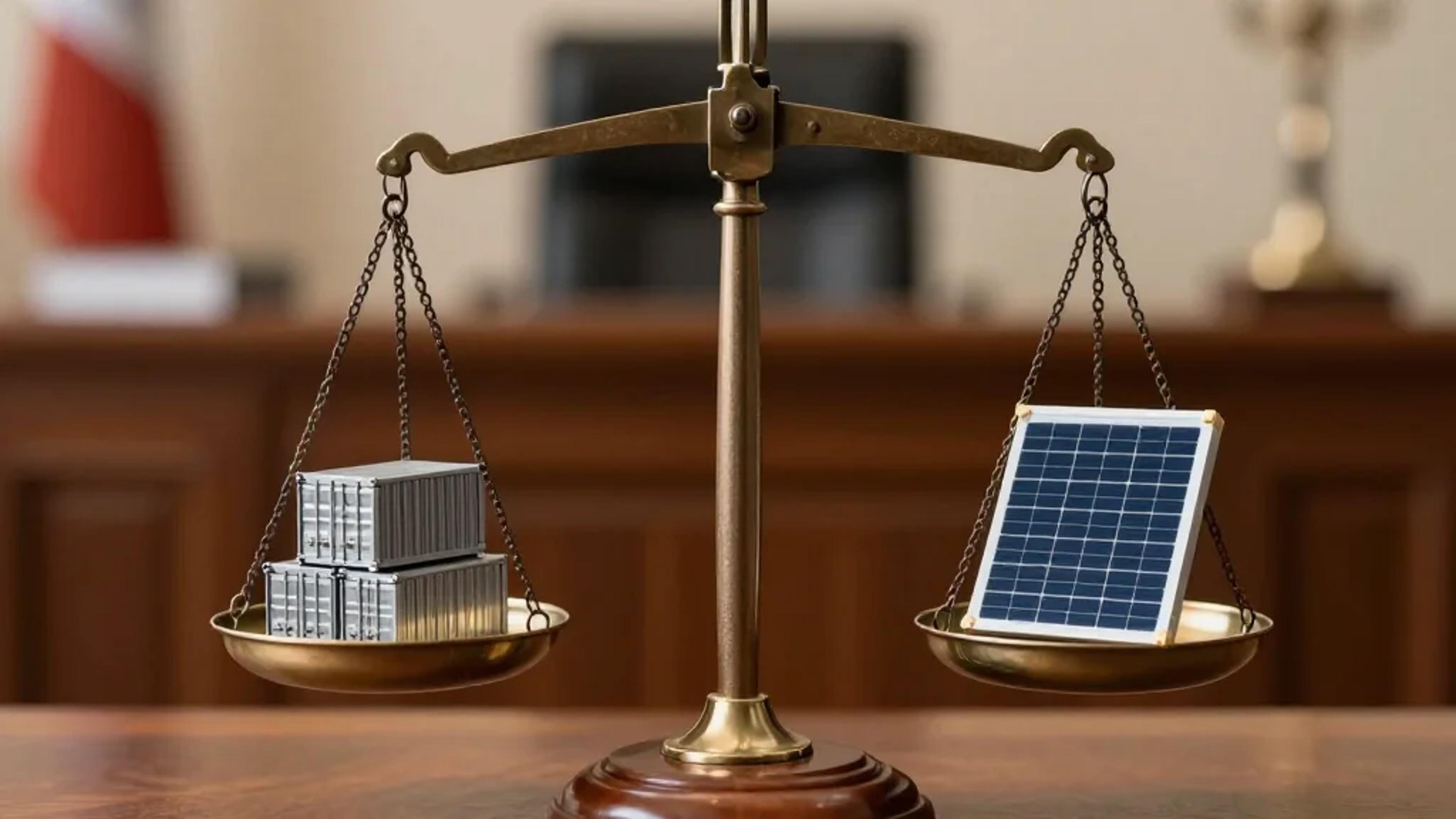
The Supreme Court Strikes Down Trump’s Tariffs
•February 20, 2026
0
Companies Mentioned
Why It Matters
It curtails executive overreach, stabilizing the regulatory environment for tech and clean‑energy businesses and unlocking billions in potential refunds.
Key Takeaways
- •Supreme Court invalidates Trump’s IEEPA tariffs
- •Potential $175 billion refunds for affected businesses
- •Clean tech imports may resume via Canada, Mexico
- •Congressional authority restored over tariff imposition
- •Trump may pursue alternative emergency powers
Pulse Analysis
S. Supreme Court marks a decisive rebuke of President Trump’s use of the International Emergency Economic Powers Act to impose tariffs without congressional approval. By invoking the Major Questions Doctrine, the Court reaffirmed that only Congress may levy taxes and trade barriers, curbing executive overreach that had created legal uncertainty for importers. This ruling not only restores constitutional balance but also sends a clear signal to future administrations that tariff authority cannot be exercised arbitrarily, reinforcing the rule of law in trade policy.
The decision immediately opens the door to thousands of lawsuits seeking refunds for the tariffs, with industry estimates of up to $175 billion in potential recoveries. Technology manufacturers, especially those in the clean‑energy sector, stand to benefit as the legal cloud lifts, allowing smoother access to components sourced from China and other low‑cost producers. Companies are already shifting supply chains toward Canada and Mexico to mitigate risk, a trend that could accelerate investment in North‑American clean‑tech hubs. Faster refunds and restored predictability are expected to boost cash flow and spur R&D spending across the sector.
Despite the court’s rebuke, Trump has signaled intent to use other emergency authorities, such as Section 122, which would still require congressional endorsement after 150 days. With midterm elections looming, lawmakers face pressure to balance trade protectionism against the need for a stable investment climate. Advocacy groups like the Consumer Technology Association and the Cato Institute warn that new tariff mechanisms could re‑introduce uncertainty for startups and small manufacturers. The ruling therefore sets a precedent, but the policy battle over protectionist measures and clean‑technology imports is far from settled.
The Supreme Court Strikes Down Trump’s Tariffs
The Supreme Court has ruled that Trump’s arbitrary imposition of tariffs under the IEEPA (International Emergency Economic Powers Act) are not legal.
This ruling opens the door for thousands of lawsuits against the Trump administration seeking refunds for tariffs and compensation for business impact — roughly $175 billion by some estimates. BYD is one of the companies suing, and reports indicate that could open the door for clean technology imports. Even if protectionism targeting China specifically blocks a direct path, companies are expanding operations into other countries that provide a potential path forward, especially from Canada and Mexico.
Having the Supreme Court rule that the president can’t just arbitrarily apply tariffs takes a lot of power away from Trump. Beyond that, the House, led by my local Congressman Gregory Meeks, had a bipartisan vote against the tariffs. That could make it even harder for Trump.
Of course, Trump is trying to find ways around the ruling. And Trump tends to not play by the rules. He has indicated that he would use emergency Section 122 rules, but those expire after 150 days, which would require congressional approval shortly before the midterm election. The tariffs are not popular.
Trump has already called the Supreme Court a “disgrace to our nation” and announced a 10 % global tariff. Clearly this is not a total end to Trump’s trade stupidity. But the ruling is an overall positive for technology trade and clean technology especially.
According to Gary Shapiro, Executive Chair and CEO of the Consumer Technology Association (CTA), who runs CES:
“Today’s 6‑3 Supreme Court decision is a victory for all Americans. By striking down tariffs under the International Emergency Economic Powers Act (IEEPA), the Court affirmed what our Founding Fathers were so careful to write into our Constitution: the power to tax Americans rests with Congress, not the President. Innovation thrives on predictability, and this common‑sense decision brings much‑needed clarity for American businesses and consumers.
“Now, the government must act quickly to refund retailers and importers without red tape or delay. Our leaders should resist the urge to compound the error by turning to new tariff authorities that add more burden and uncertainty for America’s innovators, especially small businesses and startups.
“The Consumer Technology Association was proud to lead the way in calling for the Court to clearly return tariff authority to Congress, joining dozens of organizations urging the Court to act decisively. Today’s decision, leaning on the Major Questions Doctrine and a clear reading of Constitutional text, hews closely to the arguments made in CTA’s amicus brief in this case. We applaud this clear step toward restoring balance, accountability, and confidence in the U.S. economy.”
Pete Buttigieg also explains it in his uniquely approachable way:
The conservative Cato Institute also showed their support for the ruling, but urged caution:
“The Supreme Court’s decision to strike down President Trump’s International Emergency Economic Powers Act (IEEPA) tariffs is a welcome victory for constitutional governance and the rule of law. But anyone hoping this spells the end of the administration’s tariff spree should think twice. Even without IEEPA, the president retains ample statutory authority to quickly recreate much of the current trade policy chaos.”
This is an evolving story, and the fight against protectionism targeting clean technology is by no means over. We still have a long way to go before the trade roadblocks that undermine clean technology are cleared out of the way. But this is a good day.
0
Comments
Want to join the conversation?
Loading comments...