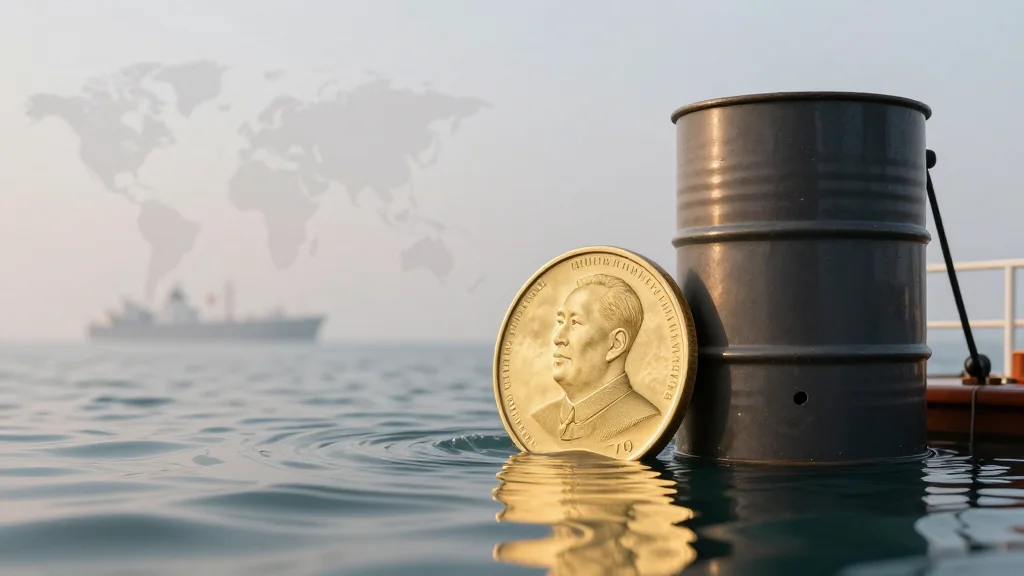
Xi’s Petroyuan Dream Gets New Life From Trump’s War in Iran
Companies Mentioned
Why It Matters
The shift hints at a gradual erosion of petrodollar dominance, reshaping global trade and sanction dynamics. It also tests the yuan’s ability to become a credible alternative currency.
Key Takeaways
- •CIPS hit 1.22 trillion yuan ($179 bn) single‑day record
- •Yuan‑Iran oil payments rise as Tehran accepts renminbi
- •Yuan‑Middle East trade grew 53% annually since 2020
- •Petrodollar share could dip to 70% within five years
- •Yuan’s limited convertibility slows petroyuan adoption
Pulse Analysis
The Iran‑Israel conflict has unexpectedly become a catalyst for China’s long‑standing petroyuan ambition. As Iran seized control of the Strait of Hormuz, it began settling oil‑related freight fees in yuan, prompting a noticeable uptick in demand for the Chinese currency. Bloomberg data shows CIPS processing 1.22 trillion yuan ($179 billion) in a single day, a milestone that underscores the growing willingness of sanction‑vulnerable economies to explore alternatives to the U.S. dollar.
Behind the headline numbers lies a deliberate infrastructure push by Beijing. Shanghai’s oil‑trading platform now offers yuan‑denominated futures, while the digital yuan pilot and expanded CIPS connectivity with Gulf banks aim to lower transaction friction. Despite these advances, the yuan remains only partially convertible, with offshore holdings at 1.6 trillion yuan ($234 billion)—a fraction of the $15 trillion dollar‑denominated asset pool. Consequently, most yuan‑linked oil deals are still bilateral settlements rather than a wholesale shift in benchmark pricing.
The broader implication is a slow but measurable weakening of the petrodollar’s grip. Analysts project the dollar’s share of global oil trade could fall from roughly 80% to 70% over the next five years, while the yuan’s slice might climb to 8‑10%. Even if the transition remains incremental, the geopolitical risk of U.S. sanctions and the perception of a "golden window" for yuan internationalization could encourage more emerging markets to diversify their currency exposure, reshaping the architecture of global finance.
Xi’s Petroyuan Dream Gets New Life From Trump’s War in Iran
Comments
Want to join the conversation?
Loading comments...