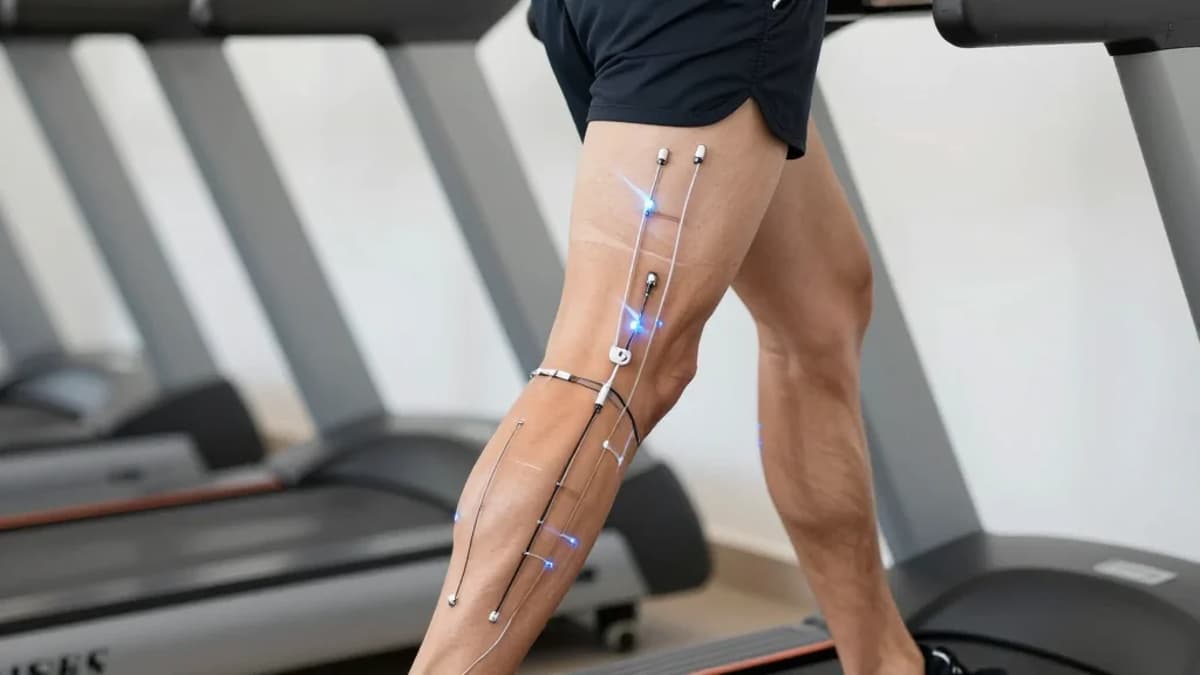
Spinal Stimulation Above and Below Injury Restores Leg Movement and Sensory Feedback in Clinical Trial
•March 11, 2026
0
Why It Matters
The breakthrough shows neurotechnology can simultaneously address motor and sensory deficits, moving toward functional independence for paralysis patients. It validates a translational pathway for spinal neuromodulation therapies in clinical practice.
Key Takeaways
- •Dual spinal stimulation restores motor and sensory function.
- •Study involved three participants with complete spinal cord injuries.
- •Machine learning optimized stimulation patterns for personalized control.
- •Participants accurately sensed knee angle via above‑injury stimulation.
- •No adverse effects reported, enabling longer‑term trials.
Pulse Analysis
The dual‑site spinal stimulation approach marks a paradigm shift in neurorehabilitation, moving beyond isolated motor activation toward integrated sensorimotor restoration. By implanting electrode arrays both distal and proximal to the lesion, researchers recreated the bidirectional communication that a healthy spinal cord provides. This configuration allowed participants not only to generate stepping motions but also to receive surrogate proprioceptive cues, a combination previously unattainable in complete injuries. The technique leverages patterned electrical pulses that mimic natural spinal firing, offering a biologically resonant alternative to pharmacologic or exoskeletal solutions.
A critical innovation in the trial was the incorporation of a patient‑operated interface, dubbed the "DJ board," paired with machine‑learning optimization. Users could adjust stimulation parameters in real time, while algorithms rapidly identified the most effective patterns for muscle activation and sensory perception. This closed‑loop personalization reduced the trial‑and‑error burden typical of neuromodulation studies and demonstrated that patients can actively shape their therapeutic outcomes. The ability to map stimulation intensity to perceived joint angles illustrates how artificial sensory feedback can be harnessed for functional tasks such as walking or wheelchair transfers.
The safety profile—no reported adverse events from the implanted arrays—strengthens the case for scaling the technology beyond the hospital setting. Ongoing plans for extended, ambulatory trials aim to assess durability, real‑world usability, and long‑term neuroplastic benefits. If successful, this dual stimulation platform could become a cornerstone of spinal injury care, complementing emerging regenerative strategies and offering a viable path to restored independence for millions worldwide.
Spinal stimulation above and below injury restores leg movement and sensory feedback in clinical trial
0
Comments
Want to join the conversation?
Loading comments...