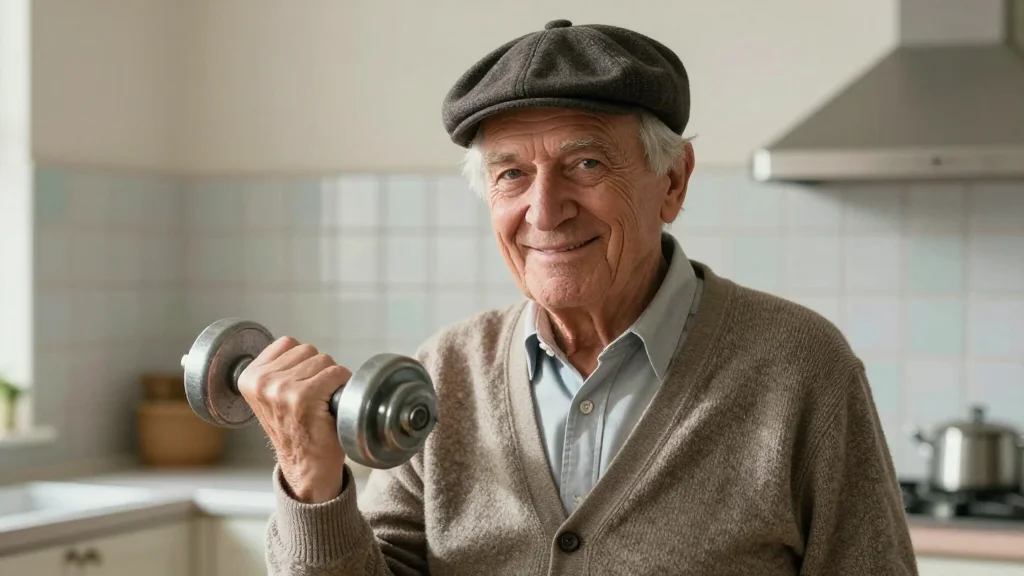
Harvard Experiment Shows 1950s Lifestyle Reverses Age‑Related Decline in Men

Why It Matters
The experiment underscores a paradigm shift in the Human Potential field: aging may be as much a story we tell ourselves as a set of cellular processes. If mindset‑driven environmental changes can produce measurable physiological benefits, policymakers and health providers could develop low‑cost, non‑pharmacological interventions to extend healthy lifespan. Moreover, the findings challenge ageist narratives that limit older adults' participation in work, sport and community life, potentially unlocking untapped economic and social contributions. Beyond individual health, the study raises ethical and practical questions about how societies construct narratives of aging. By demonstrating that a simple reframing of time can alter bodily function, the research invites a re‑examination of cultural scripts that equate age with decline, offering a new lever for improving public well‑being at scale.
Key Takeaways
- •Eight men (late 70s‑early 80s) lived a week as if it were 1959, showing gains in strength, cognition and sensory function.
- •Intelligence improvements rose from 44% in a control group to 63% in the 1959 immersion group.
- •Volunteers viewing before‑after photos judged participants looked two years younger after the retreat.
- •The experiment aligns with prior research linking positive self‑perceptions of aging to a 7.5‑year increase in lifespan.
- •A larger replication study is planned for later 2026, aiming to test scalability in community settings.
Pulse Analysis
Ellen Langer’s 1979 experiment resurfaces at a moment when the biotech industry is pouring billions into senolytics, gene editing and AI‑driven health monitoring. While those approaches target the molecular roots of aging, Langer’s work reminds us that the brain’s narrative can modulate those same pathways. The physiological improvements observed—strength, gait, sensory acuity—are likely mediated by stress‑reduction, increased dopamine from novelty, and the removal of self‑fulfilling prophecies that limit movement. In neurobiology, expectation can reshape neural plasticity; the 1959 immersion may have temporarily rewired motor and cognitive circuits, producing the observed gains.
From a market perspective, the findings could catalyze a new niche of “psychological environment” services. Companies that design senior‑friendly spaces, curate nostalgic media libraries, or develop virtual‑reality experiences that simulate past eras may attract venture capital seeking low‑cost, high‑impact interventions. However, scalability remains the key hurdle. The original study relied on a controlled, illusion‑heavy setting that is difficult to replicate in ordinary homes or assisted‑living facilities. Future research must isolate which elements—music, visual cues, narrative framing—drive the most benefit, allowing modular solutions that can be rolled out at scale.
Finally, the experiment forces a cultural reckoning. If a simple shift in story can make bodies listen differently, then ageism becomes not just a social ill but a physiological one. Policymakers, insurers and employers may need to reconsider age‑based assumptions in everything from workplace training to Medicare coverage. The upcoming replication study will be a litmus test: if broader, more diverse groups experience similar gains, the Human Potential field could see a surge in interdisciplinary collaborations that blend psychology, design, and gerontology to rewrite the script of aging.
Harvard Experiment Shows 1950s Lifestyle Reverses Age‑Related Decline in Men
Comments
Want to join the conversation?
Loading comments...