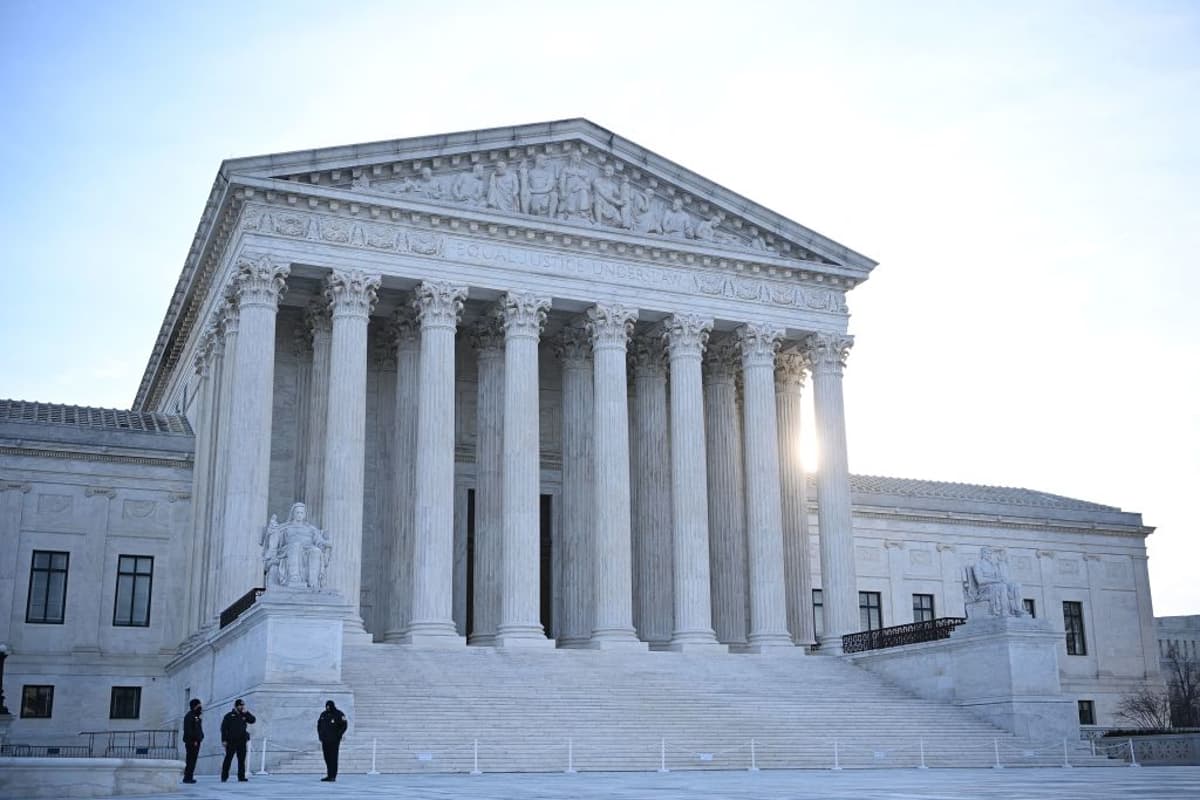
Justices Appear Dubious of Challenge to Constitutionality of Foreclosure Sales
Key Takeaways
- •Court likely rejects takings compensation claim.
- •Historical precedent supports tax foreclosure auctions.
- •Justices concerned about fairness of low‑sale price.
- •Possible due‑process review of foreclosure procedures.
- •Ruling could preserve current tax collection mechanisms.
Summary
The Supreme Court heard Pung v. Isabella County, where taxpayer Michael Pung argues that a tax‑foreclosure auction sold his property below fair‑market value and thus violates the Fifth Amendment takings clause. The justices appeared convinced they will reject the takings claim, citing centuries‑old precedent that foreclosure sales are not compensated beyond the auction price. Nonetheless, several justices expressed alarm at the apparent unfairness of selling a $200,000 home for a $3,000 tax debt. The Court may still address procedural due‑process concerns without granting compensation.
Pulse Analysis
Tax‑foreclosure sales have long been a blunt instrument for local governments to collect delinquent property taxes. By auctioning the property, the jurisdiction recovers the tax debt without needing to compensate the owner for any shortfall between the sale price and market value. The Supreme Court’s takings jurisprudence, from cases like *Kelo* to *Horne*, consistently distinguishes ordinary tax foreclosures from eminent‑domain actions, reinforcing the view that the Fifth Amendment does not require additional payment when a property is sold to satisfy a tax lien.
In *Pung v. Isabella County*, the petitioner contended that selling a $200,000 home for a $3,000 tax bill constituted an unconstitutional taking. Justices Thomas and Sotomayor highlighted the deep‑rooted legal tradition permitting such sales, while Kagan, Jackson, and Barrett warned that adopting Pung’s theory would cripple municipal finance by forcing governments to cover valuation gaps. The Court’s skepticism reflects a broader reluctance to expand property‑rights protections at the expense of efficient tax collection, especially when the plaintiff could have leveraged home equity to satisfy the debt.
Even if the takings claim is dismissed, the justices’ unease about procedural fairness may open a narrower due‑process pathway. The solicitor general’s suggestion to remand the case for a fairness review could allow lower courts to scrutinize whether the foreclosure process was unreasonably swift or opaque. A decision that preserves the status quo while permitting procedural challenges would balance governmental revenue needs with individual property‑owner protections, setting a nuanced precedent for future tax‑foreclosure disputes across the United States.


Comments
Want to join the conversation?