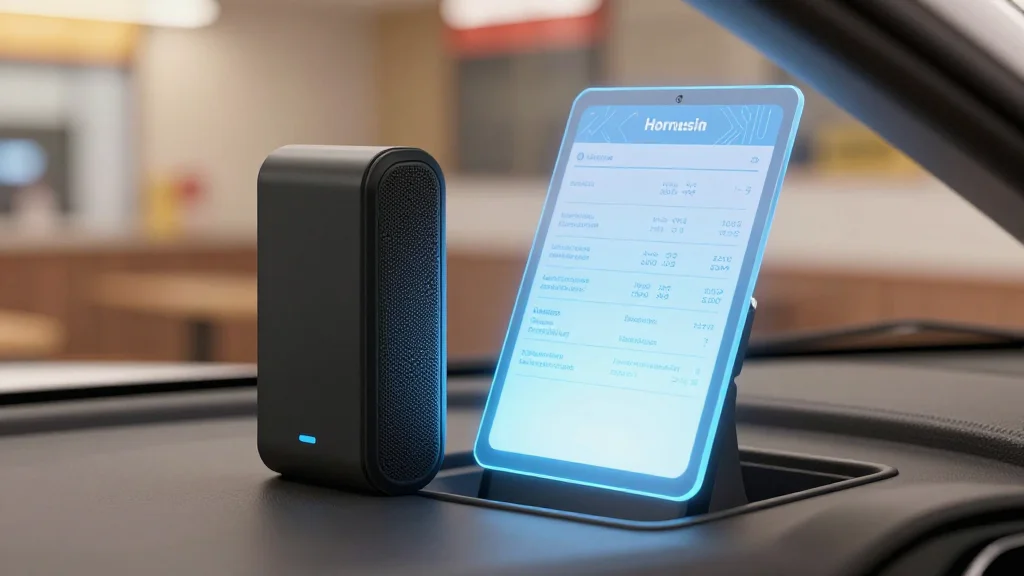
McDonald’s Tests AI Drive‑Thru System ArchIQ at Five U.S. Restaurants

Companies Mentioned

Why It Matters
The ArchIQ pilot signals a turning point for operational management in the quick‑service restaurant sector. By automating order capture, McDonald’s aims to reduce labor costs, improve order accuracy, and accelerate service speed—three metrics that directly influence same‑store sales and customer satisfaction. If the system can sustain its 90% automation rate at scale, it could force competitors to accelerate their own AI initiatives, reshaping labor models across the industry. Beyond the fast‑food arena, ArchIQ showcases how cloud‑based AI can serve as a “master brain” for complex, distributed operations. The integration of Google Edge Cloud blades creates a data pipeline that can feed real‑time analytics into inventory forecasting, staffing optimization, and equipment maintenance, potentially delivering cost efficiencies that ripple through the broader hospitality and retail sectors.
Key Takeaways
- •McDonald’s launched ArchIQ, an AI drive‑thru ordering system, at five U.S. locations.
- •The pilot has processed over 1 million transactions with ~90% of orders completed without human escalation.
- •ArchIQ runs on Google Edge Cloud infrastructure, with plans to install blades in all U.S. restaurants.
- •CEO Chris Kempczinski framed the initiative as part of “McDonald’s Next,” promising both speed and hospitality.
- •Public reaction is mixed, with some customers fearing loss of personal interaction at the drive‑thru.
Pulse Analysis
McDonald’s ArchIQ pilot is more than a technology showcase; it is a strategic bet on AI to redefine labor economics in a sector where wages and turnover are persistent challenges. Historically, fast‑food chains have relied on standardized processes and low‑skill labor to keep unit economics favorable. By moving order capture to an AI layer, McDonald’s can potentially reallocate crew members to higher‑value tasks, such as food preparation and in‑store customer engagement, thereby improving both speed and perceived hospitality.
The partnership with Google also positions McDonald’s at the intersection of cloud computing and edge AI, a combination that could yield granular, location‑specific insights. Real‑time data on order patterns, traffic flow, and equipment performance can feed predictive models that pre‑empt bottlenecks, reduce waste, and optimize staffing schedules. This data advantage may translate into measurable margin improvements, a critical factor as the chain navigates inflationary pressures and competitive pricing.
However, the rollout faces cultural and operational hurdles. Consumer backlash against perceived depersonalization, as reflected in social‑media comments, underscores the need for a balanced approach that preserves the human element. Moreover, scaling from five test sites to a national network will test the system’s robustness under varied traffic volumes, menu complexities, and regional preferences. If McDonald’s can demonstrate consistent performance and a clear ROI, ArchIQ could become the industry’s de‑facto standard for AI‑driven drive‑thru management, prompting a wave of similar investments across quick‑service and broader retail sectors.
McDonald’s Tests AI Drive‑Thru System ArchIQ at Five U.S. Restaurants
Comments
Want to join the conversation?
Loading comments...