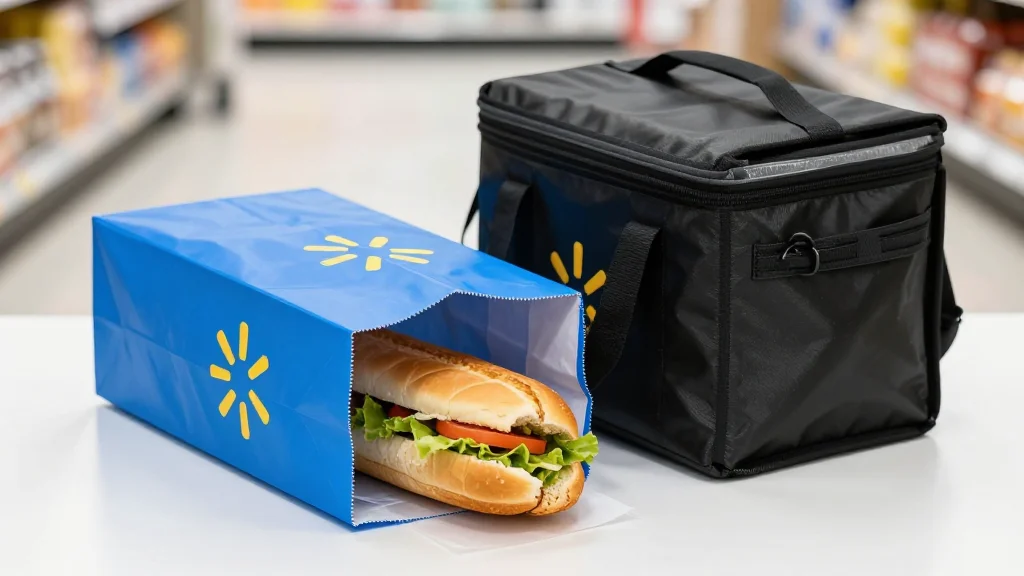
Walmart Launches In-Store Restaurant Delivery, Targeting DoorDash and UberEats with Subway Rollout

Companies Mentioned

Why It Matters
Walmart’s entry into restaurant delivery signals a shift in how traditional retailers can leverage existing infrastructure to compete in the on‑demand economy. By bundling meals with grocery orders and eliminating hidden fees, the company challenges the pricing model that has allowed DoorDash and UberEats to dominate. The move also tests Walmart’s internal coordination capabilities—aligning store operations, digital product teams, and logistics—offering a blueprint for other large retailers eyeing similar expansions. If successful, the service could compress margins for third‑party delivery platforms and accelerate a broader industry trend toward retailer‑owned fulfillment. For consumers, the promise of consistent menu pricing and a single delivery fee could reshape expectations around convenience, potentially driving a migration away from app‑centric food‑delivery ecosystems toward integrated retail experiences.
Key Takeaways
- •Walmart launches restaurant delivery via its app, starting in six states
- •Subway is the first in‑store restaurant partner; rollout to 1,400 stores by summer’s end
- •Orders will match in‑restaurant menu prices with a flat Express Delivery fee
- •CEO John Furner cites rising fuel costs as stress point for lower‑income shoppers
- •Analyst Michelle Weaver highlights convenience as a decisive factor for consumer choice
Pulse Analysis
Walmart’s foray into meal delivery is less about entering a new market than about reinforcing its omnichannel strategy. The retailer already commands a logistics network that rivals many pure‑play delivery firms, and by adding restaurant meals, it creates a one‑stop shop that can increase average order value and improve delivery density. Historically, grocery‑centric retailers have struggled to monetize food‑service offerings because of thin margins and fragmented supply chains. Walmart’s scale, however, allows it to negotiate favorable terms with restaurant operators like Subway and to absorb the cost of a flat delivery fee while still protecting its bottom line.
From a competitive standpoint, DoorDash and UberEats have built their businesses on commission‑heavy models that shift cost to restaurants, which then pass it on to consumers. Walmart’s price‑transparent approach could force a recalibration of that model, especially in markets where Walmart’s store density ensures short delivery routes and lower fuel consumption. The pilot’s success will hinge on Walmart’s ability to integrate restaurant inventory data into its existing order‑management system without disrupting grocery fulfillment—a classic management challenge of aligning disparate operational silos.
Looking ahead, the service could serve as a springboard for further vertical integration. Walmart might eventually add other in‑store food concepts, such as coffee shops or prepared‑meal counters, expanding its share of the $150 billion U.S. food‑delivery market. The key risk remains execution: any hiccup in order accuracy or delivery timeliness could erode the convenience advantage and give competitors an opening to double down on promotional pricing. Nonetheless, the initiative underscores how legacy retailers can repurpose their scale and data assets to compete in digitally native spaces, a trend that will likely accelerate as consumer expectations for seamless, low‑cost delivery continue to rise.
Walmart Launches In-Store Restaurant Delivery, Targeting DoorDash and UberEats with Subway Rollout
Comments
Want to join the conversation?
Loading comments...