
Video•Feb 26, 2026
The A.I. Videos on Kids’ YouTube Feeds
The New York Times investigated how artificial‑intelligence‑generated videos have infiltrated children’s YouTube feeds, including the main YouTube app and the more regulated YouTube Kids platform. Researchers sampled popular kids’ channels such as Bluey, Miss Rachel, and Cocomelon, then scrolled through recommended Shorts, reviewing over a thousand videos in multiple sessions. Their analysis revealed that roughly 40% of the recommended clips appear to be AI‑generated. These videos are typically 20‑30 seconds long, hyper‑colorful, and devoid of a clear narrative arc, often featuring absurd visual tricks like animals emerging from toothpaste tubes or morphing into vehicles. The rapid, nonsensical format contrasts sharply with traditional educational content that follows a beginning‑middle‑end structure. Child‑development experts warned that such content can overload young viewers cognitively and displace more enriching activities like reading or watching programs with purposeful storytelling, citing classics such as Mr. Rogers and Sesame Street as benchmarks. When pressed, YouTube said creators must disclose AI usage, yet the investigation found labeling to be sporadic and no built‑in filter to block AI‑generated videos, leaving parents to police their children’s feeds. The findings place the onus on parents and policymakers to address a growing blind spot in digital media regulation. Without clearer disclosure standards or effective filtering tools, AI‑driven content could erode developmental benefits of age‑appropriate media and fuel parental backlash against the platform.
By The New York Times

Video•Feb 26, 2026
Restoring Trust in Media | Semafor Events
The event, hosted by Semaphore at Gallup’s Global HQ, centered on the company’s mission to restore public trust in news media. Co‑founder Justin B. Smith highlighted three persistent consumer concerns—bias, information overload, and Western‑centric narratives—and outlined how Semaphore’s experimental formats...
By Semafor
Video•Feb 26, 2026
Seedance 2.0: The Future of AI Video Creation Is Here 🚀
ByDance unveiled Seance 2.0, an AI‑driven video generation engine that lets users create short films using only prompts, images, audio, or existing clips. The platform combines text, image, audio, and video inputs into a single unified multimodal architecture, allowing up to...
By Analytics Vidhya

Video•Feb 25, 2026
AI Is Everywhere, but Human Marketers Still Get the Credit: Horizon’s Jeremy Flynn
In a recent interview, Horizon’s Jeremy Flynn explained how the agency is embedding artificial intelligence into every stage of its media services, reflecting a broader shift in chief marketing officer (CMO) expectations from simple media execution to measurable growth experiences. Flynn...
By Next TV

Video•Feb 25, 2026
Walmart Connect’s Khurrum Malik: CTV Plus Linear TV Delivers 55% Reach Increase
Walmart Connect senior executive Khurrum Malik used the forum to highlight the rapid evolution of retail media, from a lower‑funnel, on‑site placement to a multi‑surface storytelling engine that now includes CTV, linear TV and over‑the‑top platforms. He announced the company’s recent...
By Next TV
Video•Feb 25, 2026
IRIS.TV’s Field Garthwaite: Contextual Targeting Enables Privacy-First CTV Performance
IRIS.TV is turning Connected TV into a performance‑driven channel by using contextual signals and emotional data to serve ads at moments that resonate with viewers. The platform’s privacy‑first approach identifies what content is being watched without tracking personal identities, enabling...
By Next TV

Video•Feb 25, 2026
Beyond the Niche: Unity Exec Urges Marketers to Rethink Gaming
Unity senior vice president Chris Feo urges marketers to treat gaming like any other high‑engagement media channel, arguing that outdated stereotypes limit ad spend despite comparable scale. He highlights Unity’s expansive platform—used by automakers, slot‑machine makers and more—supporting 160 million U.S....
By Next TV

Video•Feb 25, 2026
How Pathos Communications Is Rethinking PR
Pathos Communications plc (AIM: NEWS) completed its initial public offering on the AIM market, using the proceeds to accelerate its tech‑enabled public‑relations platform. CEO Omar Hamdi highlighted the company’s AI‑driven approach that automates media targeting and reporting for small‑ and...
By Vox Markets

Video•Feb 25, 2026
Artist Managers on Music Videos, Artist Development, Long-Term Strategy and True Fandom
In a candid conversation on the "New Music Business" podcast, host Arian sits down with Slush Management co‑founders Neil O’Conor and Aaron Green to unpack how modern artist managers navigate a fragmented industry. The discussion centers on the firm’s philosophy—following...
By Ari’s Take

Video•Feb 25, 2026
Fake Images Stoked Fears Amid Chaos in Mexico
The video captures a chaotic scene in a Mexican city where AI‑generated images and viral posts falsely claimed an airport plane was burning and a downtown church was on fire, fueling widespread panic among residents. Viewers recount seeing videos of a...
By The New York Times
Video•Feb 24, 2026
AI Shock And Tariff Fears Split Markets Winners And Losers | Insight with Haslinda Amin 02/24/2026
The episode focused on the twin shocks of artificial‑intelligence market anxiety and a wave of U.S. tariff actions following a Supreme Court ruling that struck down earlier levies. President Trump’s team announced a 10% tariff on batteries, electronics and other...
By Bloomberg Television
Video•Feb 23, 2026
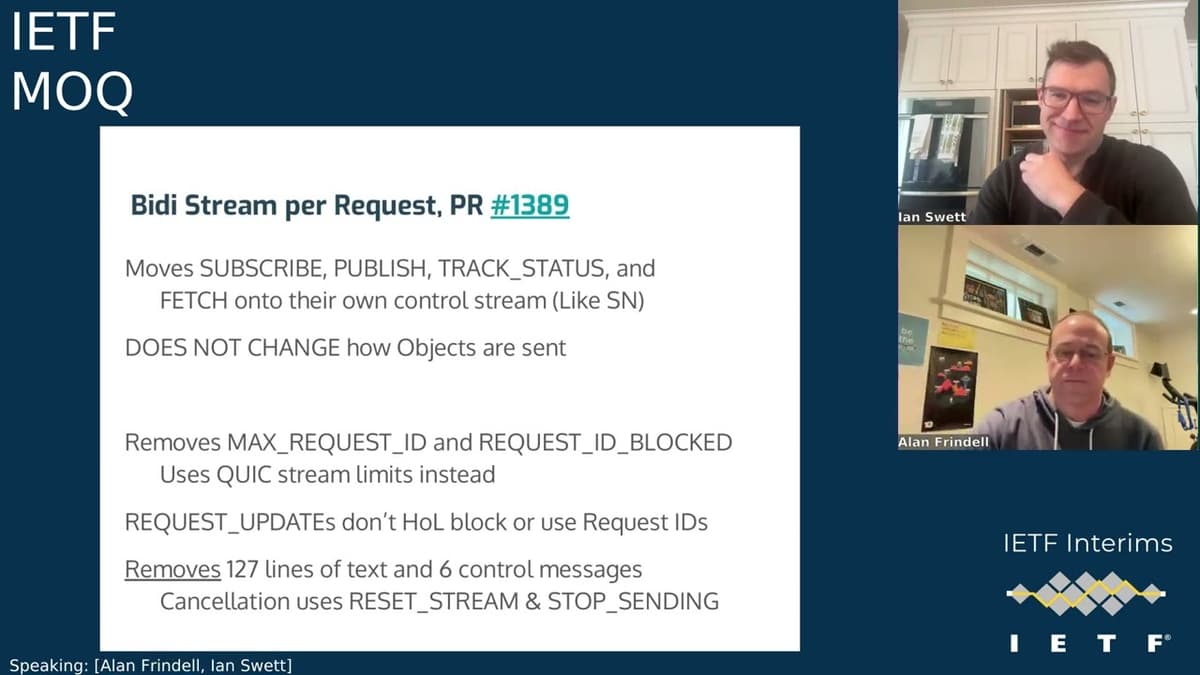
IETF Interim: Media Over QUIC (MOQ) 2026-02-23 17:00
The IETF Media Over QUIC (MOQ) virtual interim convened on February 23 to bridge the gap between the Boulder meeting and the upcoming ITF‑125. Organizers reviewed procedural notes, reminded participants of the QR‑code‑linked code of conduct, and outlined the agenda, which...
By IETF

Video•Feb 23, 2026
Audio Gets Programmatic: Lisa Coffey Of IHeartMedia Says 'Guaranteed Human' Wins Trust
IHeartMedia’s chief business officer Lisa Coffey announced a beta version of Audiograph, a platform that makes broadcast radio addressable, measurable and programmatically purchasable. Early proof‑of‑concept tests with five advertisers across retail, wireless and quick‑service restaurants showed addressable radio outperformed traditional...
By Next TV
Video•Feb 23, 2026
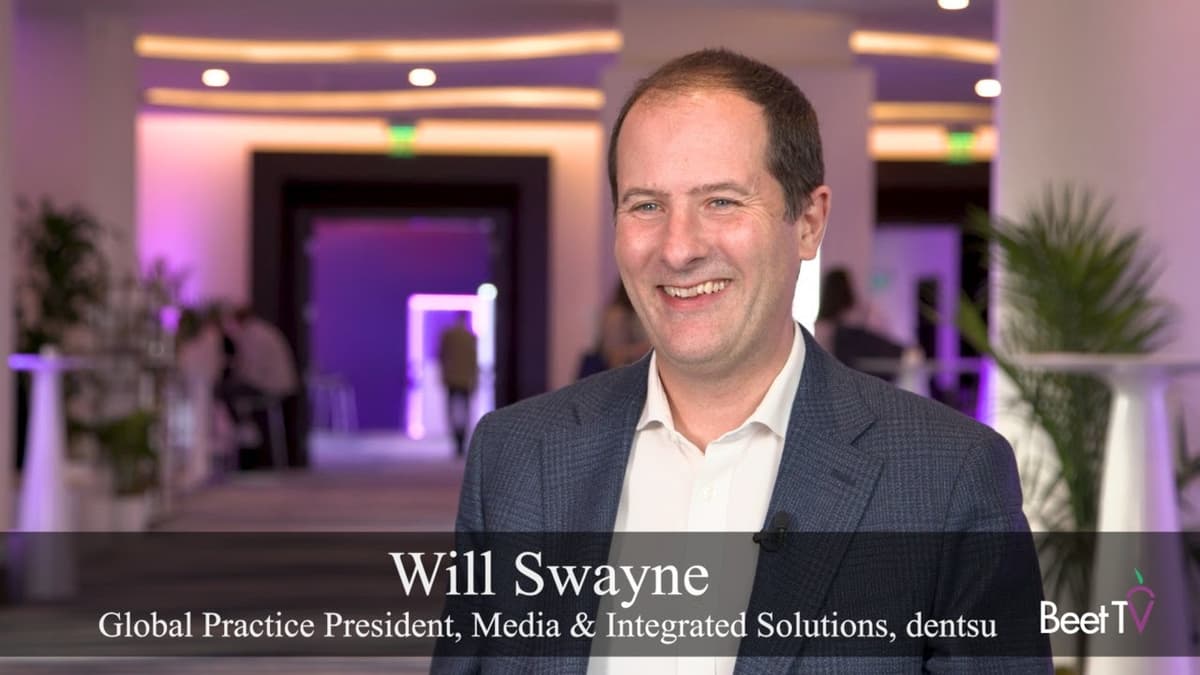
Dentsu’s Will Swayne: Advertising Enters Its Third Phase, ‘The Algorithmic Era’
Will Swayne, global practice president at dentsu, announced that advertising has entered its third, algorithmic era, where media planning relies on addressable, outcome‑focused marketplaces powered by AI. He emphasized that despite technological advances, stable consumer behaviors remain the foundation for...
By Next TV

Video•Feb 23, 2026
🚨Watch Schwab Network LIVE 🚨
Charles Schwab Media Productions has launched the Schwab Network, a streaming financial‑news channel that runs live programming from 8 a.m. to 5 p.m. ET on weekdays. The schedule includes hour‑long blocks such as Morning Movers, Opening Bell, Trading 360 and Market on...
By Schwab Network