IIT Kanpur Maps Alpha Waves to Gauge Stress Impact on Cognition

Companies Mentioned
Why It Matters
Understanding how relaxed‑state alpha activity maps onto stress responses could transform both clinical and consumer approaches to mental health. For clinicians, a reliable EEG‑based biomarker would enable objective assessment of stress‑related disorders, complementing self‑report scales and potentially guiding personalized interventions. For the meditation industry, the ability to measure the physiological impact of practices in real time opens doors to data‑driven product development, higher user engagement, and evidence‑based claims about efficacy. Beyond immediate applications, the study highlights a broader shift toward affective computing—where AI interprets emotional and cognitive states from physiological signals. As algorithms like DAAFNet mature, they may bridge the gap between subjective experience and quantifiable metrics, fostering a new generation of neuro‑feedback tools that adapt to an individual’s moment‑to‑moment mental landscape.
Key Takeaways
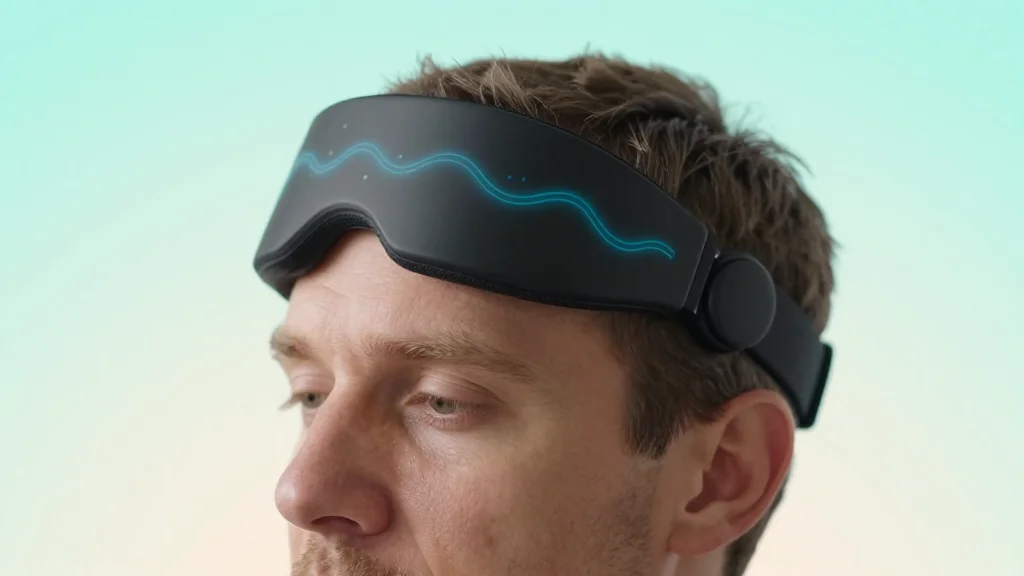
- •IIT Kanpur uses a custom EEG headband and smartwatch to record frontal alpha waves and cardiac activity.
- •Study targets 'frontal alpha symmetry' as a biomarker for stress‑related changes in cognition.
- •Researchers integrate the DAAFNet algorithm to classify emotions from EEG data.
- •Prior binaural‑beat research showed a significant rise in alpha activity and reduced perceived stress.
- •Findings could enable real‑time stress monitoring in meditation apps and brain‑computer interfaces.
Pulse Analysis
The IIT Kanpur effort arrives at a moment when the meditation market is scrambling for scientifically validated metrics. Most consumer wearables rely on heart‑rate variability or skin conductance, which are indirect proxies for stress. By anchoring measurements in alpha‑wave dynamics—a signal directly tied to relaxed wakefulness—the study promises a more granular view of mental states. This could give meditation platforms a competitive edge, allowing them to differentiate on the basis of neurophysiological fidelity rather than generic wellness branding.
Historically, alpha waves have been a staple of EEG research but have suffered from interpretive ambiguity; they rise during eyes‑closed rest, yet also appear in various cognitive tasks. The Kanpur team’s focus on frontal asymmetry narrows the scope, linking specific regional patterns to approach‑withdrawal motivation—a core concept in affective neuroscience. If longitudinal data confirm that these patterns reliably predict stress‑induced performance drops, we may see a new class of ‘cognitive‑stress dashboards’ that integrate with workplace productivity tools, offering employers a data‑driven way to manage burnout.
Looking ahead, the convergence of affective AI, low‑cost flexible electrodes, and cloud‑based analytics could democratize access to brain‑state monitoring. However, scalability hinges on addressing privacy concerns and ensuring that algorithms trained on limited Indian cohorts generalize across diverse populations. The upcoming conference presentation and journal submission will be critical checkpoints; peer validation will determine whether the findings remain a promising academic proof‑of‑concept or become the foundation for the next wave of meditation‑tech products.
IIT Kanpur Maps Alpha Waves to Gauge Stress Impact on Cognition
Comments
Want to join the conversation?
Loading comments...