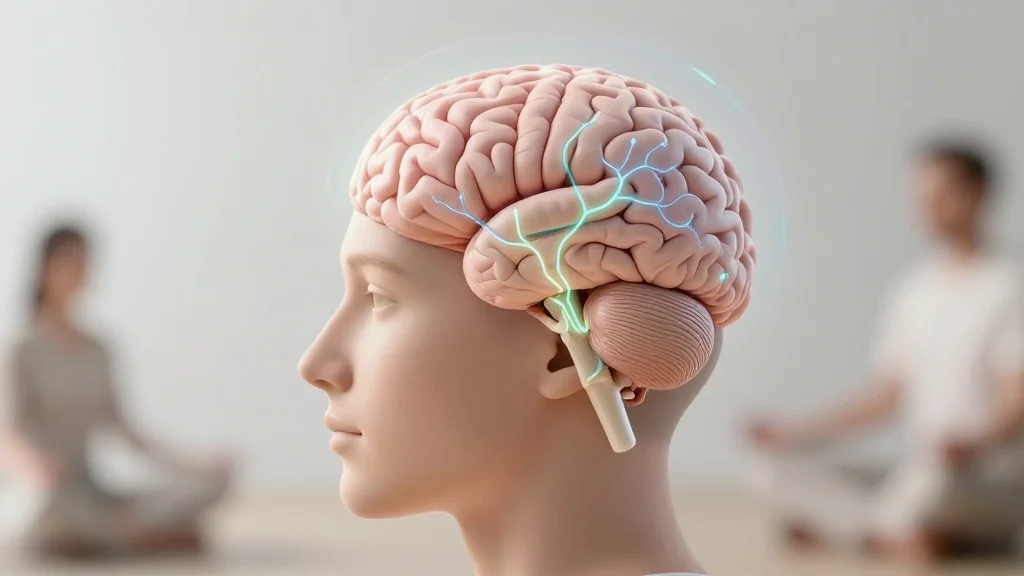
KAIST Uncovers Brain's Memory Switch, Opening New Paths for Meditation and Therapy

Why It Matters
The discovery of a concrete neural mechanism for memory selection reshapes how scientists view the brain’s capacity for flexibility—a core goal of many meditation traditions. If meditation can be shown to modulate the identified circuit, practitioners could gain a scientifically grounded method to improve focus, reduce intrusive memories, and support mental well‑being. Clinically, targeting the septum‑entorhinal pathway offers a novel avenue for treating memory‑related disorders, potentially slowing the progression of Alzheimer’s and enhancing cognitive rehabilitation. Furthermore, the link between rhythmic brain states and memory performance provides a measurable biomarker for both research and therapeutic monitoring. By aligning meditation techniques with neurophysiological markers such as theta power, future interventions could be personalized, maximizing efficacy while minimizing side effects.
Key Takeaways
- •KAIST team led by Prof. Han Jin-hee identified a medial septum‑medial entorhinal cortex circuit that acts as a memory switch.
- •Optogenetic experiments in mice showed activation improves recent‑memory recall; blockage forces reliance on older memories.
- •Theta‑dominant "online" brain states correlate with better recent‑memory performance, while frequent state switching impairs recall.
- •The mechanism offers a new therapeutic target for Alzheimer’s, schizophrenia, and other neuropsychiatric conditions.
- •Potential to align meditation practices with the circuit’s dynamics, enhancing present‑moment awareness and cognitive flexibility.
Pulse Analysis
The memory‑switch finding arrives at a moment when neuroscience, mindfulness, and AI intersect more than ever. Historically, meditation research has focused on structural changes—thickening of the prefrontal cortex, increased gray matter in the hippocampus—but lacked a precise functional target. The septum‑entorhinal pathway provides that target, translating abstract concepts of "present‑focused attention" into a testable neural circuit. This could catalyze a new generation of rigorously designed meditation trials that incorporate EEG‑based theta training, moving the field beyond self‑report measures.
From a market perspective, biotech firms developing neuromodulation devices may pivot to incorporate septal stimulation protocols, while pharmaceutical pipelines could explore compounds that selectively enhance septal cholinergic output. The crossover into AI is equally compelling: current deep‑learning models struggle with continual learning and catastrophic forgetting. Mimicking the brain’s switch could inspire algorithms that dynamically prioritize recent data without overwriting older knowledge, a breakthrough for adaptive AI systems.
Looking ahead, the biggest challenge will be translating rodent circuitry to the human brain, where the septal complex is more intricate and individual variability higher. Nonetheless, the clear behavioral phenotype—improved recent‑memory retrieval when the circuit is active—offers a concrete endpoint for both clinical and meditation‑based interventions. If future studies confirm that mindfulness training can up‑regulate this pathway, we may witness a convergence of ancient practice and cutting‑edge neuroscience, redefining how we think about memory, attention, and mental health.
KAIST Uncovers Brain's Memory Switch, Opening New Paths for Meditation and Therapy
Comments
Want to join the conversation?
Loading comments...