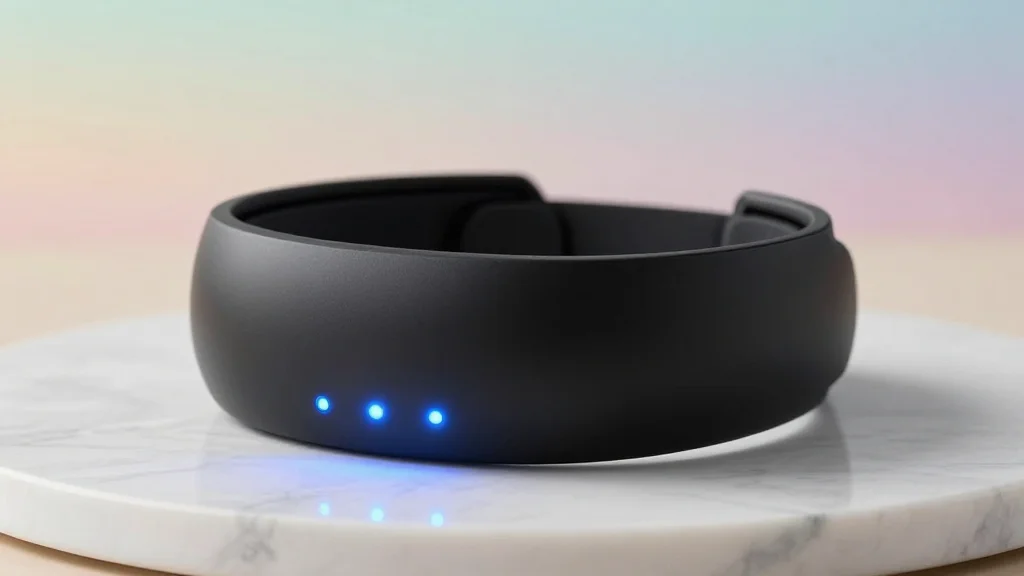
Mindmachines.com Unveils Enhanced ROSHIwave Device for Rapid Brainwave Meditation

Companies Mentioned
Why It Matters
The ROSHIwave’s launch signals a maturation of meditation technology, moving from purely software‑based experiences to hardware that claims direct neural influence. If the device delivers on its promise of rapid, deep meditative states, it could reshape how consumers approach mindfulness, making it more accessible to those lacking time or formal training. Moreover, the product underscores a growing convergence between neurotechnology and wellness, prompting regulators, clinicians, and investors to reassess standards for efficacy and safety. For the meditation ecosystem, the ROSHIwave introduces a competitive pressure on app‑centric platforms to incorporate biometric feedback or partner with hardware manufacturers. It also offers a new data point for researchers studying the impact of photostimulation on brainwave patterns, potentially accelerating scientific inquiry into non‑pharmacological cognitive enhancement.
Key Takeaways
- •Mindmachines.com released the third‑generation ROSHIwave IN‑SIGHT meditation device.
- •Dynamic Neuro‑Activation uses RGB LED flickering to "disentrain" brainwaves.
- •Company claims users can reach deep meditative states in as little as 15 minutes.
- •Nearly 100 clinicians worldwide currently employ the ROSHIwave for stress and performance applications.
- •Device is marketed as a wellness tool, not a medical device, with seizure‑disorder warnings.
Pulse Analysis
Mindmachines' ROSHIwave arrives at a crossroads where consumer demand for measurable wellness outcomes meets the hype of neuro‑tech. Historically, meditation tools have relied on subjective reporting; the ROSHIwave attempts to quantify the experience by directly modulating brainwave activity. This shift mirrors the broader trend seen in the fitness industry, where wearables moved from step counters to sophisticated health monitors. If the device can substantiate its claims with robust data, it may catalyze a new segment of "neuro‑wellness" products that blend hardware, software, and clinical insight.
However, the path forward is fraught with challenges. The scientific community remains divided on the efficacy of brainwave disentrainment, and without peer‑reviewed validation, consumer trust could waver. Competitors that have secured FDA clearance for neurofeedback functions may gain a regulatory edge, especially as health‑conscious buyers become more risk‑averse. Mindmachines will need to invest in rigorous clinical trials and transparent reporting to differentiate itself from novelty gadgets.
Strategically, the ROSHIwave could serve as a platform for future ecosystem development. Integration with existing health data streams—such as heart‑rate variability from smartwatches—could create a feedback loop that personalizes meditation protocols in real time. This would not only enhance user engagement but also generate valuable anonymized data for research partnerships. In the short term, the device's success will hinge on its ability to deliver a compelling, repeatable experience that justifies its price point and positions it as more than a curiosity in the crowded mindfulness market.
Mindmachines.com Unveils Enhanced ROSHIwave Device for Rapid Brainwave Meditation
Comments
Want to join the conversation?
Loading comments...