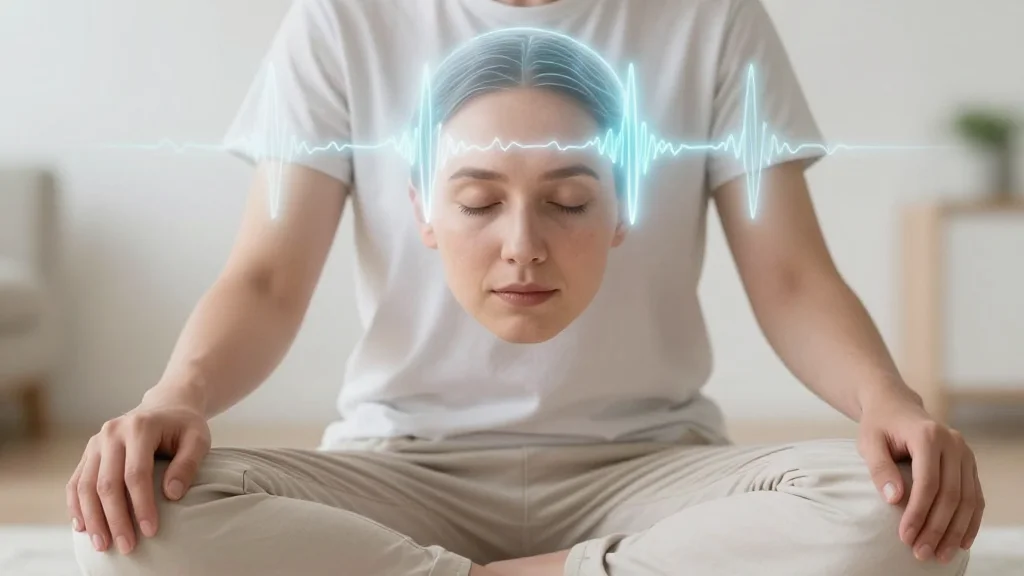
Study Finds Brainwave Shifts Appear Within Two Minutes of Meditation, Peak at Seven

Why It Matters
The discovery that meditation induces measurable brain changes within minutes reshapes how practitioners, clinicians, and technology providers think about session length. For consumers, it validates the efficacy of short, daily practices, potentially lowering the barrier to entry for those who view meditation as time‑intensive. For the mental‑health industry, the findings offer a quantifiable biomarker that can be used to assess treatment adherence and outcomes, accelerating the integration of mindfulness into evidence‑based care. Finally, for the burgeoning digital wellness market, the study supplies a research‑backed selling point that could differentiate platforms that prioritize scientifically optimized session durations. Key bullets: - EEG shifts detected as early as two minutes into breath‑watching meditation. - Peak neural activity occurs around the seven‑minute mark, consistent across experience levels. - Study involved 103 participants split into three groups: meditation‑naïve, novice, and experienced. - Research conducted at NIMHANS, Bengaluru, and published in *Mindfulness*. - Findings support the design of sub‑ten‑minute meditation modules for apps and clinical use. Pulse Analysis: The timing breakthrough arrives at a pivotal moment for the mindfulness economy, which is projected to exceed $9 billion globally by 2028. Historically, the industry has emphasized session depth over duration, with flagship programs often recommending 20‑ to 45‑minute practices. This new evidence flips that script, suggesting that the neural payoff curve is front‑loaded. Companies that can translate the seven‑minute peak into adaptive user experiences—perhaps by using wearable EEG or photoplethysmography to detect when a user reaches the optimal state—will likely capture a competitive edge. From a historical perspective, early meditation research in the 1970s and 80s relied on coarse measures like heart rate variability, which obscured rapid brain dynamics. The current study leverages high‑density EEG and fine‑grained temporal analysis, echoing a broader trend in neuroscience toward real‑time monitoring. As neurotechnology costs decline, we can expect a wave of consumer‑grade devices that provide instant feedback, turning the seven‑minute window into a personalized target rather than a generic recommendation. Looking ahead, the integration of these findings into clinical protocols could accelerate the adoption of meditation as a first‑line intervention for stress‑related disorders. Insurance providers, already experimenting with reimbursing digital therapeutics, may soon require evidence of rapid neural engagement as a criterion for coverage. In sum, the study not only deepens scientific understanding but also creates a tangible lever for market differentiation, product innovation, and healthcare policy.
Key Takeaways
- •EEG shifts detected as early as two minutes into breath‑watching meditation.
- •Peak neural activity occurs around the seven‑minute mark, consistent across experience levels.
- •Study involved 103 participants split into three groups: meditation‑naïve, novice, and experienced.
- •Research conducted at NIMHANS, Bengaluru, and published in *Mindfulness*.
- •Findings support the design of sub‑ten‑minute meditation modules for apps and clinical use.
Pulse Analysis
The timing breakthrough arrives at a pivotal moment for the mindfulness economy, which is projected to exceed $9 billion globally by 2028. Historically, the industry has emphasized session depth over duration, with flagship programs often recommending 20‑ to 45‑minute practices. This new evidence flips that script, suggesting that the neural payoff curve is front‑loaded. Companies that can translate the seven‑minute peak into adaptive user experiences—perhaps by using wearable EEG or photoplethysmography to detect when a user reaches the optimal state—will likely capture a competitive edge.
From a historical perspective, early meditation research in the 1970s and 80s relied on coarse measures like heart rate variability, which obscured rapid brain dynamics. The current study leverages high‑density EEG and fine‑grained temporal analysis, echoing a broader trend in neuroscience toward real‑time monitoring. As neurotechnology costs decline, we can expect a wave of consumer‑grade devices that provide instant feedback, turning the seven‑minute window into a personalized target rather than a generic recommendation.
Looking ahead, the integration of these findings into clinical protocols could accelerate the adoption of meditation as a first‑line intervention for stress‑related disorders. Insurance providers, already experimenting with reimbursing digital therapeutics, may soon require evidence of rapid neural engagement as a criterion for coverage. In sum, the study not only deepens scientific understanding but also creates a tangible lever for market differentiation, product innovation, and healthcare policy.
Study Finds Brainwave Shifts Appear Within Two Minutes of Meditation, Peak at Seven
Comments
Want to join the conversation?
Loading comments...