Designing Polyethyleneimine‐Based Electrospun Fibers via Hydrogen Bonding Reconstruction for Enhanced Uranium Extraction From Seawater
•March 2, 2026
0
Why It Matters
This breakthrough overcomes the low site utilization that has limited polymer adsorbents, making seawater uranium extraction more economically feasible and supporting a sustainable nuclear fuel supply.
Key Takeaways
- •Branched-linear fiber reaches 806 mg U g⁻¹ capacity.
- •TEPA converts intramolecular to intermolecular hydrogen bonds.
- •Active sites increase 2.5× versus conventional bPEI fibers.
- •Retains >95% uptake after seven regeneration cycles.
- •Quantum studies show synergistic TEPA‑bPEI adsorption network.
Pulse Analysis
Uranium dissolved in seawater represents a virtually limitless resource for nuclear energy, yet commercial recovery has been hampered by low adsorption efficiencies and costly processing. Conventional polymer adsorbents, such as hyper‑branched polyethyleneimine (bPEI) fibers, suffer from dense intra‑molecular hydrogen bonding that collapses chain mobility and limits exposure of amine sites. This structural bottleneck reduces the number of active binding points available for the uranyl ion, resulting in modest uptake capacities that fall short of economic viability. Researchers have therefore focused on engineering fiber architectures that maximize site accessibility while maintaining mechanical robustness for large‑scale deployment.
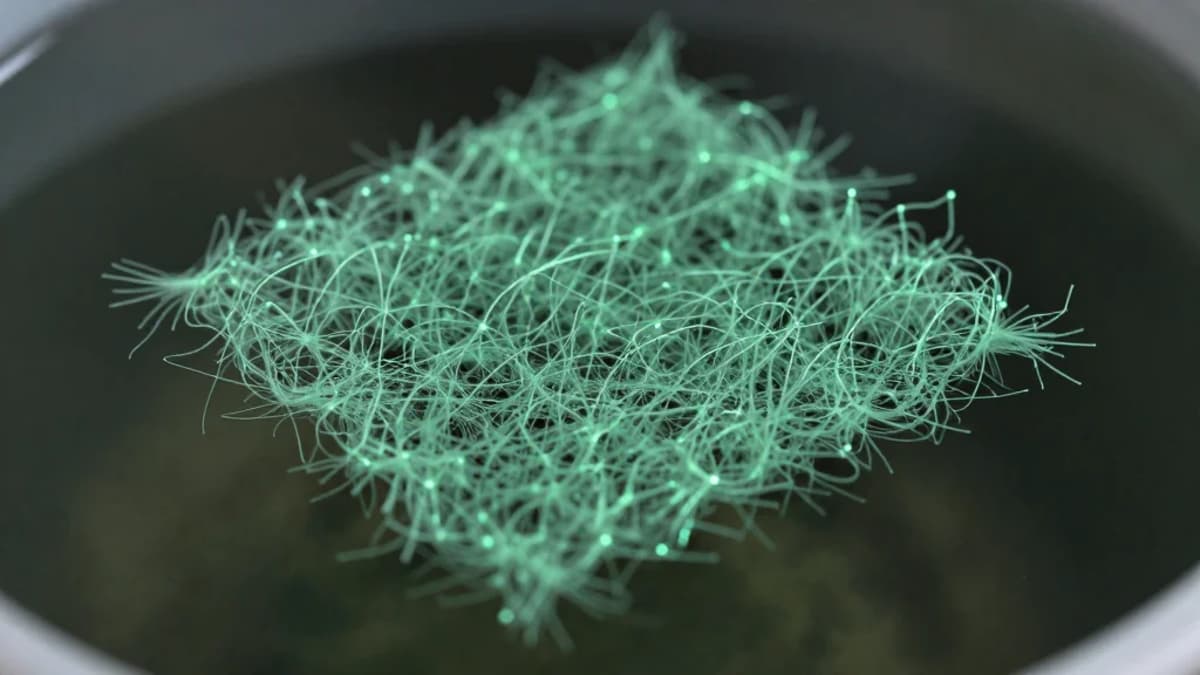
The recent study introduces a branched‑linear intertwining electrospun fiber, designated PAN‑bPEI‑T/PVA, that co‑grafts hyper‑branched PEI with linear triethylenetetramine (TEPA). TEPA acts as a hydrogen‑bond regulator, converting strong intramolecular bonds in bPEI into weaker intermolecular interactions, which expands the polymer network and unveils additional amine groups. This dendritic topology delivers an unprecedented uranium uptake of 806.4 mg g⁻¹ in spiked seawater, more than 2.5 times the capacity of traditional bPEI fibers. Quantum‑theoretical calculations confirm a synergistic adsorption complex where flexible TEPA chains adaptively chelate uranyl, enhancing both selectivity and kinetics.
The performance gains translate into tangible commercial advantages: the fiber retains over 95 % of its capacity after seven regeneration cycles, indicating low operational costs and minimal material loss. Its scalable electrospinning process and compatibility with polyvinyl alcohol binders suggest straightforward integration into existing seawater‑filtration infrastructure. By addressing the long‑standing limitation of site utilization, this technology could accelerate the economic case for seawater‑derived uranium, supporting a more resilient nuclear fuel supply chain and reducing reliance on terrestrial mining. Ongoing work will likely explore long‑term durability in real ocean conditions and potential hybridization with other functional polymers.
Designing Polyethyleneimine‐Based Electrospun Fibers via Hydrogen Bonding Reconstruction for Enhanced Uranium Extraction From Seawater
0
Comments
Want to join the conversation?
Loading comments...