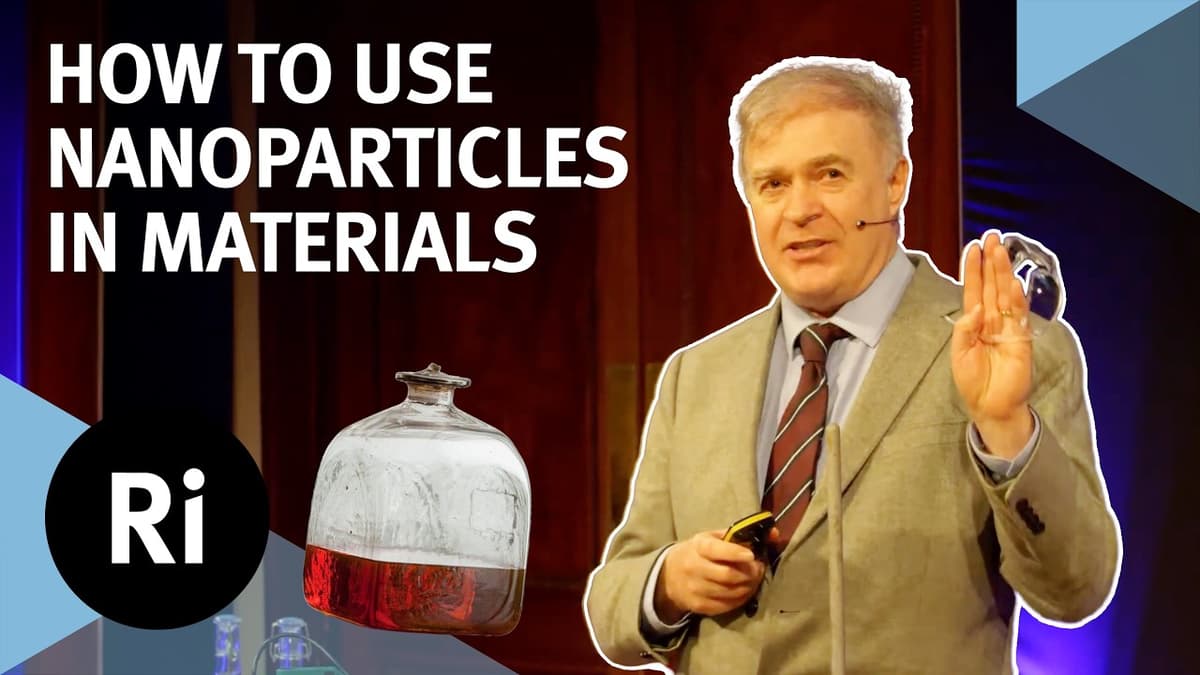
How Nanoparticles Are Quietly Revolutionising the World | with Ivan Parkin
The lecture revisits the origins of nanoscience, beginning with Michael Faraday’s 1857 ruby‑gold experiments that first revealed gold nanoparticles’ vivid colors. It then connects that historic curiosity to today’s nanomaterial breakthroughs, especially titanium dioxide (TiO₂) coatings that render glass self‑cleaning and super‑hydrophilic. Key technical insights include the ultra‑thin (≈25 nm) TiO₂ films applied via atmospheric‑pressure chemical vapor deposition (APCVD), which can be doped with nitrogen, sulfur or phosphorus to dramatically increase photocatalytic activity. The presenter also describes heterojunction designs combining anatase and rutile TiO₂ phases, achieving higher quantum efficiencies, and demonstrates oscillating chemical reactions as analogues for nanoparticle dynamics. Illustrative examples feature Faraday’s ruby‑red gold‑salt solution still on display at the Royal Institution, Pilkington’s active glass used in conservatories and high‑profile buildings, and the commercial scale of the technology—about $200 million in annual sales and tens of thousands of installations worldwide. The talk highlights collaborations between UCL, the Royal Institution, and industry partners that have spawned multiple spin‑out companies. The broader implication is that nanomaterials are moving from laboratory curiosities to market‑ready solutions that improve energy efficiency, reduce maintenance costs, and enable new sustainable products. The UK’s leadership in APCVD and nanocoating innovation positions it to capture significant economic and environmental benefits as these technologies proliferate across construction, consumer goods, and clean‑energy sectors.
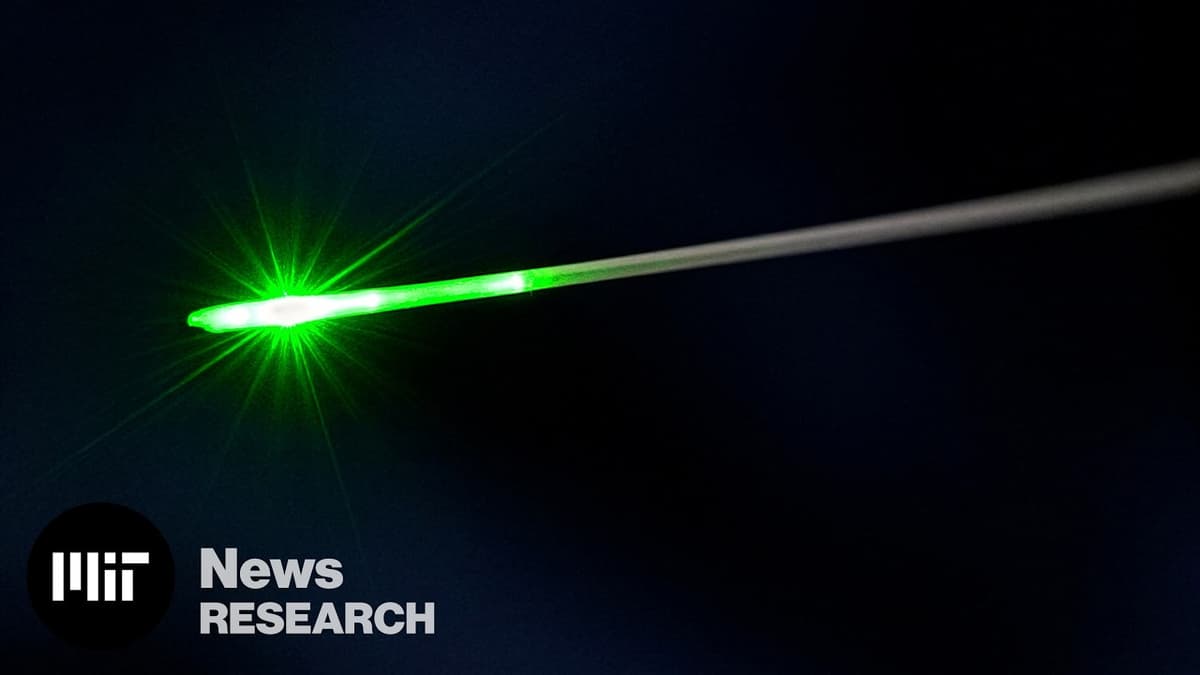
Shining a Light on Bladder Cancer Detection
MIT researchers have engineered a urinary catheter coated with carbon‑nanotube nanosensors that light up when they encounter bladder‑cancer‑specific protein biomarkers. The device scans the bladder with a laser‑based system, producing a fluorescent “chemical image” that pinpoints where malignant molecules are...
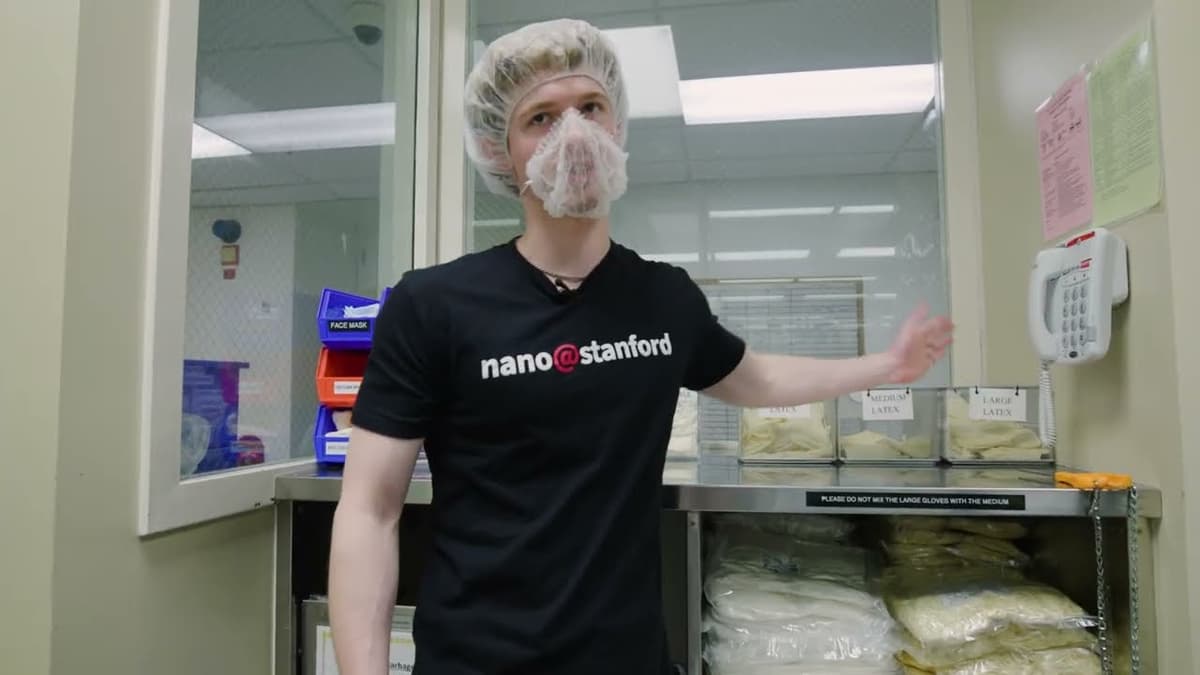
Day in the Life of a Nano@stanford Intern
Connor Short, a community-college intern at Stanford’s Nano facility, outlines daily responsibilities that range from restocking consumables and maintaining safety protocols to preparing and cleaning silicon wafers for microfabrication. Interns run monitoring processes and use atomic layer deposition tools to...
Bending Light at the Nanoscale with Matt Jones
The Nanoccape podcast features Rice University chemist Matt Jones discussing how nanoscale engineering lets scientists bend, focus, and manipulate light far beyond conventional optics. Drawing inspiration from Star Wars, Jones explains that while today’s lightsabers remain fiction, the underlying physics is...

Deblina Sarkar | Autonomous and Surgery-Free Nano-Electronics for Brain-Computer Symbiosis
The talk introduced a new class of autonomous, surgery‑free nano‑electronics designed to create a seamless brain‑computer symbiosis. By shrinking electronic chips to subcellular dimensions and removing any supporting substrate, the devices can be injected intravenously, travel through the circulatory system,...

Frontier IP Group CEO on €211M Boost for 2D Photonics
Frontier IP Group’s CEO Neil Crabb announced that its portfolio company 2D Photonics has secured a €200 million grant from the Italian government, approved by the EU, to accelerate development of advanced graphene‑based photonic chips. The funding will finance a pilot plant...

Soft Robotics Inspired by Nature | Building Artificial Muscles that Move and Sense with Ryan Truby
The Nanocape episode spotlights Ryan Truby’s work at Northwestern University, where he re‑imagines robots from the inside out by replacing stiff, precision‑driven mechanisms with bio‑inspired soft materials and artificial muscles. Truby argues that the next wave of robotics must...

National Lab Discovery Series: LLNL's Massively Parallel Two-Photon Lithography Using Metaoptics
Lawrence Livermore National Laboratory unveiled a breakthrough in two‑photon lithography that replaces a single focal spot with a massive array of meta‑optics lenses. By coupling a high‑energy femtosecond laser to a spatial light modulator (SLM) and a wafer‑scale silicon metasurface...

Graphene Manufacturing Group CEO on European Sales Push, US EPA Approval
Graphene Manufacturing Group Ltd. announced two pivotal milestones: EPA clearance for its THERMAL‑XR graphene coating in the United States and the rapid deployment of a ten‑person sales force across Europe. CEO Craig Nicol highlighted that both developments are expected to...

Graphene Manufacturing Group Expands with EPA Approval & Global Growth
Graphene Manufacturing Group Ltd (GMG) secured U.S. Environmental Protection Agency approval for its THERMAL‑XR® graphene coating, clearing a regulatory hurdle that enables commercial sales in the United States. The coating is engineered to boost energy efficiency and prolong equipment life,...

This Shapeshifting Polymer Was Inspired by Octopus Skin
The video introduces a thin polymer film that mimics octopus skin, dynamically altering both colour and surface texture before reverting to its original state. Inspired by cephalopod camouflage, the material leverages fluid‑induced swelling to achieve reversible visual changes. The researchers use...

Can Nanoscience Build Better Clothes? With Cécile Chazot
Nanoscience is poised to transform clothing by re‑engineering polymers at the molecular level, a theme explored in a Nanoscape interview with Northwestern professor Cécile Chazot. Chazot explains that failure in plastics and textiles begins when molecular chains slide past each...

Group Quebec - Nanosis A Nanomedicine Design Puzzle
Group Quebec’s BioNano Engineering Group unveiled Nanosis, a Tetris‑inspired educational game that lets players assemble nanoparticles, molecular linkers, and biomolecular ligands to navigate the body’s biological barriers. Each level mirrors a stage of nanomedicine delivery—from bloodstream circulation and immune evasion...

Nanoparticles, Genome Therapy & Antibodies - The Zhou Research Lab at Yale School of Medicine
The Zhou Research Lab at Yale School of Medicine is a biomedical‑engineering group that builds platform technologies for delivering therapeutics to the brain. Its work spans three distinct avenues: engineered nanoparticles for crossing the blood‑brain barrier, a novel “step‑engineering”...

Dr. Ben Feringa | 2025 Feynman Prize Winner
Dr. Ben Feringa, 2016 Nobel laureate in chemistry, was honored with the 2025 Feynman Prize and delivered a lecture on the art of building molecular switches and motors. He framed the discussion around dynamic molecular systems that bridge chemistry, physics,...