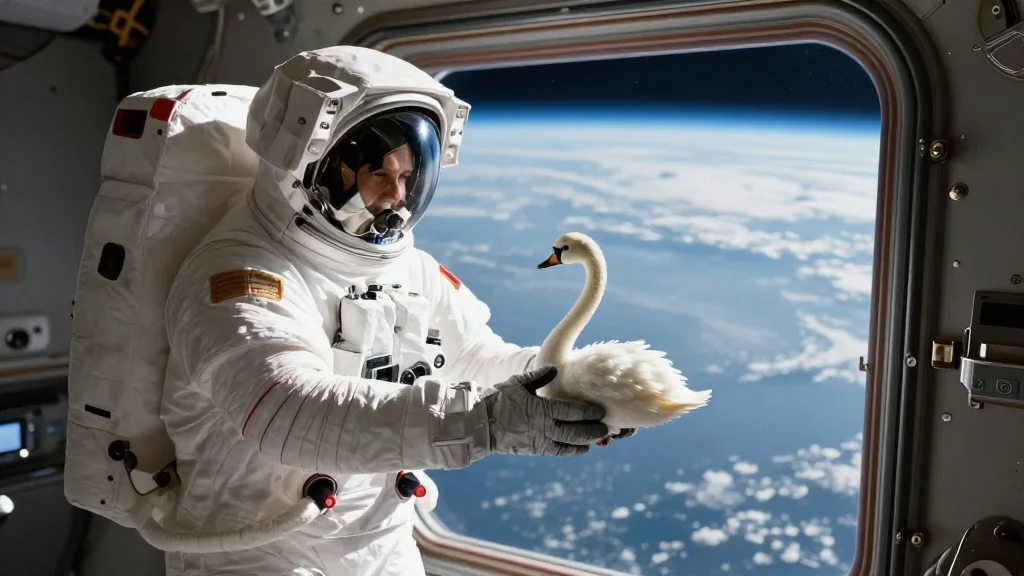
Astronaut Shubhanshu Shukla Says Focus Comes From Discernment, Not Discipline

Companies Mentioned
Why It Matters
Shukla’s framing of focus as discernment challenges the dominant discipline‑first narrative that underpins most productivity literature. By positioning attention as a joyful, purpose‑driven state, the message aligns with emerging research on intrinsic motivation and mental well‑being. For the motivation industry, this could catalyze a wave of tools that prioritize task relevance over sheer volume, potentially reducing burnout and increasing sustained performance. Moreover, the astronaut’s credibility adds weight to the argument. As someone who operates in an environment where every second counts, Shukla’s endorsement of discernment may persuade skeptics that the approach is not merely philosophical but operationally viable. This could accelerate adoption among corporate training programs and personal development coaches seeking evidence‑based strategies.
Key Takeaways
- •Shubhanshu Shukla, first Indian astronaut on the ISS, posted on X on June 1, 2026.
- •He used the swan zero‑gravity indicator from Axiom Mission 4 as a metaphor for discernment.
- •Shukla emphasized that focus feels "Joyful" when rooted in discernment, not rigid discipline.
- •The post sparked debate between discipline‑focused productivity models and emerging discernment‑based approaches.
- •Potential industry impact includes AI‑driven task‑filtering apps and purpose‑aligned productivity platforms.
Pulse Analysis
Shukla’s insight arrives at a crossroads for the motivation sector. For the past decade, the market has been saturated with habit‑tracking apps that promise results through strict routine enforcement. While effective for some, data shows a rising churn rate as users report fatigue and loss of intrinsic drive. Shukla’s emphasis on discernment taps into a growing body of research that links purpose‑aligned work to higher engagement and lower stress. If the industry embraces this shift, we could see a new generation of platforms that leverage behavioral AI to surface tasks that align with personal values, effectively acting as a digital "swan" that filters noise.
Historically, motivation frameworks have oscillated between external structures (e.g., Pomodoro timers) and internal states (e.g., flow theory). Shukla’s narrative bridges the two by suggesting that the internal state—joyful focus—can be cultivated through an external cue (the swan) that reminds users to ask, "Is this essential?" This hybrid approach could reconcile the need for structure with the desire for autonomy, a balance that many modern workers crave.
Looking ahead, the real test will be whether organizations translate this philosophy into measurable outcomes. Early adopters that embed discernment modules into performance dashboards may report higher employee satisfaction scores, while traditional discipline‑centric firms could see a competitive disadvantage. As the conversation evolves, the motivation space is likely to witness a diversification of tools, with discernment‑focused solutions carving out a distinct niche alongside classic habit‑forming products.
Astronaut Shubhanshu Shukla Says Focus Comes From Discernment, Not Discipline
Comments
Want to join the conversation?
Loading comments...