
What Happens When You Protect One Day From Meetings
The article advocates dedicating a single day—typically Wednesday—to uninterrupted deep work by permanently blocking it on the calendar and enforcing strict no‑meeting rules. It outlines seven practical steps, from pre‑blocking the day and delaying email/Slack until noon to focusing on one concrete project, using do‑not‑disturb settings, taking a mid‑day walk, holding a brief 4 pm checkpoint, and reflecting on Thursday. Executives like Elon Musk and Satya Nadella are cited as role models for this approach, which aims to boost output and decision quality. The piece argues that a protected day can generate more value than fragmented meetings across the week.

Why Smart Entrepreneurs Are Scheduling a Weekly ‘Reset’ for Their Companies
Founders are embracing a weekly 30‑60 minute "reset" to step back from nonstop hustle and align their teams. The reset starts with a rapid review of sales, cash flow, pipeline and other leading metrics, turning raw data into actionable insight....

I Hated Running. Then I Committed to Running a Mile Every Day for a Month.
Rona Ahdout, a strength‑focused athlete, ran a mile every day for April, completing the 30‑day challenge despite initial dread. She shifted from speed‑centric goals to a 15‑minute time box and logged daily miles with a coworker, using cushioned sneakers to...
The Power of Saying No: Boundaries as a Productivity Superpower
The article argues that saying no is a productivity superpower, emphasizing personal boundaries as essential for preventing overload. It illustrates the concept with a real‑world example from a church music group, where the author resisted additional commitments despite peer pressure....

Jack Link’s CEO Shares His Message for Gen Z Workers: Commit, Stick to It, and ‘Be Really Good at It’
Jack Link’s, a $4 billion meat‑snack multinational selling in more than 55 countries, is riding a protein boom that pushed U.S. meat‑snack sales to $5.5 billion in 2025. CEO Troy Link, who took the helm in 2013, credits early‑morning discipline, daily to‑do...

These ‘Micro‑Challenges’ Take Less Than a Minute—And Readers Say They’re Game-Changing
Inc.com columnist launches a text‑based Micro‑Challenge service that delivers short, 30‑second exercises to help readers stay mindful and productive. The program has run for six years, offering daily prompts via Monday‑to‑Friday texts and a free 14‑day trial that can be...

Daily Motivation Routines for Sales Professionals
On The Sales Hunter Podcast, COO Darryl Clark recounts his rise from a warehouse job at Wallace Eannace & Associates to the executive suite, highlighting the daily habits that fueled his ascent. He stresses that genuine purpose, disciplined routines, and...

6 Simple Habits That Made Me More Productive Than 12-Hour Workdays Ever Did
The article outlines six simple habits that helped the author become more productive than grinding 10‑12‑hour days. Key practices include focusing on a single task, cultivating a creative hobby, integrating SEO and AI into one workflow, repurposing existing content, measuring...

The One Change that Worked: I Struggled to Get Any Work Done – Until I Bought a Kitchen Timer
Zahra Onsori, a freelance journalist, long battled procrastination and late‑night cramming. After purchasing a tomato‑shaped kitchen timer and applying the Pomodoro technique—25 minutes of focused work followed by a five‑minute break—she completed tasks in minutes instead of hours. The simple timer...

The Story of the One Pair of Shoes
At the Yugto 2026 commencement of the CARD MRI Development Institute in Tagum, 282 senior‑high graduates heard Dr. Jasmin J. Neri, TESDA Davao del Norte director, recount a childhood memory of three sisters sharing a single pair of shoes. She...

Patience Over Panic: Jeremy Grantham’s Investment Mantra for Modern Investors
Jeremy Grantham warns that disciplined, patient investing beats hype‑driven trading in today’s volatile markets. He highlights that AI‑linked stocks and select Indian small‑caps are trading at stretched valuations, echoing past bubbles he identified. Grantham stresses buying cheap, avoiding leverage, and...

Your Brain Is Wired to See Threats Instead of Opportunities. Here’s Why — and How to Train It to Do...
The reticular activating system (RAS) acts as the brain’s attention filter, deciding which of the billions of daily data points reach conscious awareness. When entrepreneurs focus on avoiding failure, the RAS surfaces evidence of loss, blinding them to potential opportunities....

‘I Didn’t Know How Much Time I Had Left, but I Wanted to Go Down Fighting for What I Believe...
Blake Lusty, a Harvard Business School graduate and former Navy lieutenant commander, survived two late‑stage cancer diagnoses while completing a Naval Academy education and four combat deployments. After retiring from the Navy in 2024, he earned his MBA and will...

Walter Elliot’s Rule for Staying Motivated Without Burning Out
Walter Elliot reframes perseverance as a series of short, outcome‑focused races rather than a single marathon. By breaking large projects into timed sprints, individuals gain clear endpoints, immediate feedback, and frequent wins that sustain motivation. The article outlines a four‑step...
Tom Brady Tells Gen Z to Treat Their Careers Like the Super Bowl: ‘You May only Get One Chance to...
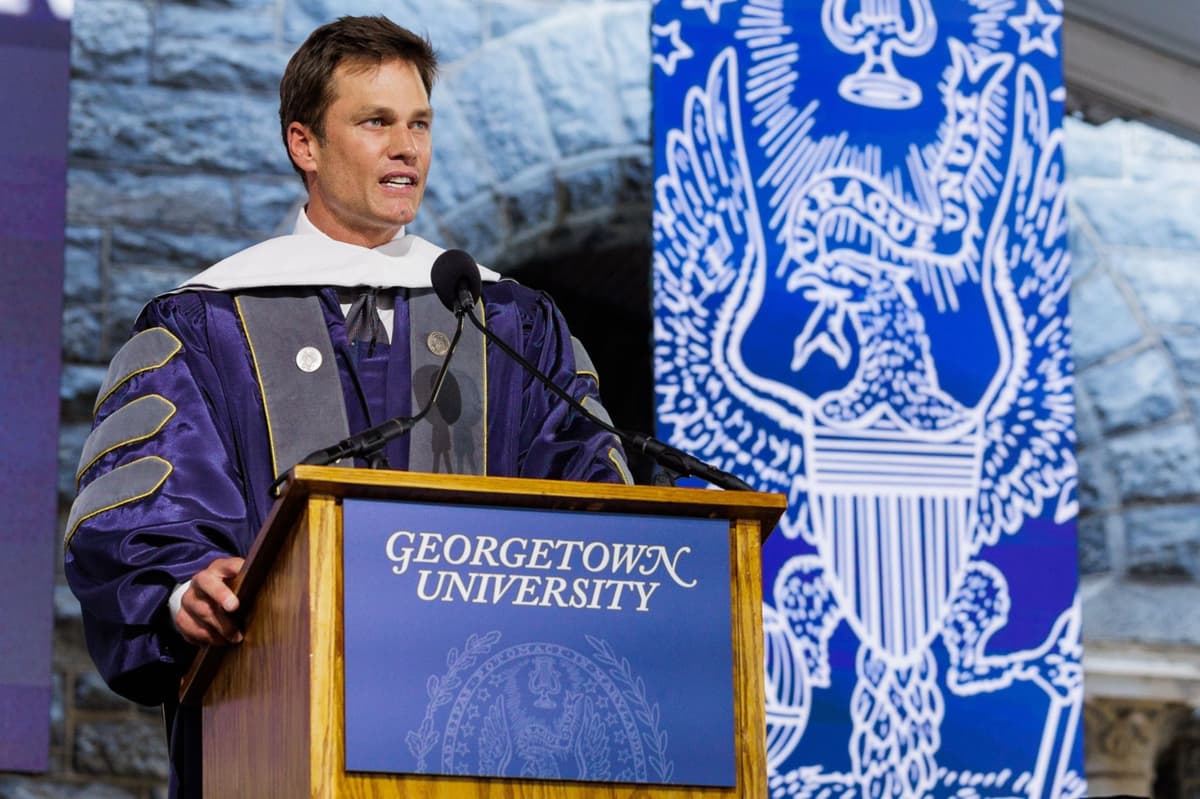
Tom Brady, speaking at Georgetown’s McDonough School of Business, told the class of 2026 to treat every career opportunity like a Super Bowl, emphasizing preparation and resilience. He recalled the 2017 Super Bowl LI comeback, where the Patriots overcame a...