
Walter Elliot’s Rule for Staying Motivated Without Burning Out
Walter Elliot reframes perseverance as a series of short, outcome‑focused races rather than a single marathon. By breaking large projects into timed sprints, individuals gain clear endpoints, immediate feedback, and frequent wins that sustain motivation. The article outlines a four‑step framework—define the finish line, time‑box, execute, then reset with reflection—to apply the concept in personal growth, career initiatives, and learning. It also warns against oversized tasks, vague goals, and neglecting recovery, offering practical tips to avoid burnout while maintaining progress.

Tom Brady Tells Gen Z to Treat Their Careers Like the Super Bowl: ‘You May only Get One Chance to...
Tom Brady, speaking at Georgetown’s McDonough School of Business, told the class of 2026 to treat every career opportunity like a Super Bowl, emphasizing preparation and resilience. He recalled the 2017 Super Bowl LI comeback, where the Patriots overcame a...

Two Hours of Deep Work a Day Is Enough. Here’s Why You’re Probably Not Getting Them.
The article argues that two uninterrupted hours of deep work each day is the optimal productivity standard for knowledge workers. Real work—tasks that move projects forward—must be protected from the constant interruptions of fake work like Slack and email. By...

The Airplane Oath
Seth Godin’s essay uses a near‑fatal plane incident to illustrate how a stark moment can inspire a personal oath to change careers. He recounts his friend Ty’s decision to quit a family‑pleasing job and pursue work that matters after surviving...

You’re Not Behind. You’re Just Comparing Your Beginning to Someone Else’s Middle.
The piece argues that feeling “behind” is a symptom of comparing one’s early career stage to others’ more advanced positions. It explains that this external benchmark hides real progress and creates chronic dissatisfaction. By shifting focus to personal growth—measuring how...

3 Ways to Improve Your Focus
The article outlines three practical tactics for boosting focus when drafting fundraising materials. First, it urges writers to allocate ample time for research and stakeholder alignment before drafting. Second, it warns against multitasking, emphasizing that single‑task work yields higher productivity....

He’s So Random
Max Hawkins, a former Google software engineer, grew uneasy with his hyper‑predictable San Francisco routine and built a suite of apps that let Uber drivers, randomizers and simple calculators decide his destinations, meals, and even tattoos. The experiments sent him to...
Early Rejections
Seth Godin’s brief essay frames early rejections as a vital signpost rather than a dead end. He argues that, in hindsight, each “no” proves perseverance was worthwhile and fuels the next creative push. While painful at the moment, rejections are...

The Psychology of Attention Residue and How I Have Started Minimizing It
The article explains "attention residue," a cognitive leak that occurs when workers switch tasks, leaving part of their focus on the previous activity. Research by UC‑Irvine professor Gloria Mark shows each interruption costs an average of 23 minutes and two...

The Difference Between People Who Keep Moving Forward in Life and Those Who Stall Sometimes Isn’t Talent, Luck, or Hard...
The article argues that people who keep advancing do so by shedding counter‑productive habits, not by talent or luck. It highlights four habits that forward‑movers drop: saying yes to everything, waiting for motivation, multitasking, and avoiding discomfort. A personal anecdote...

Beyond the Score: Mia Hamm on Empowerment, Winning Culture and Constant Growth
Mia Hamm, former USWNT star, addressed BenefitsPRO’s Broker Expo, sharing how her journey from a 15‑year‑old rookie to a champion illustrates the power of continuous learning, employee empowerment, and a winning culture. She emphasized that greatness stems from acknowledging knowledge...

I’m 35 and for Most of My Adult Life I Confused Motivation with Discipline, and I Wasted Years Waiting to...
The author, a 35‑year‑old former finance professional, realized he had spent years mistaking motivation for discipline and waiting to "feel ready" before taking action. He describes how that mindset led to endless research, planning, and avoidance, while true progress required...

This 4-Week Challenge Will Actually Help You Get Off Your Phone
The Well platform launches a month‑long “Touch Grass” Challenge in June to help users curb excessive phone use. Each Thursday, participants receive evidence‑based weekly tasks encouraging outdoor activity, social connection, and creative breaks. The program is guided by columnist Jancee...

37 Genius Productivity Hacks to Transform Work Efficiency
The article outlines 37 practical productivity hacks aimed at helping knowledge workers work smarter, not harder. It emphasizes deep‑work practices such as eliminating distractions, using the Pomodoro technique, and creating no‑interrupt zones. It also promotes single‑tasking, goal‑setting, and automation tools...

Be Your Own Butler
The article frames discipline as a practical tool for personal and professional growth, defining it as the ability to prioritize the future self over immediate cravings. Behavioral analyst Chase Hughes illustrates this concept with the "own‑butler" metaphor, urging readers to...

Piruz Khambatta’s Ashoi: How 60,000 Parsis Built $400 Billion in Enterprise Value
Piruz Khambatta, CEO of Rasna, released his book *Ashoi* outlining how the Zoroastrian principle of righteousness has helped India’s 60,000‑person Parsi community create roughly $400 billion in enterprise value. He argues that the triad of good thoughts, words and deeds builds...

How We Make Use of Our Inner Worlds
In "How We Make Use of Our Inner Worlds," Dr. Grant Hilary Brenner outlines a mental‑mapping framework that treats inner experience as a navigable terrain. He introduces a repertoire of "inner moves"—noticing, releasing, following, pushing, pulling, witnessing, and distancing—to help...

How to Stay Calm on a Hectic Day
The article explains how the Yerkes‑Dodson law describes an optimal arousal zone for peak performance and warns that exceeding it hampers focus. It offers practical tactics—breathing exercises, nutrition tweaks, brief movement, visual reminders, sunlight exposure, and micro‑tasks—to bring overstimulation back...

On The Up: Chance Encounter at Hawke’s Bay Marathon Inspires Woman’s First Race in 35 Years
Kathryn Marsh, 61, was moved by a struggling 20‑year‑old runner at the 2025 Hawke’s Bay Marathon and decided to train for her own marathon after a 35‑year hiatus. She completed an 8.5 km walk, recovered from a hamstring tear with a...

Nikki Springston and the Power of Relentless Execution
Nikki Springston, a senior leader at UHY, has built a reputation for turning complex client challenges into clear, executable solutions. Leveraging a background in education, recruitment and design, she aligns talent with business needs, creates repeatable systems, and drives momentum...

Behavior Change Isn't a Willpower Problem
Behavior‑change experts are moving beyond willpower myths, arguing that motivation is a fluid state that varies by context. The article introduces a "personalization algorithm" that treats each decision as a moment‑by‑moment calculation, likening motivation to a tank that can be...

How Perfectionism Holds Entrepreneurs Back — and ‘Good Enough’ Propels Them Forward
The article argues that entrepreneurial perfectionism functions as a planning addiction that stalls real‑world testing and growth. By embracing a "good enough" mindset, founders can launch early, gather data, and iterate rapidly instead of spending months on unvalidated features. Speed...

Valentina Shevchenko Reveals the Longevity Secrets Behind Her UFC Dominance and Championship Mindset
UFC flyweight champion Valentina Shevchenko attributes her decade‑long dominance to a mindset of constant control and disciplined recovery. After defeating Weili Zhang in November, she is eyeing a next defense against Natalia Silva while maintaining daily, nature‑based training. She emphasizes...

The Founder Focus Tactics That Quietly Change Everything
Founders who consistently outpace competitors rely on systematic focus tactics rather than raw willpower. By batching context switches, adding friction to distractions, and protecting a non‑negotiable deep‑work block, they reclaim 5‑20 hours each week. Additional practices such as a decision...

Wisdom of the 5AM Club
The 5 AM Club, popularized by Robin Sharma, is gaining traction among top executives like Jeff Bezos, Tim Cook, and Oprah Winfrey. Its core routine— the 20/20/20 formula—splits the first hour into exercise, reflection, and learning to boost dopamine, clarity, and...

Every Successful Founder Has This Trait in Common, According to Shark Tank’s Daymond John
Daymond John, Shark Tank investor since 2009, says the hallmark of successful founders is intentional, incremental growth. Rather than sprinting into new markets, they take small, testable steps and prioritize what keeps the cash flow healthy. He advises entrepreneurs to...

People Who Constantly Research Self-Improvement but Never Start Aren’t Necessarily Lazy – Sometimes They’ve Confused Learning with Changing
The article argues that many self‑improvement enthusiasts mistake extensive research for real change, confusing intellectual understanding with actionable behavior. Readers often accumulate books, frameworks, and insights without translating them into daily habits, creating a comfort zone of learning that feels...

Adopting the Self-Coaching Mindset
Adopting a self‑coaching mindset is presented as a shift from reacting to life’s circumstances toward actively observing, questioning, and guiding one’s own thoughts and actions. The article outlines practical steps—using observational language, embracing responsibility, aligning with personal values, and treating...

7 Calendar Plays That Turn Stalled Deals Into Wins
Calendar.com outlines a seven‑play time‑blocking framework to accelerate stalled sales deals. By assigning dedicated blocks for discovery on Monday, proposal creation on Wednesday, objection handling on Friday morning, and other strategic activities, reps create a predictable rhythm that moves prospects...

The Rewards of Repetition
Anthony Guerra, founder of healthsystemCIO, argues that lasting operational excellence stems from tightly documented, repeatable workflows. He draws on Michael Gerber’s "E‑Myth" and the "small‑menu" concept from restaurant management to stress narrowing service scope for mastery. Guerra also highlights that...
How I Do My Weekly Review with ChatGPT Voice (After 15 Years of Doing It the Old Way)
After 15 years of typing weekly reviews, the author switched to using ChatGPT’s voice feature on a mobile device. By feeding the AI a preset list of ten reflective questions, the bot asks each one aloud while the user answers...

Creative Ways to Use Calendars for Better Daily Productivity and Focus
Robert Helson’s May 7, 2026 article reframes calendars from simple date‑keepers to active productivity systems. He outlines five tactics—time blocking, scheduling white‑space, color‑coding, using a physical backup, and weekly reviews—to curb task‑switching and stress. The piece cites CDC data showing 30% of...

7 Growth Mindset Activities & Exercises That Build Resilience
The article outlines seven practical exercises that help adults cultivate a growth mindset, from taking the first step on a new hobby to maintaining a 21‑day journaling habit. It explains how neuroplasticity proves the brain can keep changing, and it...

Energy Vampires: The Hidden Drain on Leadership Performance
Renée Giarrusso warns that leaders are losing performance to hidden "energy vampires"—people, tasks and environments that sap mental, emotional and physical stamina. She categorises these drains into relationships, situations and personal habits, highlighting unappreciated effort, micromanagement, unrealistic workloads and toxic politics...

9 Reasons You Should Write All the Time
Mike’s LinkedIn brief outlines nine compelling reasons to write habitually, from sharpening vocabulary to generating business opportunities. He argues that writing forces ideas into concrete form, reduces stress, and builds discipline that spills over into other professional tasks. The piece...
The Meeting That Kills Internal Email (And Why You Should Add It Before Any AI Tool)
A CPA in Austin was drowning in internal emails, prompting a shift from inbox management to structural change. By instituting a 15‑minute daily standup, her team halted most internal questions, slashing email volume by roughly 25 messages per day. Adding...
How to Escape the Shiny Object Trap Before It Derails Your Business
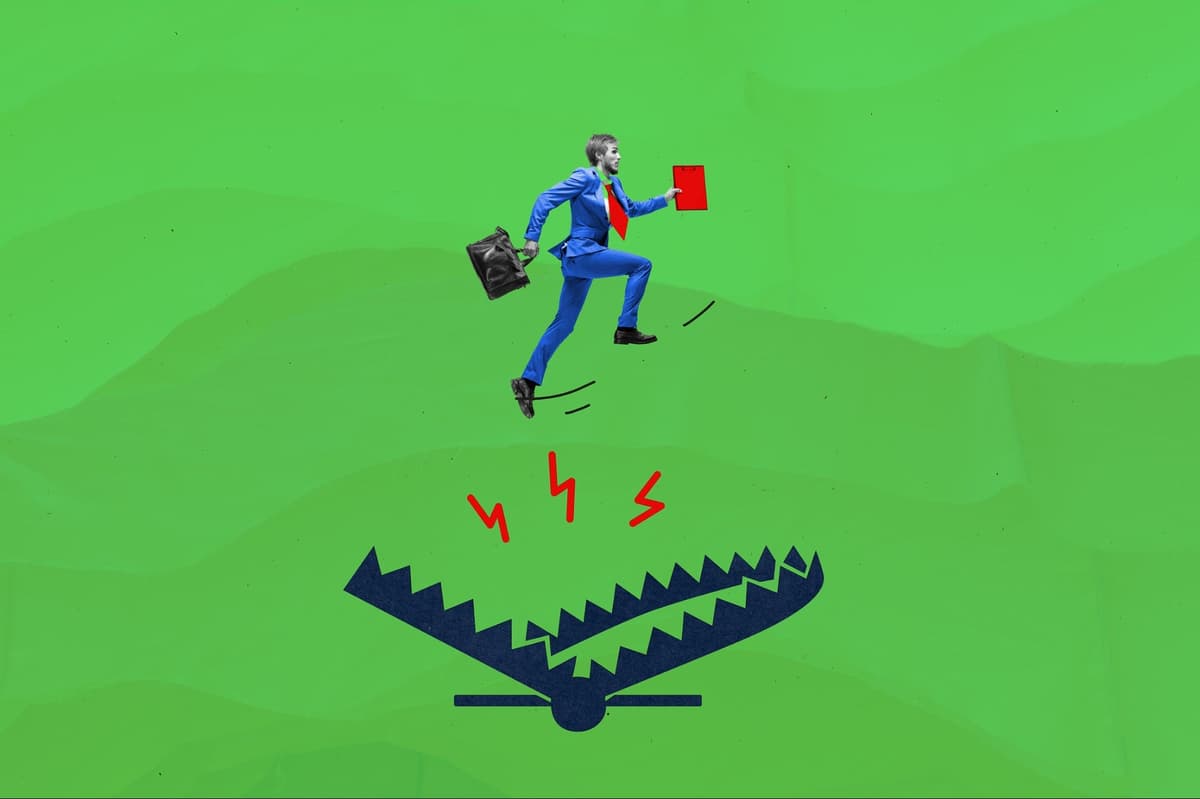
The article warns founders that chasing new ideas—often called the shiny object trap—splits attention, bandwidth, capital, and brand clarity. It argues that sustainable growth comes from anchoring every decision to a single, quarterly key metric rather than scattering effort across...

The Attention-Span Panic
The Atlantic essay argues that America’s anxiety over shrinking attention spans reflects a broader shift from "deep" to "hyper" attention, a change accelerated by smartphones and social‑media platforms. Neuroscientists note that sustained focus consumes significant brain glucose, and rapid task‑switching...

How Self-Awareness Makes Every Habit Easier
Self‑awareness is a rare skill—only about 12% of people truly possess it despite 95% believing they do. The article explains how genuine self‑awareness, not rumination or narcissism, lets individuals observe thoughts, feelings, and actions non‑judgmentally, which in turn fuels habit...

Your Work Diary
Seth Godin proposes a simple five‑item work diary to be completed each day: a leadership act, a thank‑you note, a curiosity moment, a new skill, and an empathy‑building interaction. He suggests that maintaining this habit for 200 consecutive workdays can...

31 SMART Goals Examples for Students in 2026
The article explains the SMART framework—Specific, Measurable, Achievable, Relevant, Time‑Bound—and why it’s a powerful tool for students navigating today’s hybrid learning environment. It cites a longitudinal study of 1,200 high‑school Spanish learners that linked goal‑setting to higher language proficiency and...
How I Compressed a 3-Day Goal Setting Retreat Into 2 Hours Using AI
A productivity expert condensed a traditional three‑day, cabin‑style goal‑setting retreat into a two‑hour desk session by leveraging generative AI. By prompting the model to interview him and then ask which goals to discard, he accelerated the clarity‑building phase from days...

Former IndyCar Driver Sam Schmidt On The Power Of Purpose
Former IndyCar champion Sam Schmidt explains how a defined purpose transformed his post‑racing ventures. He details the shift from pure competition to purpose‑driven leadership at Schmidt Peterson Motorsports and his venture‑building portfolio. By embedding purpose into hiring, sponsorship negotiations, and...

This 5-Minute Fold Will Train Your Brain to Stay in the “Pain Cave”
The article introduces the five‑minute Caterpillar pose, a yin‑yoga forward fold designed to train athletes’ brains to tolerate discomfort, likening the experience to the final miles of a triathlon run. By holding the stretch for three to five minutes, practitioners...

5 Powerful Ways to Reset Your Mindset when You’re Stuck
Andrew Horsfield outlines five practical ways to reset a stuck mindset: reframe experiences, ask powerful questions, embrace curiosity, live by core values, and lean on trusted relationships. He frames mental flexibility as essential for leaders navigating personal or professional dilemmas....

Therrian Fontenot: Turning Discipline Into Direction
Therrian Fontenot grew up in Louisiana, moved to Los Angeles, and leveraged football as a vehicle for personal discipline and opportunity. A full scholarship to Fresno State validated his work ethic, and he left college early to pursue a brief professional...

I Used to Dread Long Runs. Now I Swear by These 4 Tricks That Make the Time Fly.
Runner Michael McDonough shares four strategies he uses to make long runs more enjoyable: mental exercises, music making, spoken‑word audio, and socializing. Each method receives a personal grade, ranging from a C for pure mental focus to an A for...
You Don’t Need 40 AI Agents. You Need One Good One.
The author argues that productivity gains come from a single, well‑designed AI agent rather than a sprawling fleet. Starting with a basic email‑drafting agent saved about 20 minutes a day, and incremental weekly tweaks eventually produced a 55‑hour weekly time‑saving...

How Whatnot Goes Beyond Dogfooding to Instill a Consumer Focus
Whatnot, the live‑shopping platform launched in 2019, mandates that all 1,000+ employees buy, sell, and handle support tickets on the app each quarter, receiving $150 in credits for purchases. This rigorous dogfooding policy is tied to performance reviews, ensuring staff...

People Who Keep Their Phone Face-Down on Every Table Aren’t Hiding Something — They Learned, Somewhere Along the Way, that...
The article explains why many adults habitually place their smartphones face‑down on tables: it’s a deliberate act to reclaim control over their time rather than a secretive gesture. The behavior stems from a childhood “phone wins” rule that taught interruptibility...