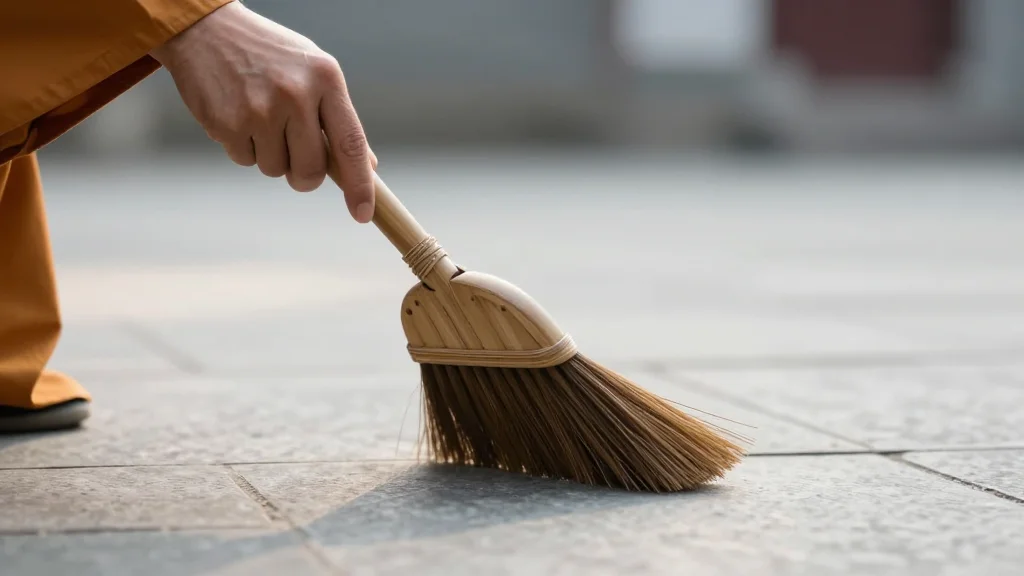
Monks’ Daily Courtyard Sweep Shows How Ritual Boosts Focus and Calm

Why It Matters
The monks’ sweeping ritual demonstrates that motivation can be cultivated through simple, repeatable actions that provide immediate sensory feedback. In an era where burnout and attention fragmentation are common, the practice offers a scalable model for individuals seeking to anchor their day with a grounding habit. Beyond personal well‑being, the approach has implications for organizational culture. By normalizing modest, shared chores, companies can foster a collective sense of responsibility and reduce hierarchical barriers, ultimately enhancing teamwork and reducing stress‑related absenteeism.
Key Takeaways
- •Monks sweep the same courtyard each morning, treating the chore as a meditation on attachment.
- •Psychologist Holly Schiff links repetitive cleaning to nervous‑system regulation and anxiety reduction.
- •Zen teaching emphasizes unchanged actions with evolving attention, reinforcing intrinsic motivation.
- •Studies show structured physical tasks provide clear completion signals that boost focus.
- •Businesses are piloting movement‑based mindfulness programs inspired by monastic cleaning rituals.
Pulse Analysis
The resurgence of ritualized physical tasks reflects a broader shift toward embodied cognition in motivation science. Historically, Western productivity models prized abstract goal‑setting, but recent neuroscience underscores the brain's preference for concrete, sensorimotor feedback. The monks’ courtyard sweep embodies this principle: a low‑stakes activity that repeatedly triggers dopamine release associated with task completion, reinforcing the habit loop.
From a competitive standpoint, firms that integrate such embodied practices may gain a measurable edge in employee retention and performance. Early adopters—tech startups and creative agencies—report lower turnover after introducing daily “reset” rituals, such as desk clearing or communal floor sweeping. The practice also democratizes mindfulness, removing barriers that traditional seated meditation can pose for some workers.
Future research will likely explore the optimal frequency and duration of these chores to maximize motivational benefits without causing fatigue. If the monastic model scales, we could see a new category of workplace design that includes dedicated cleaning stations, rhythmic task timers, and community‑wide sweep days, turning an ancient habit into a modern productivity catalyst.
Monks’ Daily Courtyard Sweep Shows How Ritual Boosts Focus and Calm
Comments
Want to join the conversation?
Loading comments...